An official website of the United States government
Here's how you know
Official websites use .gov
A .gov website belongs to an official government organization in the United States.
Secure .gov websites use HTTPS
A lock () or https:// means you’ve safely connected to the .gov website. Share sensitive information only on official, secure websites.
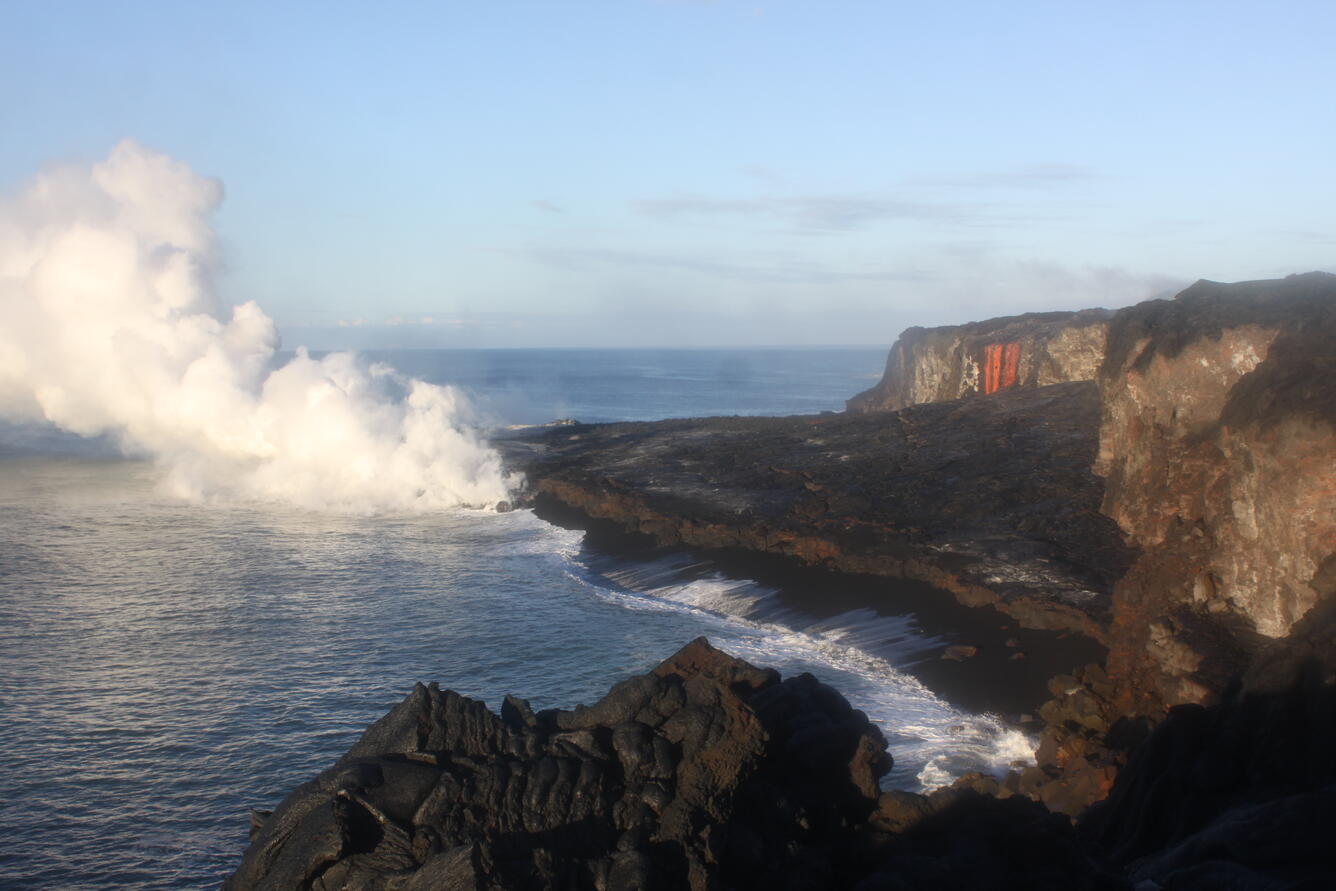
On Saturday, August 19 at 04:10 HST a breakout that started 120 m (394 ft) up-slope of the ocean entry, began to spill over the sea cliff and onto the delta. The lava fall was located to the west of the ramp (tubed-over firehose), and produced a small ‘A‘ā flow on the western portion of the delta. This breakout was short-lived and appeared to have died by 1:30 pm HST, lasting about 9.5 hours. The photo pictured above was taken at 6:40 am HST, showing the lava fall and some faint activity of the ‘A‘ā flows on the far side of the delta. Many cracks remain and continue to widen on the delta, although they are more difficult to see in the early morning light.
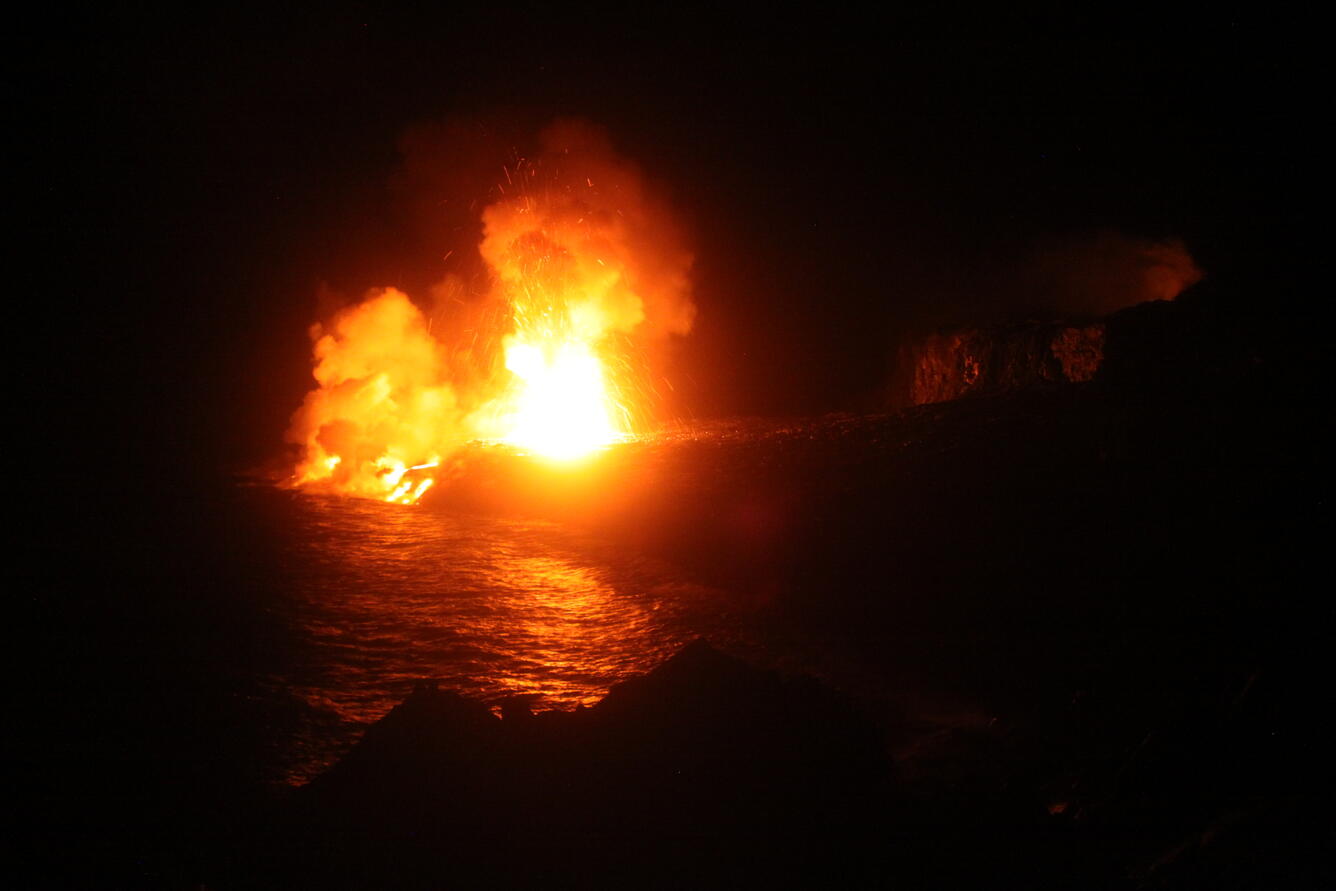
At 9:35 pm HST on August 19, there was a large littoral explosion near the front of the delta (left). Another smaller explosion was seen 5 minutes later. These explosions are typically caused by mixing of cool sea water and hot lava. The August 19 explosions were not followed by obvious delta subsidence or collapse, something we have seen in the past.
A telephoto image of the spatter deposit produced by the August 19 littoral explosions at the lava delta. When ejected, the spatter was thrown much higher than the height of the sea cliff which is approximately 28 m (92 ft). The flying debris is just one of the many hazards at an ocean entry.