An official website of the United States government
Here's how you know
Official websites use .gov
A .gov website belongs to an official government organization in the United States.
Secure .gov websites use HTTPS
A lock () or https:// means you’ve safely connected to the .gov website. Share sensitive information only on official, secure websites.
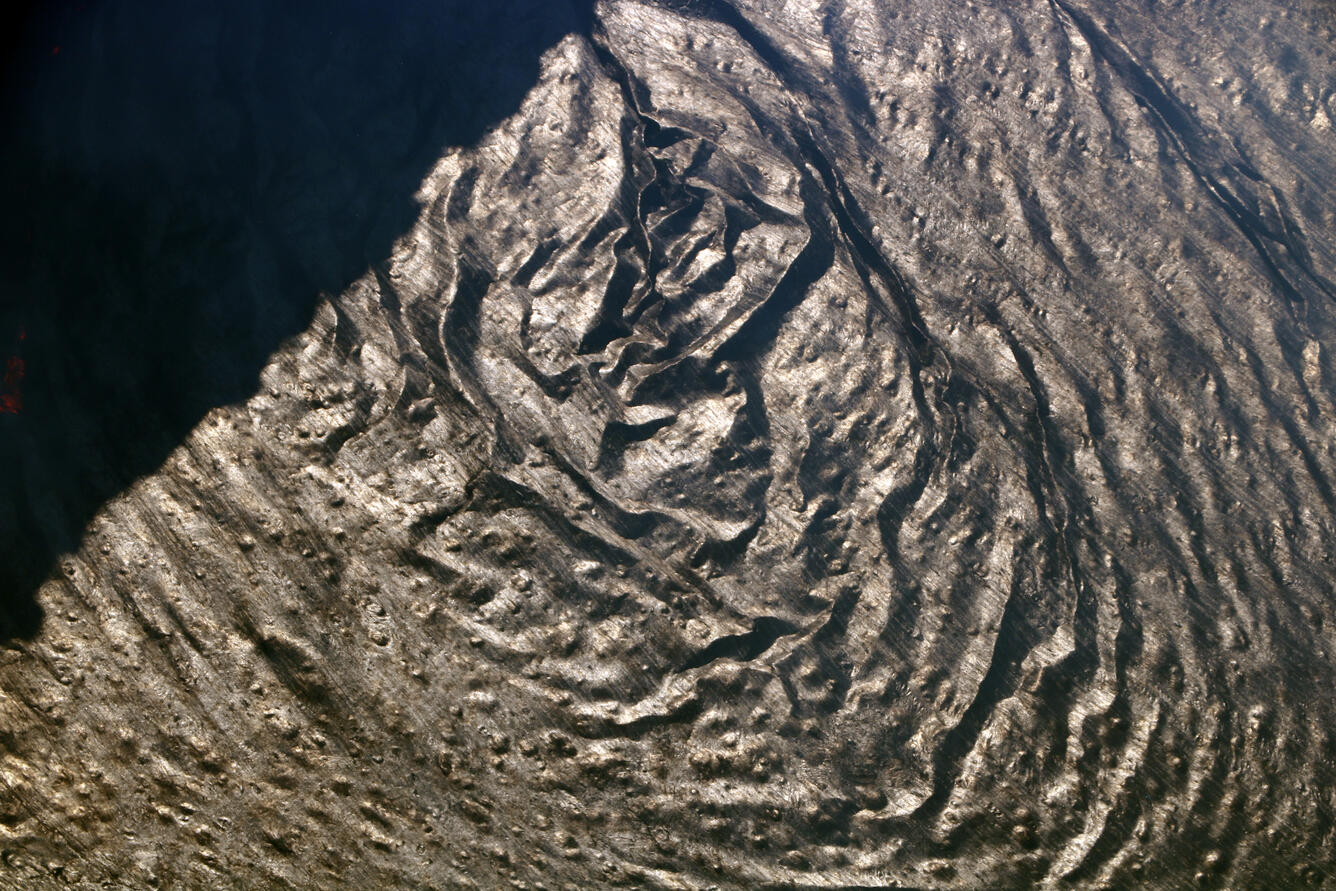
The activity in the summit lava lake in Halema‘uma‘u has been typical in recent weeks, with the normal fluctuations in lava level. The low sun angle during the late afternoon provided good views of the different surface textures on the lake.
Subtle folds are common on the lake surface, suggesting that the crust on the lake surface is thin and flexible. In addition, small "blisters" cover large portions of the lake surface. HVO geologists have seen these blisters form, and they appear to be small bubbles that rise and push up the thin crust, without breaking it. The field of view in this photo is roughly 50 meters (yards) wide.
A clearer picture of the folding on the lake surface, which resemble folds in a piece of thin fabric. The field of view in this photo is roughly 50 meters (yards) wide.
A view of the northern Overlook crater wall, through passing fume. The lake surface (lower left in photo) was about 22 meters (72 feet) below the crater rim (upper right in photo). The uppermost section of the crater wall is formed by stacks of thin overflows from mid-2015. The main section of the wall, with a light pink color here, is the older portions of the Halema‘uma‘u Crater floor, formed from lava flows that filled the crater decades ago. At the base of the wall, spattering from the lake has deposited a thin black veneer of lava on the crater wall. Sometimes these spatter deposits built out small ledges, and form bulbous protrusions (center of photo) when the lake level drops.