An official website of the United States government
Here's how you know
Official websites use .gov
A .gov website belongs to an official government organization in the United States.
Secure .gov websites use HTTPS
A lock () or https:// means you’ve safely connected to the .gov website. Share sensitive information only on official, secure websites.

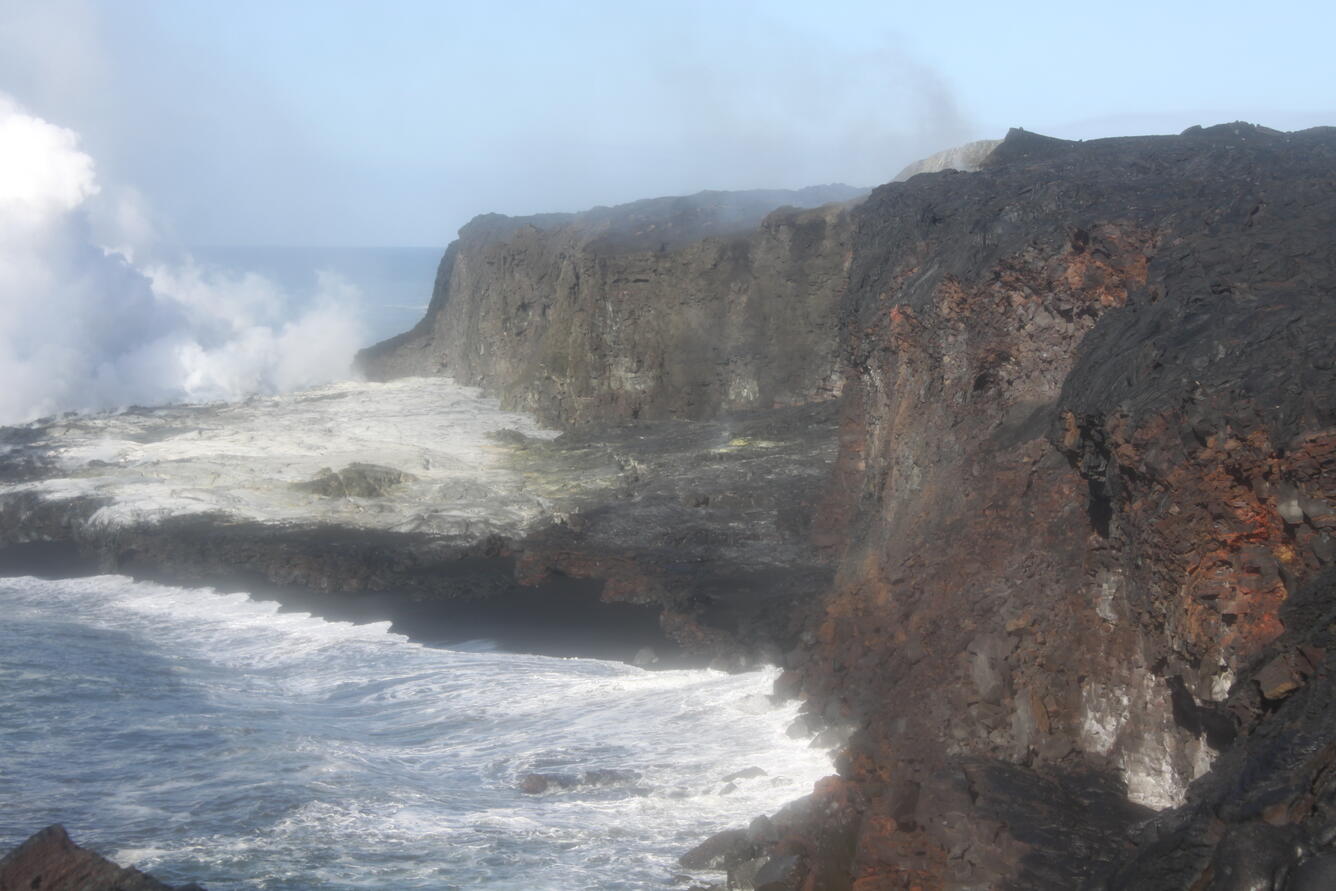
On May 3, Kīlauea Volcano's Kamokuna lava delta, which had been growing since late March, collapsed. An HVO time-lapse camera captured the sequence of events in five-minute intervals. This image shows the lava delta at 7:50 a.m. HST, a couple of hours before the collapse.
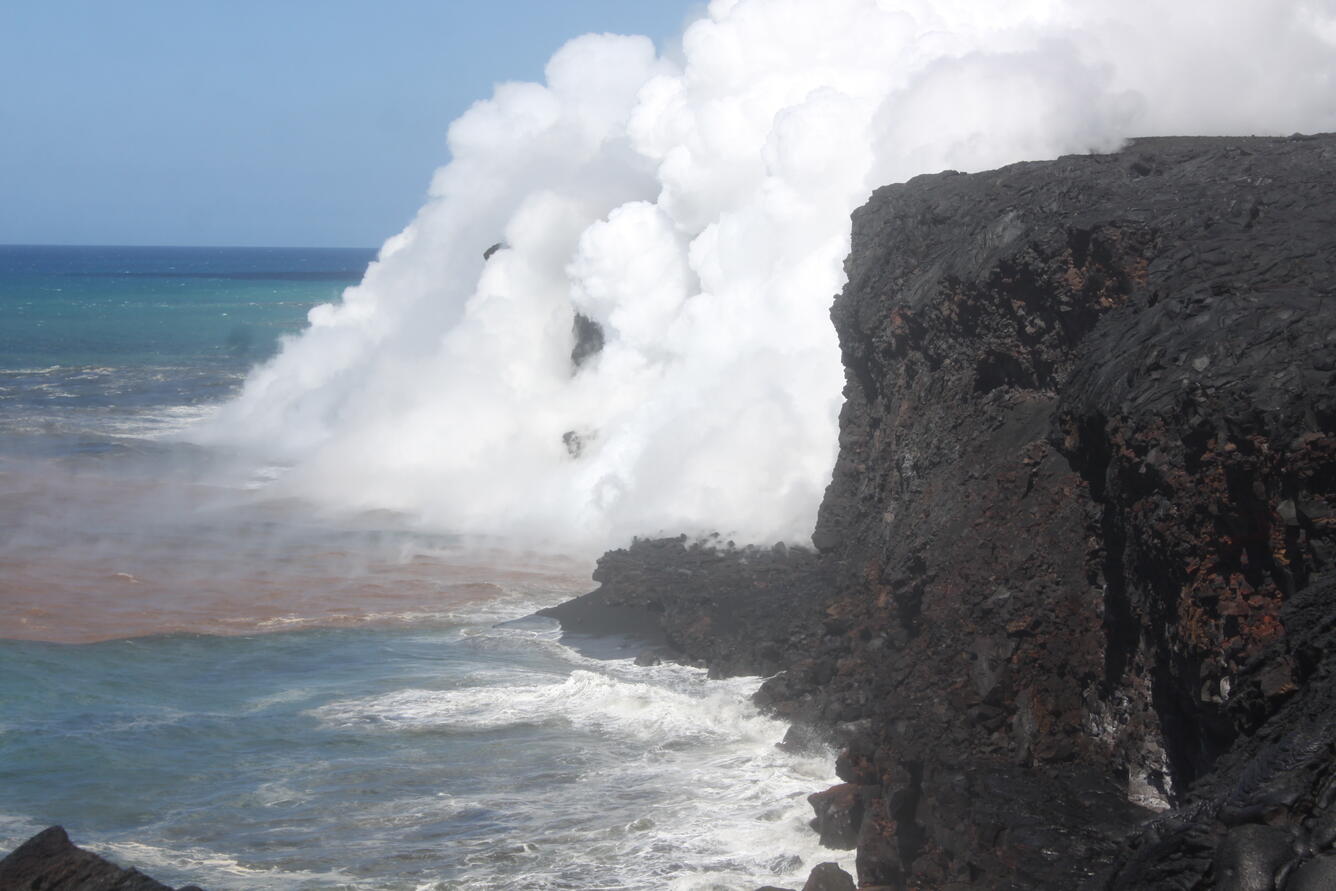
Within five minutes, between 9:55 and 10:00 a.m. HST, nearly the entire delta disappeared, collapsing into the sea. The collapsed area cut back toward the sea cliff, past the largest crack on the delta. In this image, captured at 10:05 a.m., the seawater is brown and turbulent. Large blocks of steaming rocks are visible on top of a narrow slice of the remaining delta (center). These rocks were likely washed ashore by a small, localized tsunami generated by the collapse. During the next few hours, small pieces of the remnant delta continued to flake off and disappear into the ocean.
This morning (May 4), the Kamokuna ocean entry was obscured by a thick steam plume at the base of the cliff. Sparse littoral bursts, occasionally visible through the plume, were the source of the floating, steaming lava fragments that can be seen in the ocean near the entry.