An official website of the United States government
Here's how you know
Official websites use .gov
A .gov website belongs to an official government organization in the United States.
Secure .gov websites use HTTPS
A lock () or https:// means you’ve safely connected to the .gov website. Share sensitive information only on official, secure websites.
There were clear views of the delta today (October 6), with only weak plumes being produced by the few ocean entries. Multiple pāhoehoe streams and drips entered the ocean on the east side of the delta (pictured).
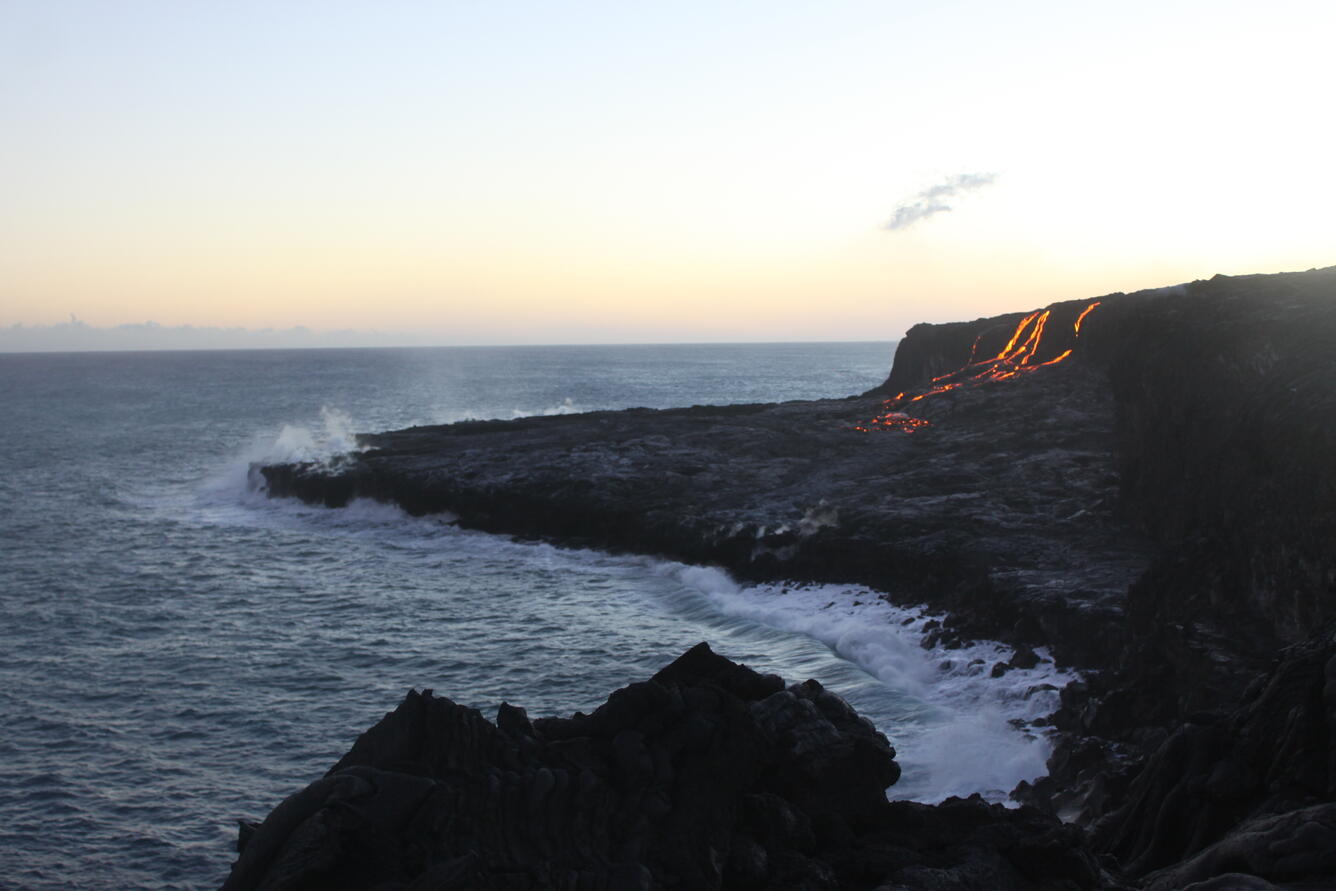
Over the past two weeks, there have been at least three breakouts within 100 m (330 ft) of the Kamokuna ocean entry. The western-most breakout (pictured above) had no visible surface breakouts on the cliff today (October 6), but was producing a nice cascading ‘A‘ā flow off the edge of the cliff and onto the delta. These lava cascades have been occurring often starting on October 1 just after 10:00 pm (HST), and consisted of both ‘A‘ā and pāhoehoe flows onto the delta. There was a weak plume originating from several lava entry points on the delta today, visible on the right side of the photo.
Image taken by a time-lapse camera of multiple lava cascades on the sea cliff on October 4 at 3:31 am (HST). Just a few of the many resulting surface flows can be seen on the delta both below the cliff and near the front, which is lit by lava and moonlight.
A small channel flowing down the cliff to the delta creates an ‘A‘ā fan at its distal tip. Many lava falls over the past week have locally built up the height of the sea cliff and covered much of the blocky rigid cliff face.