U.S. flag

An official website of the United States government

November 21, 2025

Overnight, there was strong glow from the north and south vents with brief periods of spattering. Inflationary tilt is being recorded by summit tiltmeters and several overflows from the south vent have taken place today. Models suggest that episode 37 will probably occur between November 22 to November 26 with November 23-25 mostly likely. 


On November 21, USGS Hawaiian Volcano Observatory scientists conducted an aerial overflight of the eruptive vent complex at the summit of Kīlauea. Roiling lava ponds were visible in both the north and south vents during the overflight; the north vent's incandescent pond barely visible in this aerial photo looking down from the north. A couple hours after the overflight, both vents overflowed for the first time in advance of the eruption's likely thirty-seventh lava fountaining episode, forecast for the coming days. USGS photo by L. DeSmither.
Media
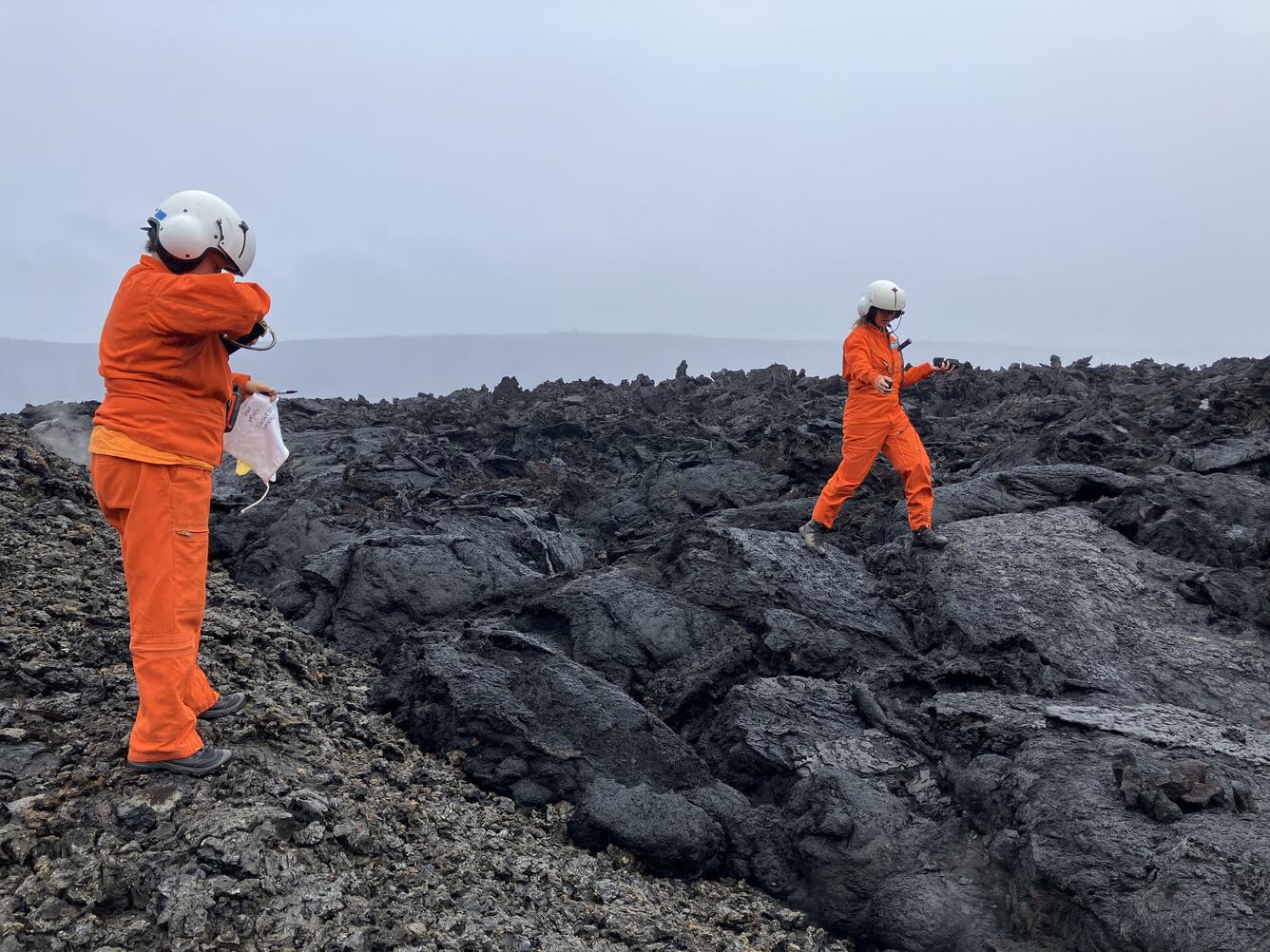
Color photograph of two scientists collecting samples from cooled lava flows
With permission from Hawai‘i Volcanoes National Park, USGS Hawaiian Volcano Observatory scientists landed briefly on the floor of Halema‘uma‘u crater on November 21 to collect lava samples from Kīlauea summit eruption episodes 34, 35, and 36. Geochemical analyses of these samples will provide information on the magma storage conditions below, informing hazard assessment of the ongoing eruption. The geologist on the right is retrieving solid samples from the cooled surface of the episode 34 lava flow (which erupted on October 1), while the other is preparing sample storage bags with notes on the time, location, and type of sample. USGS photo by M. Zoeller.
Media
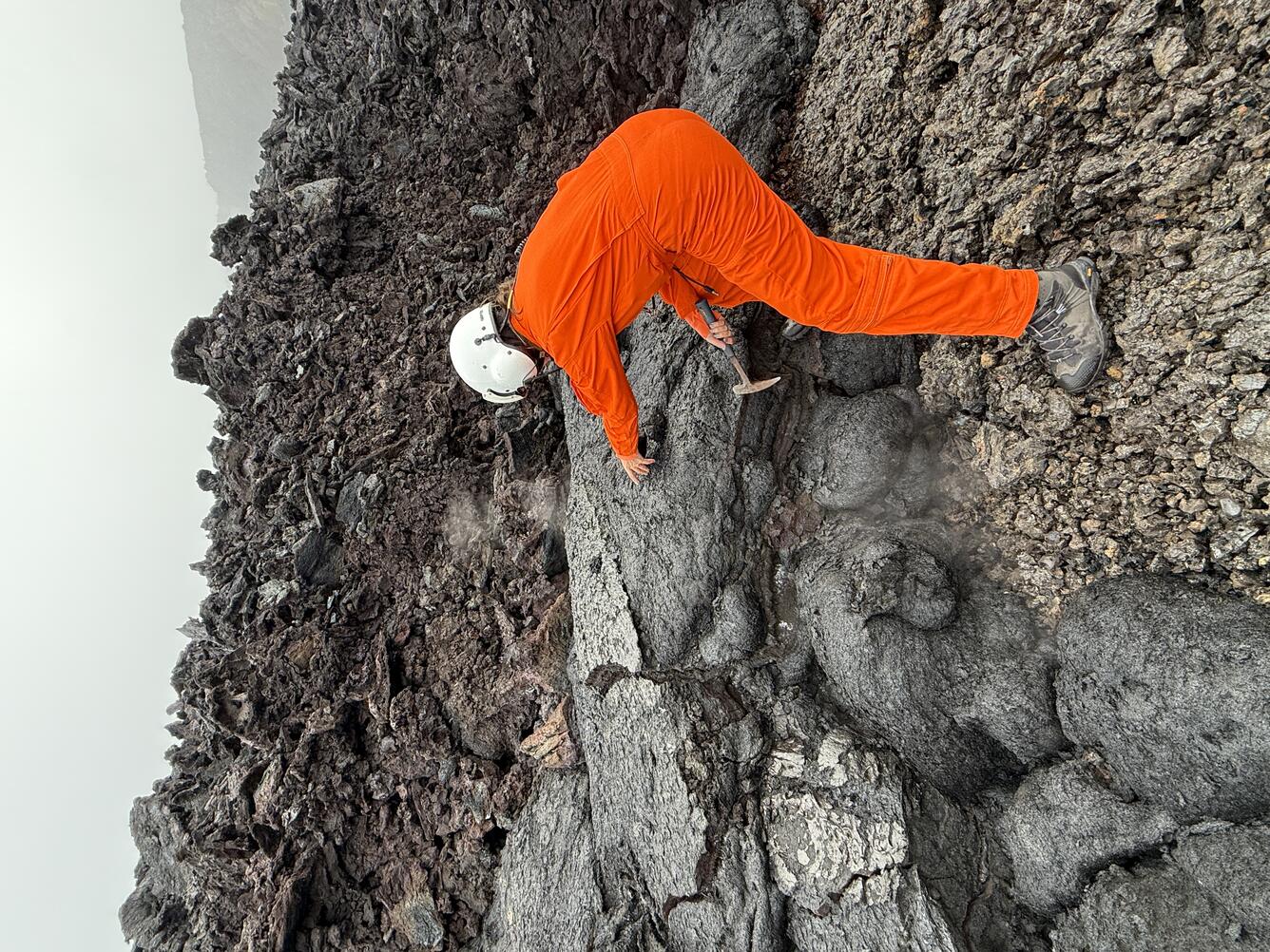
Color photograph of scientist collecting sample of cooled lava flow
On November 21, USGS Hawaiian Volcano Observatory scientists collected solid lava samples from the floor of Halema‘uma‘u crater at the summit of Kīlauea. All sampling in this area, which is significant to native Hawaiian communities, is done with permission from Hawai‘i Volcanoes National Park. This "cold sampling," distinct from sampling molten lava flows, sometimes requires the lava rock to be broken, exposing its interior structure. Here, one of the scientists is breaking the rocks down to a size that could be easily transported with them in a helicopter out of a crater. USGS photo by M. Warren.

November 18, 2025

Media
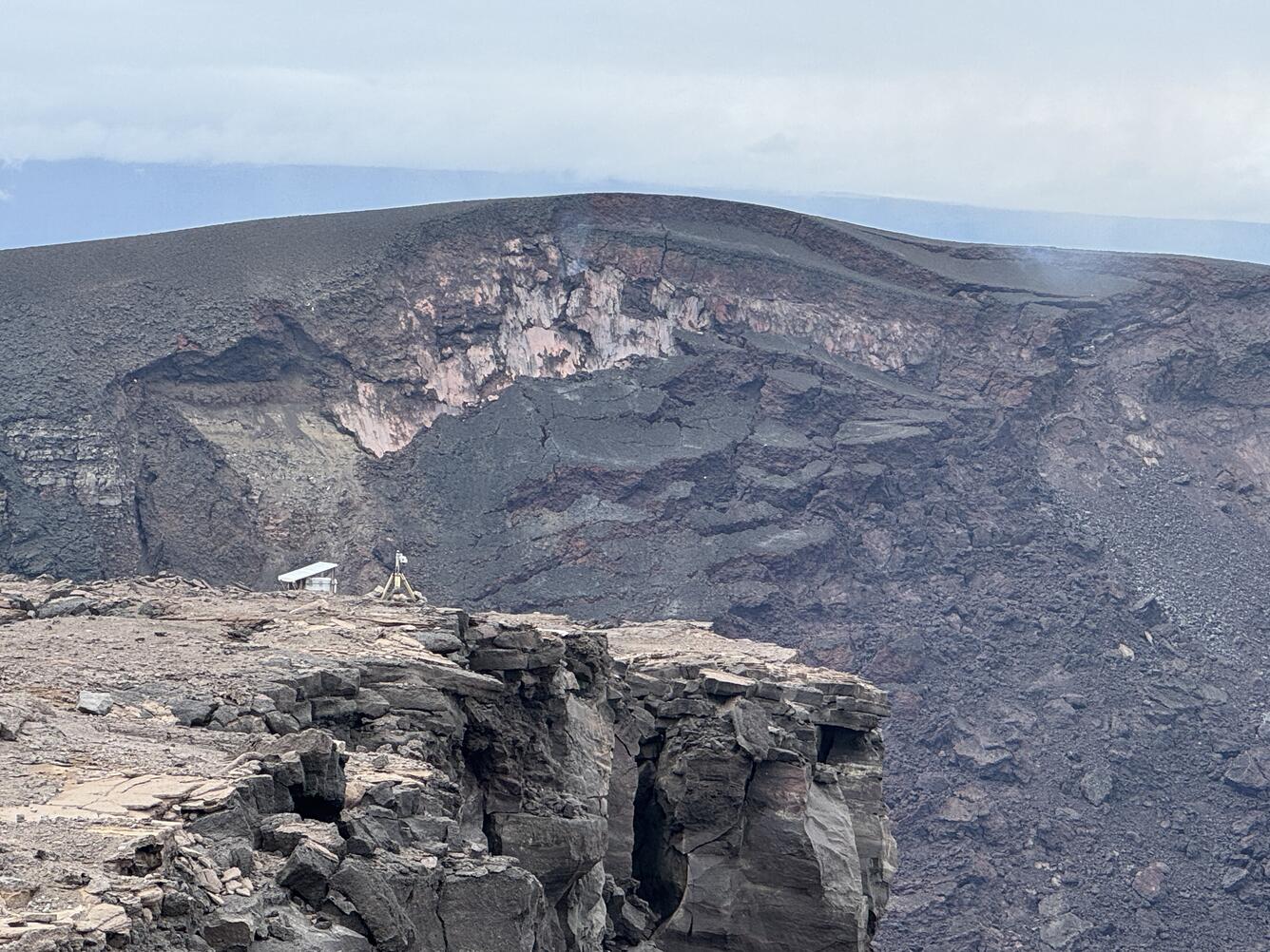
Color photograph of volcanic hill
This photo, taken on November 18 from the south rim of Halemaʻumaʻu crater, shows slumping of material from the hill formed by fallout from the recent lava fountains at Kīlauea summit. The v3cam livestream camera is visible on the rim of the crater in the middle left of the image. USGS photo by M. Patrick
Was this page helpful?