



Photo & Video Chronology – September 19, 2025 – Kīlauea summit eruption episode 33
Episode 33 of the ongoing Halemaʻumaʻu eruption started around 3:11 a.m. HST on September 19, 2025. Lava fountain heights reached 700-800 feet (210-240 meters), the highest since episode 28 in July. The fountain remains inclined to the northeast at about 60 degrees, but less than episodes 31 and 32. North vent fountains rapidly dropped and disappeared at 12:08 pm HST September 19.
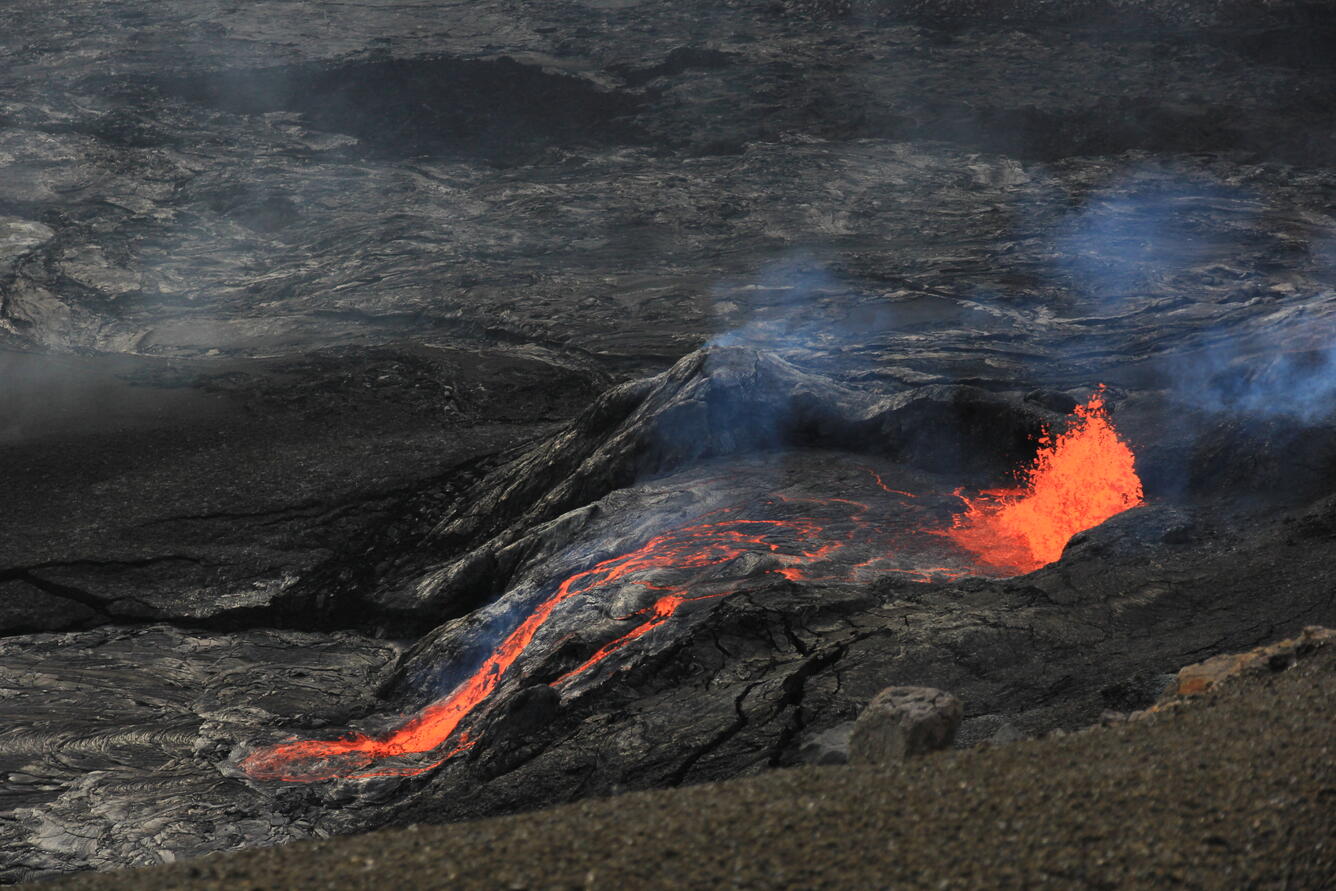
Activity at the Halema‘uma‘u summit eruption is increasing prior to episode 33. North vent is experiencing gas pistoning cycles (lava fills vent, overflows, drains). Lava flows from north vent are contained to a single dominant channel exiting the cone. North vent is approximately 20 m (65 feet) from base of the vent to the perched lava pond. Activity continues in this cycle at this time with low level dome fountains approximately 3-5 m (10-15 feet) high. USGS photo by H. Winslow.
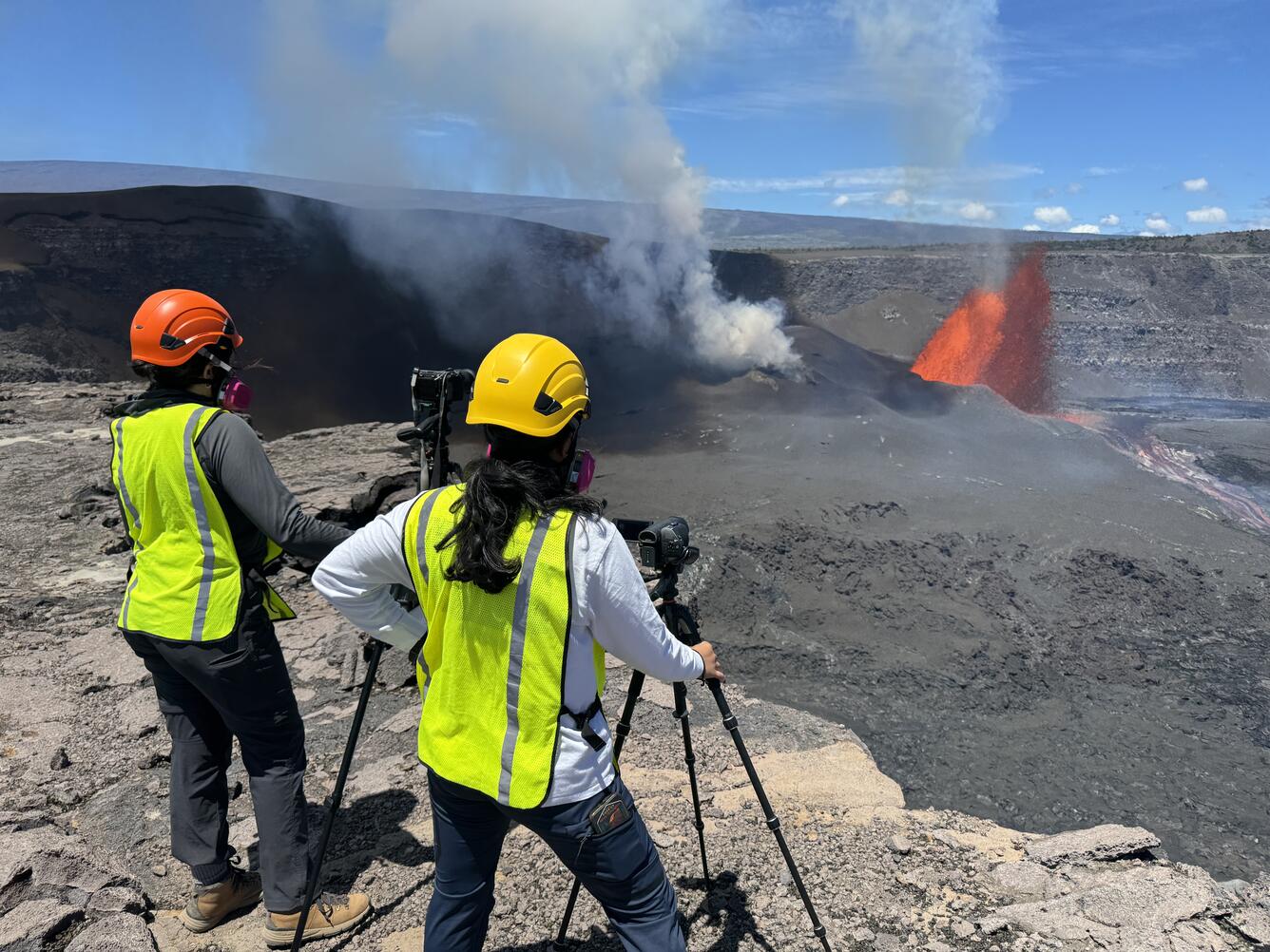
HVO geologists collect video and make visual observations of the episode 33 lava fountain, at the summit of Kīlauea. USGS photo by M. Patrick.
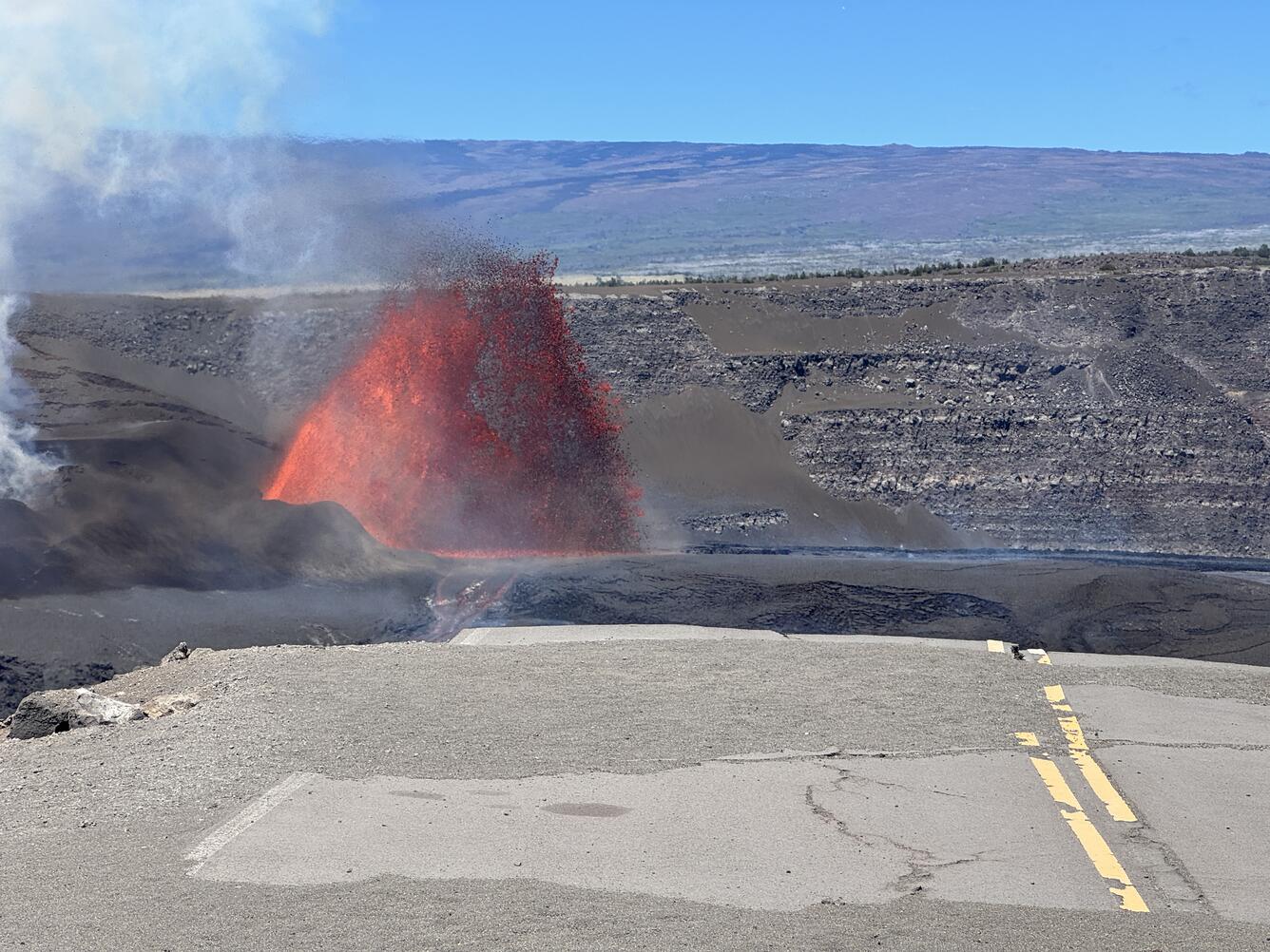
The episode 33 lava fountain from the north vent, at the summit of Kīlauea, is seen beyond the collapsed end of Crater Rim Drive. This portion of Crater Rim Drive was destroyed during the 2018 summit collapse events, and is closed to the public. USGS photo by M. Patrick.
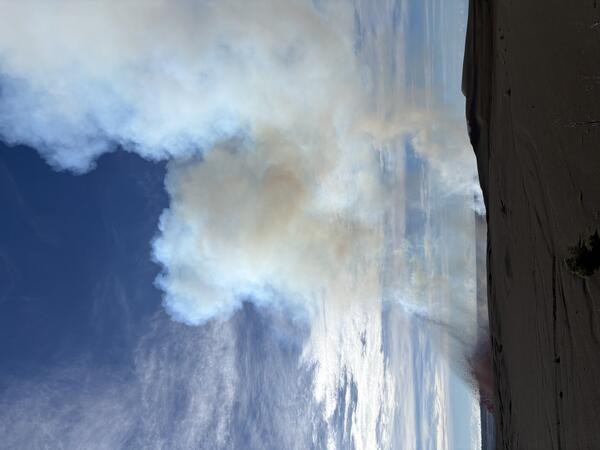
Photo of the lava fountain peeking over the crater rim and the gas plume in white lofting to the southwest with the trade winds. Photo by USGS geologist D. Downs.
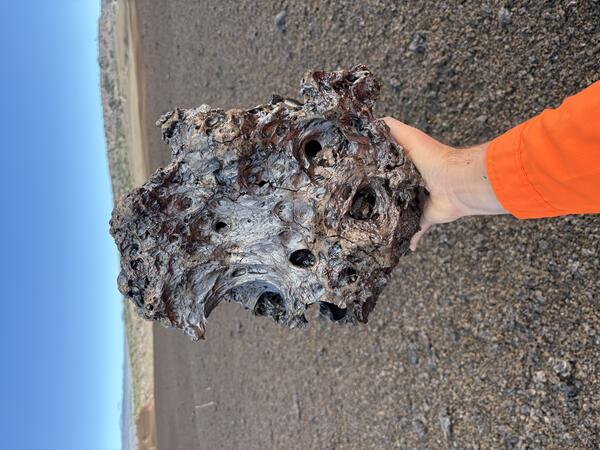
A lava bomb from the north vent above the crater rim that was found not long after it landed and cooled. As the molten bombs fly through the air, they cool and form a glassy crust with the interior full of vesicles. Most shatter into many pieces upon impact with the ground, but on rare occasions some stay mostly intact. Bombs like this one can be analyzed to help geologists understand where the magma is coming from and the processes necessary to bring it to the surface. Photo by USGS geologist D. Downs.
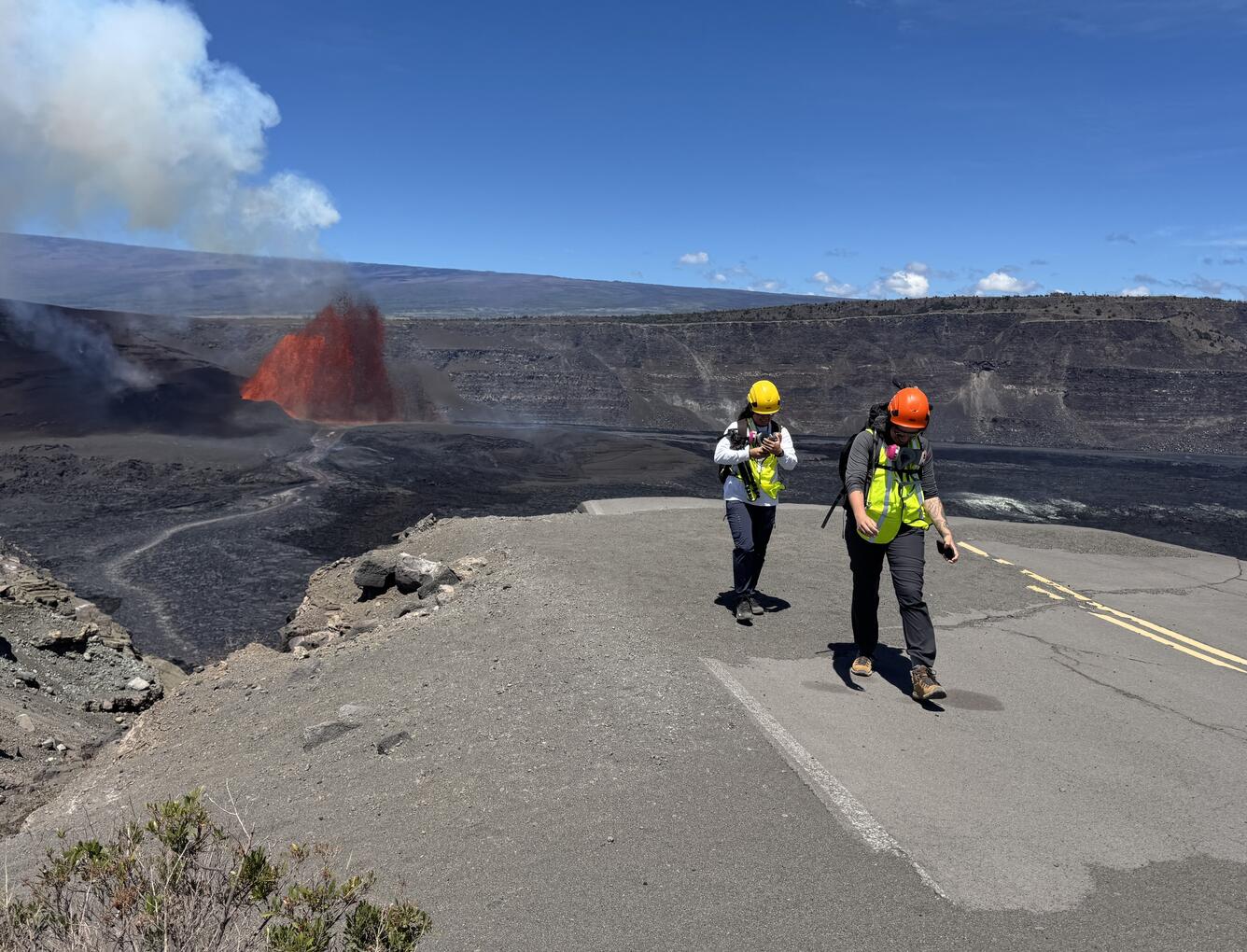
HVO geologists make an initial assessment of the episode 33 lava fountain from the collapsed end of Crater Rim Drive, at the summit of Kīlauea. This portion of Crater Rim Drive was destroyed during the 2018 summit collapse events, and is closed to the public. USGS photo by M. Patrick.
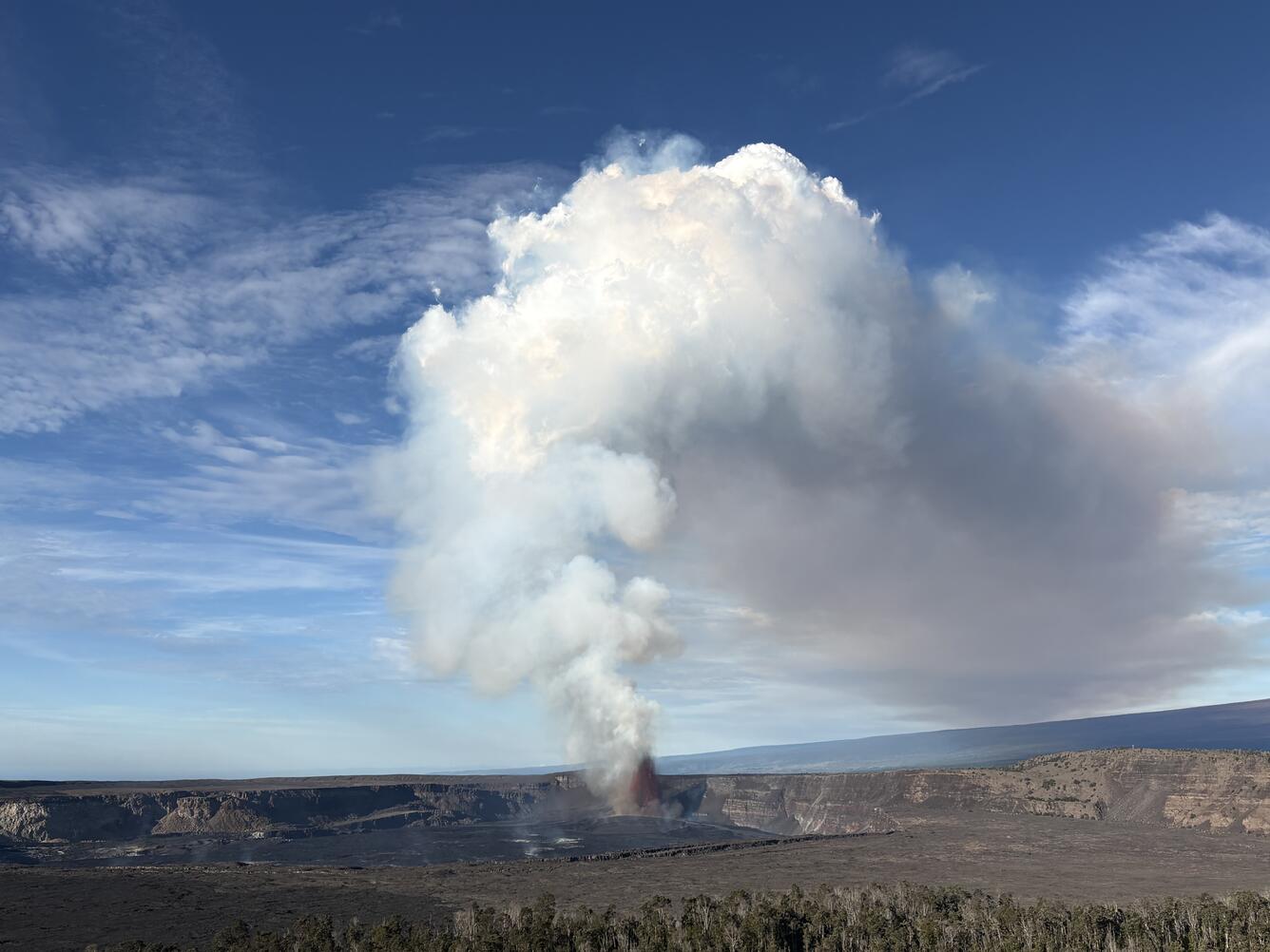
Episode 33 lava fountain from the north vent, as seen from Volcano House, on the morning of September 19, 2025, at approximately 7:15 am. The lava fountain was approximately 300–400 feet (90–120 meters). Photo by USGS geologist D. Downs.