



Get to Know a Scientist Emeritus—John Nimmo
This is the latest in a series of Get to Know posts highlighting and celebrating the contributions of exemplary Scientists Emeriti. Their work, experience, and contributions are essential to the mission of the USGS.
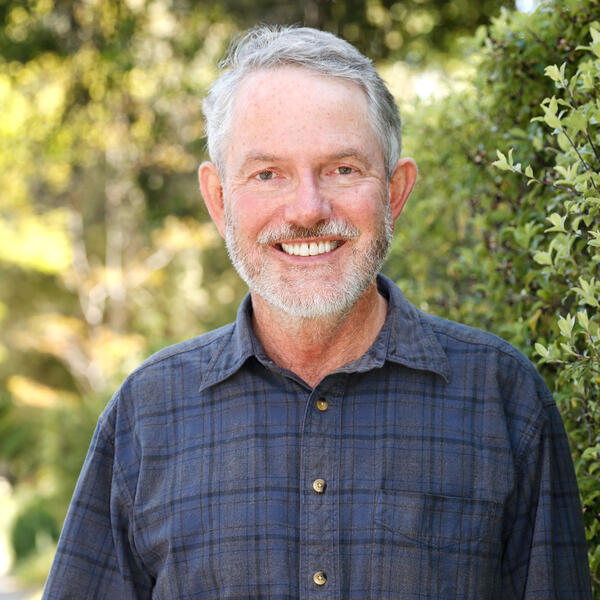
How long have you worked at the USGS, and what do you do?
I worked as an employee of the USGS for thirty-eight years and as an emeritus for five years so far. I am a research physicist specializing in water flow through the unsaturated zone—on problems related to aquifer recharge, ecosystem preservation and restoration, contaminant transport, and hydrologic impacts of climate and land-use change. My research methods include lab and field experiments, review and synthesis of scientific and historical documents, and development of theory, models, and measurement techniques. As an emeritus, I’m no longer active with lab and field work, but otherwise I continue with these approaches.
What attracted you to the position you held with the USGS?
The ability to do cutting-edge research in the National Research Program of what was then the Water Division was extremely attractive. It was important to me to be able to identify the research topics of most importance and most in need of fundamental advances in the science of water resources, and to pursue them with good support in terms of personnel, funding, and lab facilities. I also loved the idea of working close to people in a broad diversity of research fields and methodological approaches—a much greater variety than in a university department.
Did you have a favorite part of your job, and if so, what was it?
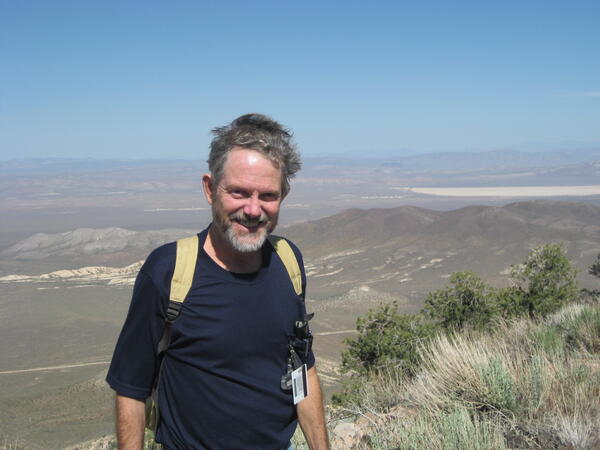
Yes, what I loved most (and still do) is what happens when I encounter a new set of results for the first time—whether it’s by myself working with raw data on a spreadsheet or when one of my team members comes into my office with a graph or table of new data. That moment of encountering something that hasn’t been seen before and starting to figure out what it means—that’s joy in science!
What are you most proud of during your career with the USGS? Or, describe a highlight of your career.
My career highlights include the many occasions I have traveled to begin field experiments in a new location and have been rapidly educated by local USGS researchers in Water Science Centers and other USGS units, in all the pertinent details of the soils, climate, topography, geology, land-use practices, and water-related economics and politics. It was always great to combine my basic process knowledge with this amazing depth of local expertise. What I am most proud of is that I helped many young people—students, interns, and postdocs—to launch their careers in scientific research.
What led you to decide to become an emeritus?
I love to do research and didn’t want to stop, but after nearly forty years, I had gotten tired of the other duties and responsibilities I had as an employee. Becoming an emeritus was the obvious solution.
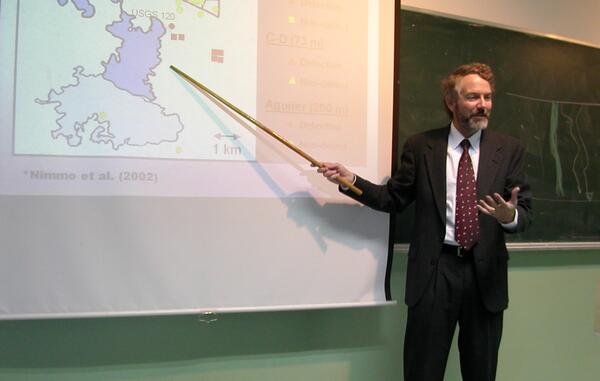
What exciting research or service activities are you currently working on, and what are you planning for the near future?
My biggest emeritus project so far has been working with a Powell Center group on the application of soil water content measurements to preferential (fast and channelized) flow of water through the unsaturated zone. Among my activities in this was to lead a group of twelve collaborators to publish a comprehensive review paper on the methodologies used for this purpose. I also continue to develop theory and models for improved prediction of preferential flow. Apart from research, I write poetry, do a lot of reading, and enjoy traveling.
If you could give your 18-year-old self one piece of advice, what would it be?
“You think you’re lacking in leadership and management skills, but these are things that can be learned. And you’re good at learning— If you work to develop skills that are important but don’t interest you, it can enhance your ability to pursue the things that you’re excited about.”