



HVO geologists observed the new eruption within Kīlauea summit caldera during an eruption-monitoring overflight the morning of September 11, 2023. Multiple minor fountains remain active in the eastern portion of Halema‘uma‘u crater floor and on the downdropped block within Kīlauea's summit caldera.
All Multimedia
Access all multimedia to include images, video, audio, webcams, before-after imagery, and more. Filter and explore with filtering options to refine search.
Filter Total Items: 24981

Kīlauea summit eruption - September 11, 2023
HVO geologists observed the new eruption within Kīlauea summit caldera during an eruption-monitoring overflight the morning of September 11, 2023. Multiple minor fountains remain active in the eastern portion of Halema‘uma‘u crater floor and on the downdropped block within Kīlauea's summit caldera.

Kīlauea summit eruption - September 11, 2023
HVO geologists observed the new eruption within Kīlauea summit caldera during an eruption-monitoring overflight the morning of September 11, 2023. Multiple minor fountains remain active in the eastern portion of Halema‘uma‘u crater floor and on the downdropped block within Kīlauea's summit caldera.
HVO geologists observed the new eruption within Kīlauea summit caldera during an eruption-monitoring overflight the morning of September 11, 2023. Multiple minor fountains remain active in the eastern portion of Halema‘uma‘u crater floor and on the downdropped block within Kīlauea's summit caldera.

Kīlauea summit eruption - September 11, 2023
HVO geologists observed the new eruption within Kīlauea summit caldera during an eruption-monitoring overflight the morning of September 11, 2023. Multiple minor fountains remain active in the eastern portion of Halema‘uma‘u crater floor and on the downdropped block within Kīlauea's summit caldera.
HVO geologists observed the new eruption within Kīlauea summit caldera during an eruption-monitoring overflight the morning of September 11, 2023. Multiple minor fountains remain active in the eastern portion of Halema‘uma‘u crater floor and on the downdropped block within Kīlauea's summit caldera.

Kīlauea summit eruption - September 11, 2023
HVO geologists observed the new eruption within Kīlauea summit caldera during an eruption-monitoring overflight the morning of September 11, 2023. Multiple minor fountains remain active in the eastern portion of Halema‘uma‘u crater floor and on the downdropped block within Kīlauea's summit caldera.
HVO geologists observed the new eruption within Kīlauea summit caldera during an eruption-monitoring overflight the morning of September 11, 2023. Multiple minor fountains remain active in the eastern portion of Halema‘uma‘u crater floor and on the downdropped block within Kīlauea's summit caldera.

Kīlauea summit eruption - September 11, 2023
HVO geologists observed the new eruption within Kīlauea summit caldera during an eruption-monitoring overflight the morning of September 11, 2023. Multiple minor fountains remain active in the eastern portion of Halema‘uma‘u crater floor and on the downdropped block within Kīlauea's summit caldera.
HVO geologists observed the new eruption within Kīlauea summit caldera during an eruption-monitoring overflight the morning of September 11, 2023. Multiple minor fountains remain active in the eastern portion of Halema‘uma‘u crater floor and on the downdropped block within Kīlauea's summit caldera.

Kīlauea summit eruption - September 11, 2023
HVO geologists observed the new eruption within Kīlauea summit caldera during an eruption-monitoring overflight the morning of September 11, 2023. Multiple minor fountains remain active in the eastern portion of Halema‘uma‘u crater floor and on the downdropped block within Kīlauea's summit caldera.
HVO geologists observed the new eruption within Kīlauea summit caldera during an eruption-monitoring overflight the morning of September 11, 2023. Multiple minor fountains remain active in the eastern portion of Halema‘uma‘u crater floor and on the downdropped block within Kīlauea's summit caldera.

Kīlauea summit eruption overflight video - September 11, 2023
Kīlauea summit eruption overflight video - September 11, 2023The new eruption at the summit of Kīlauea volcano continues. Numerous fountains remain active on the downdropped block east of Halema‘uma‘u crater, with lava pouring west onto the crater floor.
Kīlauea summit eruption overflight video - September 11, 2023
Kīlauea summit eruption overflight video - September 11, 2023The new eruption at the summit of Kīlauea volcano continues. Numerous fountains remain active on the downdropped block east of Halema‘uma‘u crater, with lava pouring west onto the crater floor.

Kīlauea summit eruption sampling - September 11, 2023
Kīlauea summit eruption sampling - September 11, 2023During the morning of September 11, Hawaiian Volcano Observatory geologists conducted an overflight of the new eruption within the Kīlauea summit caldera. The eruption is occurring in the east portion of Halemaʻumaʻu crater and on the downdropped block to the east, which formed during the 2018 summit collapse.
Kīlauea summit eruption sampling - September 11, 2023
Kīlauea summit eruption sampling - September 11, 2023During the morning of September 11, Hawaiian Volcano Observatory geologists conducted an overflight of the new eruption within the Kīlauea summit caldera. The eruption is occurring in the east portion of Halemaʻumaʻu crater and on the downdropped block to the east, which formed during the 2018 summit collapse.
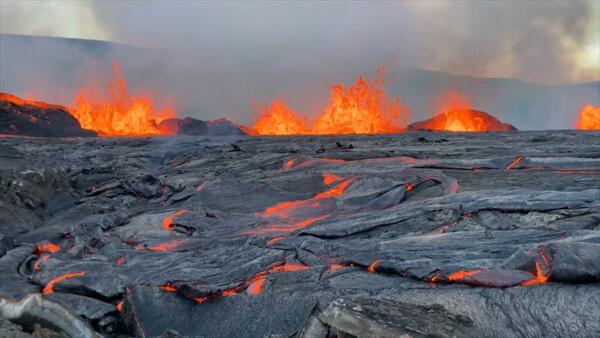
New vents erupting at Kīlauea volcano summit - September 11, 2023
New vents erupting at Kīlauea volcano summit - September 11, 2023During an HVO eruption monitoring overflight on September 11, 2023, HVO geologist were able to land on the downdropped block within Kīlauea's summit caldera. They observed the line of erupting vents, several of which are visible in this video, as they searched for a safe location to collect a lava sample.
New vents erupting at Kīlauea volcano summit - September 11, 2023
New vents erupting at Kīlauea volcano summit - September 11, 2023During an HVO eruption monitoring overflight on September 11, 2023, HVO geologist were able to land on the downdropped block within Kīlauea's summit caldera. They observed the line of erupting vents, several of which are visible in this video, as they searched for a safe location to collect a lava sample.

B1cam captures the onset of Kīlauea summit eruption - September 10, 2023
B1cam captures the onset of Kīlauea summit eruption - September 10, 2023The B1cam, located on the east margin of the down-dropped block within Kīlauea caldera, captured the start of another eruption at the summit of Kīlauea volcano that began at 3:13 p.m. on September 10, 2023. This video shows a lava fountain bursting from a degassing area in the eastern portion of Halemaʻumaʻu crater, with the downdropped block in the foreground.
B1cam captures the onset of Kīlauea summit eruption - September 10, 2023
B1cam captures the onset of Kīlauea summit eruption - September 10, 2023The B1cam, located on the east margin of the down-dropped block within Kīlauea caldera, captured the start of another eruption at the summit of Kīlauea volcano that began at 3:13 p.m. on September 10, 2023. This video shows a lava fountain bursting from a degassing area in the eastern portion of Halemaʻumaʻu crater, with the downdropped block in the foreground.

B2cam captures the onset of Kīlauea summit eruption - September 10, 2023
B2cam captures the onset of Kīlauea summit eruption - September 10, 2023Another eruption at the summit of Kīlauea volcano began at 3:13 p.m. on September 10, 2023. This video, captured by the Hawaiian Volcano Observatory's B2cam on the east rim of Halemaʻumaʻu crater, shows the opening phase of the eruption. A lava fountain bursts from a degassing area in the eastern portion of Halemaʻumaʻu crater.
B2cam captures the onset of Kīlauea summit eruption - September 10, 2023
B2cam captures the onset of Kīlauea summit eruption - September 10, 2023Another eruption at the summit of Kīlauea volcano began at 3:13 p.m. on September 10, 2023. This video, captured by the Hawaiian Volcano Observatory's B2cam on the east rim of Halemaʻumaʻu crater, shows the opening phase of the eruption. A lava fountain bursts from a degassing area in the eastern portion of Halemaʻumaʻu crater.

Eruption at the summit of Kilauea volcano
An eruption at the summit of Kīlauea volcano began on September 10, 2023. The main fountain, which HVO geologists estimate is approximately 50 meters tall, is on the eastern margin of Halemaʻumaʻu crater. As of approximately 4:30 p.m.
An eruption at the summit of Kīlauea volcano began on September 10, 2023. The main fountain, which HVO geologists estimate is approximately 50 meters tall, is on the eastern margin of Halemaʻumaʻu crater. As of approximately 4:30 p.m.

Eruption at the summit of Kīlauea
From the Uēkahuna overlook, the new eruption at the summit of Kīlauea is visible. The farthest east fissure is near the to margin of downdropped block that formed during the 2018 summit collapse. The base of the main fissure, which is farthest west (right on the image), is approximately 70 meters wide.
From the Uēkahuna overlook, the new eruption at the summit of Kīlauea is visible. The farthest east fissure is near the to margin of downdropped block that formed during the 2018 summit collapse. The base of the main fissure, which is farthest west (right on the image), is approximately 70 meters wide.

Eruption at the summit of Kīlauea
The new eruption at the summit of Kīlauea volcano on September 10, 2023. After about an hour of increased seismic activity and uplift, HVO scientists observed the start of the eruption at approximately 3:15 p.m. HST.
The new eruption at the summit of Kīlauea volcano on September 10, 2023. After about an hour of increased seismic activity and uplift, HVO scientists observed the start of the eruption at approximately 3:15 p.m. HST.

Eruption at the summit of Kīlauea
The new eruption at the summit of Kīlauea volcano on September 10, 2023. After about an hour of increased seismic activity and uplift, HVO scientists observed the start of the eruption at approximately 3:15 p.m. HST.
The new eruption at the summit of Kīlauea volcano on September 10, 2023. After about an hour of increased seismic activity and uplift, HVO scientists observed the start of the eruption at approximately 3:15 p.m. HST.

Eruption at the summit of Kīlauea
The new eruption at the summit of Kīlauea volcano on September 10, 2023. After about an hour of increased seismic activity and uplift, HVO scientists observed the start of the eruption at approximately 3:15 p.m. HST.
The new eruption at the summit of Kīlauea volcano on September 10, 2023. After about an hour of increased seismic activity and uplift, HVO scientists observed the start of the eruption at approximately 3:15 p.m. HST.

Eruption at the summit of Kīlauea
The new eruption at the summit of Kīlauea volcano on September 10, 2023. After about an hour of increased seismic activity and uplift, HVO scientists observed the start of the eruption at approximately 3:15 p.m. HST.
The new eruption at the summit of Kīlauea volcano on September 10, 2023. After about an hour of increased seismic activity and uplift, HVO scientists observed the start of the eruption at approximately 3:15 p.m. HST.

Eruption at the summit of Kīlauea
The new eruption at the summit of Kīlauea volcano on September 10, 2023. After about an hour of increased seismic activity and uplift, HVO scientists observed the start of the eruption at approximately 3:15 p.m. HST.
The new eruption at the summit of Kīlauea volcano on September 10, 2023. After about an hour of increased seismic activity and uplift, HVO scientists observed the start of the eruption at approximately 3:15 p.m. HST.

Eruption at the summit of Kīlauea
The new eruption at the summit of Kīlauea volcano on September 10, 2023. After about an hour of increased seismic activity and uplift, HVO scientists observed the start of the eruption at approximately 3:15 p.m. HST.
The new eruption at the summit of Kīlauea volcano on September 10, 2023. After about an hour of increased seismic activity and uplift, HVO scientists observed the start of the eruption at approximately 3:15 p.m. HST.

Eruption at the summit of Kīlauea
The new eruption at the summit of Kīlauea volcano on September 10, 2023. After about an hour of increased seismic activity and uplift, HVO scientists observed the start of the eruption at approximately 3:15 p.m. HST.
The new eruption at the summit of Kīlauea volcano on September 10, 2023. After about an hour of increased seismic activity and uplift, HVO scientists observed the start of the eruption at approximately 3:15 p.m. HST.

Eruption at the summit of Kīlauea
The new eruption at the summit of Kīlauea volcano on September 10, 2023. After about an hour of increased seismic activity and uplift, HVO scientists observed the start of the eruption at approximately 3:15 p.m. HST.
The new eruption at the summit of Kīlauea volcano on September 10, 2023. After about an hour of increased seismic activity and uplift, HVO scientists observed the start of the eruption at approximately 3:15 p.m. HST.