USGS gage 05293000 YELLOW BANK RIVER NEAR ODESSA, MN
USGS gage 05293000 YELLOW BANK RIVER NEAR ODESSA, MNUSGS gage 05293000 YELLOW BANK RIVER NEAR ODESSA, MN with High River Water Level From Flood.


Official websites use .gov
A .gov website belongs to an official government organization in the United States.

Secure .gov websites use HTTPS
A lock () or https:// means you’ve safely connected to the .gov website. Share sensitive information only on official, secure websites.

Access all multimedia to include images, video, audio, webcams, before-after imagery, and more. Filter and explore with filtering options to refine search.

USGS gage 05293000 YELLOW BANK RIVER NEAR ODESSA, MN with High River Water Level From Flood.
USGS gage 05293000 YELLOW BANK RIVER NEAR ODESSA, MN with High River Water Level From Flood.

USGS hydrologist Tim Cowdery titrates water alkalinity in a mobile sampling van using an electronic field form.
USGS hydrologist Tim Cowdery titrates water alkalinity in a mobile sampling van using an electronic field form.

A frontal view of the USGS Water Science Center in Louisville, Kentucky.
A frontal view of the USGS Water Science Center in Louisville, Kentucky.

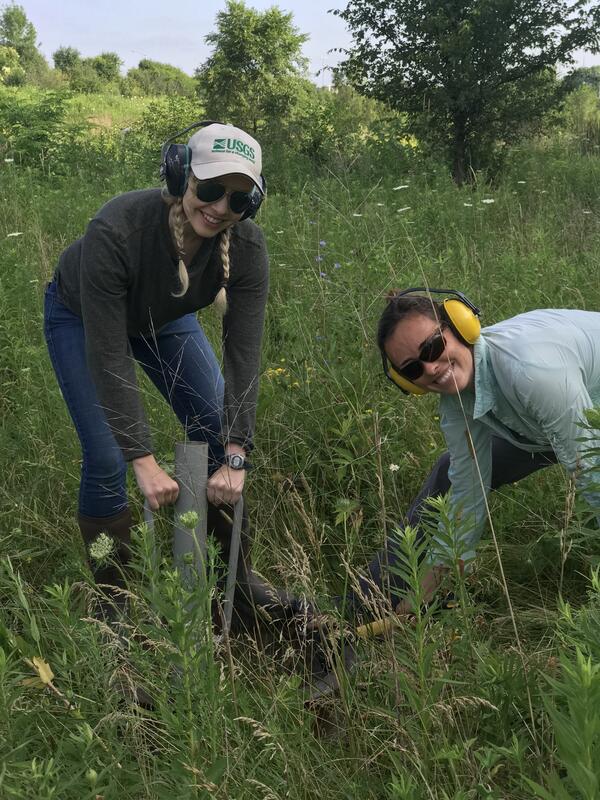
In this photo, USGS scientists Megan Haserodt (Hydrologist) and Jenelle Wempner (Student Intern) install a double ring infiltrometer along a recreated floodplain of Underwood Creek, a tributary to the Milwaukee River and Lake Michigan in Milwaukee, Wisconsin.
In this photo, USGS scientists Megan Haserodt (Hydrologist) and Jenelle Wempner (Student Intern) install a double ring infiltrometer along a recreated floodplain of Underwood Creek, a tributary to the Milwaukee River and Lake Michigan in Milwaukee, Wisconsin.

Northeast Region Photo Contest, August 2019, People
View of Half Dome from approximately 2,000’ up El Capitan (Mescalito)
Northeast Region Photo Contest, August 2019, People
View of Half Dome from approximately 2,000’ up El Capitan (Mescalito)

View South from Wolverine Glacier
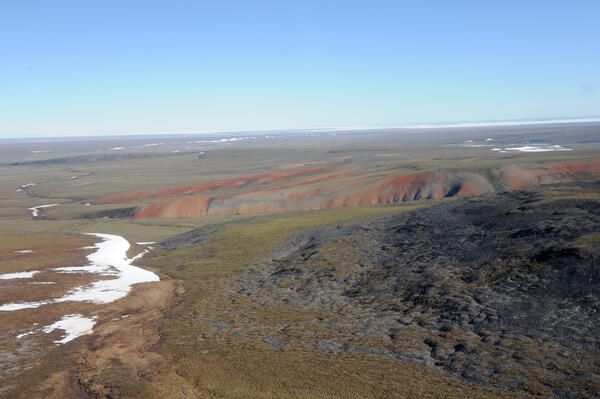
View to northeast from southwestern Arctic National Wildlife Refuge-1002 Area with ice in Camden Bay in distance. In foreground, red-weathering rocks are Hue Shale (oil-prone source rock with is present throughout 1002 Area) and dark gray rocks are Kemik Sandstone (lateral equivalent to Thomson sandstone, main reservoir in Pt. Thomson field).
View to northeast from southwestern Arctic National Wildlife Refuge-1002 Area with ice in Camden Bay in distance. In foreground, red-weathering rocks are Hue Shale (oil-prone source rock with is present throughout 1002 Area) and dark gray rocks are Kemik Sandstone (lateral equivalent to Thomson sandstone, main reservoir in Pt. Thomson field).

View to the southeast from near the Canning River Delta. Visible in foreground are permafrost polygons cut by caribou trails.
Arctic National Wildlife Refuge
View to the southeast from near the Canning River Delta. Visible in foreground are permafrost polygons cut by caribou trails.
Arctic National Wildlife Refuge

Well head of Sourdough oil discovery on Alaska state lease less than one mile west of Arctic National Wildlife Refuge-1002 Area showing minimal disturbance of permafrost polygons.
Well head of Sourdough oil discovery on Alaska state lease less than one mile west of Arctic National Wildlife Refuge-1002 Area showing minimal disturbance of permafrost polygons.

A well at a restored prairie on Lake Agassiz beach ridge, Glacial Ridge National Wildlife Refuge
A well at a restored prairie on Lake Agassiz beach ridge, Glacial Ridge National Wildlife Refuge

Northward view in western Arctic National Wildlife Refuge-1002 Area with ice in Camden Bay in distance. North sloping, tundra-covered surface is typical of coastal plain.
Northward view in western Arctic National Wildlife Refuge-1002 Area with ice in Camden Bay in distance. North sloping, tundra-covered surface is typical of coastal plain.

View to northeast from western Sadlerochit Mountains near the Tamayariak River. This gently rolling topography is typical of the southern coastal plain.
View to northeast from western Sadlerochit Mountains near the Tamayariak River. This gently rolling topography is typical of the southern coastal plain.

Ephemeral wetlands at Glacial Ridge National Wildlife Refuge
Ephemeral wetlands at Glacial Ridge National Wildlife Refuge

Scientists at the U.S. Geological Survey Wetland and Aquatic Research Center study important aspects of wetlands, such as the flow and quality of water, the chemistry of soil, and the plants and animals which call this ecosystem home.
Scientists at the U.S. Geological Survey Wetland and Aquatic Research Center study important aspects of wetlands, such as the flow and quality of water, the chemistry of soil, and the plants and animals which call this ecosystem home.

Scientists at the U.S. Geological Survey Wetland and Aquatic Research Center study important aspects of wetlands, such as the flow and quality of water, the chemistry of soil, and the plants and animals which call this ecosystem home.
Scientists at the U.S. Geological Survey Wetland and Aquatic Research Center study important aspects of wetlands, such as the flow and quality of water, the chemistry of soil, and the plants and animals which call this ecosystem home.

Scientists at the U.S. Geological Survey Wetland and Aquatic Research Center (www.usgs.gov/warc) study important aspects of wetlands, such as the flow and quality of water, the chemistry of soil, and the plants and animals which call this ecosystem home.
Scientists at the U.S. Geological Survey Wetland and Aquatic Research Center (www.usgs.gov/warc) study important aspects of wetlands, such as the flow and quality of water, the chemistry of soil, and the plants and animals which call this ecosystem home.

Northeast Region Photo Contest Winner | June 2019 | People
Will Dougherty carrying snapping turtle
Northeast Region Photo Contest Winner | June 2019 | People
Will Dougherty carrying snapping turtle

Scientists at the U.S. Geological Survey Wetland and Aquatic Research Center (www.usgs.gov/warc) study important aspects of wetlands, such as the flow and quality of water, the chemistry of soil, and the plants and animals which call this ecosystem home.
Scientists at the U.S. Geological Survey Wetland and Aquatic Research Center (www.usgs.gov/warc) study important aspects of wetlands, such as the flow and quality of water, the chemistry of soil, and the plants and animals which call this ecosystem home.

Scientists at the U.S. Geological Survey Wetland and Aquatic Research Center (www.usgs.gov/warc) study important aspects of wetlands, such as the flow and quality of water, the chemistry of soil, and the plants and animals which call this ecosystem home.
Scientists at the U.S. Geological Survey Wetland and Aquatic Research Center (www.usgs.gov/warc) study important aspects of wetlands, such as the flow and quality of water, the chemistry of soil, and the plants and animals which call this ecosystem home.

This is remote capture image of a Yosemite toad seen crossing beneath "toad road" structure built atop a forest road in the Sierra National Forest. Reseachers are exploring tools, such as this elevated road structure, or "toad road," to reduce vehicle strikes to this threatened species.
This is remote capture image of a Yosemite toad seen crossing beneath "toad road" structure built atop a forest road in the Sierra National Forest. Reseachers are exploring tools, such as this elevated road structure, or "toad road," to reduce vehicle strikes to this threatened species.