Kīlauea LERZ Fissures and Flows, May 28, 3:00 p.m.
Kīlauea LERZ Fissures and Flows, May 28, 3:00 p.m.Map as of 3:00 p.m. HST, May 28, 2018. Shaded purple areas indicate lava flows erupted in 1840, 1955, 1960, and 2014-2015.


Official websites use .gov
A .gov website belongs to an official government organization in the United States.

Secure .gov websites use HTTPS
A lock () or https:// means you’ve safely connected to the .gov website. Share sensitive information only on official, secure websites.

Access all multimedia to include images, video, audio, webcams, before-after imagery, and more. Filter and explore with filtering options to refine search.

Map as of 3:00 p.m. HST, May 28, 2018. Shaded purple areas indicate lava flows erupted in 1840, 1955, 1960, and 2014-2015.
Map as of 3:00 p.m. HST, May 28, 2018. Shaded purple areas indicate lava flows erupted in 1840, 1955, 1960, and 2014-2015.

View of the fissure complex looking toward the southwest (uprift) during this afternoon's overflight at about 1:15 p.m. HST. The small lava flows spreading to the southeast from the fissure complex (lower middle) originate in the area of between fissures 16 and 18.
View of the fissure complex looking toward the southwest (uprift) during this afternoon's overflight at about 1:15 p.m. HST. The small lava flows spreading to the southeast from the fissure complex (lower middle) originate in the area of between fissures 16 and 18.

View of the fissurecomplex is toward the southeast during this afternoon's overflight of the lower East Rift Zone at about 1:15 p.m. HST. The lava channel in middle of photograph is filling with lava erupted from fissure 22.
View of the fissurecomplex is toward the southeast during this afternoon's overflight of the lower East Rift Zone at about 1:15 p.m. HST. The lava channel in middle of photograph is filling with lava erupted from fissure 22.

Close view of lava channel in middle of the lava flow erupting from fissure 8 during this morning's overflight at about 7 a.m. HST. The tallest lava fountain is fissure 8, active since yesterday evening. The eruption rate at fissure 8 diminished significantly later in the morning.
Close view of lava channel in middle of the lava flow erupting from fissure 8 during this morning's overflight at about 7 a.m. HST. The tallest lava fountain is fissure 8, active since yesterday evening. The eruption rate at fissure 8 diminished significantly later in the morning.

Aerial view of active lava flow crossing Pohoiki Road during an overflight this morning about 7 a.m. HST. Pohoiki Road cuts through middle of photograph.
Aerial view of active lava flow crossing Pohoiki Road during an overflight this morning about 7 a.m. HST. Pohoiki Road cuts through middle of photograph.

USGS Hawaiian Volcano Observatory status of Kilauea volcano in Hawaii on May 28, 2018.
USGS Hawaiian Volcano Observatory status of Kilauea volcano in Hawaii on May 28, 2018.

Ash rises above Halema‘uma‘u within Kīlauea's summit caldera in this May 27, 2018, telephoto image from near Volcano House Hotel in Hawai‘i Volcanoes National Park.
Ash rises above Halema‘uma‘u within Kīlauea's summit caldera in this May 27, 2018, telephoto image from near Volcano House Hotel in Hawai‘i Volcanoes National Park.

On May 27, 2018, the Department of Interior Unmanned Aircraft Systems (UAS) Kīlauea response team was conducting mapping missions in the lower East Rift Zone to monitor lava flow advancement rates and direction toward Highway 132 and populated areas.
On May 27, 2018, the Department of Interior Unmanned Aircraft Systems (UAS) Kīlauea response team was conducting mapping missions in the lower East Rift Zone to monitor lava flow advancement rates and direction toward Highway 132 and populated areas.

Aerial view of the eastern-most end of the fissure complex (top right) and active lava channels and inactive flows south of the fissures (toward left side of photo) at about 12:30 p.m. HST; the ocean is out of view left side of photo. In this view, fissure 22 in top right is supplying most of the lava to the active channel.
Aerial view of the eastern-most end of the fissure complex (top right) and active lava channels and inactive flows south of the fissures (toward left side of photo) at about 12:30 p.m. HST; the ocean is out of view left side of photo. In this view, fissure 22 in top right is supplying most of the lava to the active channel.

This image shows radar data acquired by the European Space Agency's Sentinel-1 satellite over Kīlauea Volcano on May 19 at 6:30 PM HST (left) compared to May 25 at 6:30 PM HST (right). The satellite transmits a radar signal toward the surface and measures the strength of the return, with bright areas indicating a strong return and dark areas a weak return.
This image shows radar data acquired by the European Space Agency's Sentinel-1 satellite over Kīlauea Volcano on May 19 at 6:30 PM HST (left) compared to May 25 at 6:30 PM HST (right). The satellite transmits a radar signal toward the surface and measures the strength of the return, with bright areas indicating a strong return and dark areas a weak return.

Downrift view of fissure 7 and a line of low lava fountains on Kīlauea Volcano's lower East Rift Zone. Fissure 7 activity increased overnight, with
Downrift view of fissure 7 and a line of low lava fountains on Kīlauea Volcano's lower East Rift Zone. Fissure 7 activity increased overnight, with

Aerial view of the ocean-entry areas at about 12:30 p.m. HST. Lava flowing into the ocean diminished overnight and this morning (note lack of obvious plume at the entry areas). View is toward the northwest.
Aerial view of the ocean-entry areas at about 12:30 p.m. HST. Lava flowing into the ocean diminished overnight and this morning (note lack of obvious plume at the entry areas). View is toward the northwest.

Pāhoehoe lava advancing west from fissure 7 (lava fountain in background) on Leilani Avenue. Fissure 7 activity increased overnig
Pāhoehoe lava advancing west from fissure 7 (lava fountain in background) on Leilani Avenue. Fissure 7 activity increased overnig

An aerial view, looking west, of the two active ocean entries on Kīlauea Volcano's lower East Rift Zone. The large white plume (foreground) is the eastern ocean entry; the weaker, western plume can be seen in the distance.
An aerial view, looking west, of the two active ocean entries on Kīlauea Volcano's lower East Rift Zone. The large white plume (foreground) is the eastern ocean entry; the weaker, western plume can be seen in the distance.

A UAS (Unmanned Aircraft Systems) mission during this past week documented the widening of the Overlook vent. Earthquakes in the Kīlauea Volcano's summit region continue as the area subsides and adjusts to the withdrawa
A UAS (Unmanned Aircraft Systems) mission during this past week documented the widening of the Overlook vent. Earthquakes in the Kīlauea Volcano's summit region continue as the area subsides and adjusts to the withdrawa

This ‘a‘ā flow, erupted from fissures 7 and 21, was approximately 3–4 meters (yards) high at the flow front and slowly advancing to the northeast in the Leilani Estates subdivision around 10:30 a.m. HST today.
This ‘a‘ā flow, erupted from fissures 7 and 21, was approximately 3–4 meters (yards) high at the flow front and slowly advancing to the northeast in the Leilani Estates subdivision around 10:30 a.m. HST today.

USGS Hawaiian Volcano Observatory status of Kilauea volcano in Hawaii on May 26, 2018.
USGS Hawaiian Volcano Observatory status of Kilauea volcano in Hawaii on May 26, 2018.

Map as of 2:00 p.m. HST, May 25. Shaded purple areas indicate lava flows erupted in 1840, 1955, 1960, and 2014-2015.
Map as of 2:00 p.m. HST, May 25. Shaded purple areas indicate lava flows erupted in 1840, 1955, 1960, and 2014-2015.
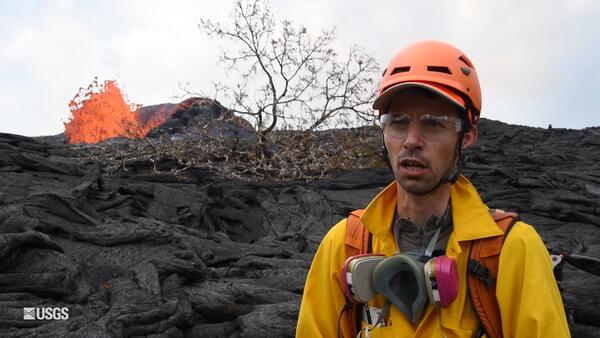
Scientists from the U.S. Geological Survey’s Hawaiian Volcano Observatory are part of a 24 hour watch during the ongoing eruption on the lower east rift zone of the Kīlauea Volcano. Working in shifts they keep an eye on where the lava activity is and where it might move to.
Scientists from the U.S. Geological Survey’s Hawaiian Volcano Observatory are part of a 24 hour watch during the ongoing eruption on the lower east rift zone of the Kīlauea Volcano. Working in shifts they keep an eye on where the lava activity is and where it might move to.

Fissure 8, one of the westernmost active fissures on Kīlauea Volcano's lower East Rift Zone, reactivated during the overnight hours of May 25-26, with chaotic bursts of gas and lavaspatter.
Fissure 8, one of the westernmost active fissures on Kīlauea Volcano's lower East Rift Zone, reactivated during the overnight hours of May 25-26, with chaotic bursts of gas and lavaspatter.
