



Explore More RADish Profiles
Explore interviews with scientists and managers researching and implementing the resist-accept-direct (RAD) framework.
Dr. Gregor Schuurman
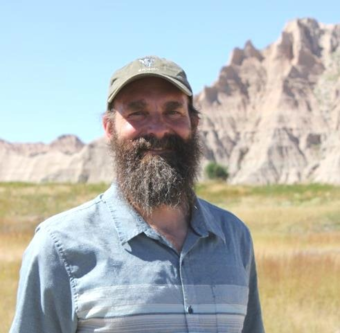
Ecologist with the National Park Service Climate Change Response Program
Gregor began his career as a tropical field biologist, spending most of the 1990s in a tented camp in the Okavango Delta region of northern Botswana while conducting his dissertation research on the ecological role of mound-building termites in African savannas and woodlands.
Immediately thereafter, climate change became a focal component of Gregor’s work studying climate-sensitive, endangered damselflies and high-elevation ecosystems in Hawaii Volcanoes and Haleakalā National Parks. His work on climate change continued while with the Wisconsin Department of Natural Resources, Bureau of Endangered Resources and as co-lead for the Wisconsin Initiative on Climate Change Impacts wildlife working group. In this role, Gregor helped forge connections between endangered species conservation and climate change adaptation, including work on the federally endangered Karner blue butterfly that has continued throughout his career.
Gregor joined the National Park Service’s Climate Change Response Program in 2013, where he helps national park managers and partners understand and adapt to climate change. He feels lucky to have worked with so many creative, collaborative, and hopeful people in developing approaches and tools—including the RAD framework—to help conserve our natural and cultural heritage in this time of change.
Q: How long have you been a RADish?
I have been working with RAD for a little more than a decade. I was an active pioneer with RAD in its earliest stage, helping shape and refine it through years of climate adaptation work within the National Park Service. These ideas about how to help managers think across the entire decision space emerged directly from collaborations with managers in national parks confronting ecological change on the ground, specifically our work in 2015 and 2016 with Knife River Indian Villages National Historic Site and Badlands National Park in the Dakotas, which are somewhat buried in the corresponding NPS reports (North Dakota Report, South Dakota Report). You may note that RAD’s original middle term, accommodate, was changed more recently to the more precise accept, which is now the established convention. Since then, the NPS Climate Change Response Program and partners have continued to experiment with a variety of different tools for scenario-based adaptation.
Q: How have you seen the concept evolve and how does it continue to be useful?
Over the years, I have witnessed climate adaptation concepts rise and fade, yet the RAD framework continues to survive the test of time. The concept of RAD is rooted much deeper than the acronym itself and can be credited to early adaptation trailblazers like Connie Millar, Nate Stephenson, Scott Stephens, David Cole, and Greg Aplet who conceptualized the underlying three-part framework 20 years ago. Not long afterwards, we in the National Park Service Climate Change Response Program were feeling increasingly uncomfortable with framing adaptation under the banner of “managing for resilience.” Deeper analysis of the Aplet and Cole Resist–Accept–Guide framework, paired with our questioning of the usefulness of the term “resilience” and exploration of alternative framing, ultimately led to merging these ideas into what became the RAD Framework.
Experimentation and practical application are qualities that keep RAD useful and relevant. The framework plays a pivotal role in helping managers think through their potential responses to ecological transformation in a more intuitive and accessible way. I believe one of RAD’s greatest strengths lies in its ability to encourage managers to think broadly before narrowing decisions into more specific management actions. RAD represents part of a larger shift in environmental management and conservation thinking. As the world changes, so too must our perspective. Rather than clinging to the sole goal of preserving historical conditions, RAD creates a space for managers and communities to think more broadly about their options and work together strategically.
Q: What are some of the biggest challenges you've seen managers face when choosing between resisting, accepting, or directing change?
A major challenge that managers face is determining whether a particular RAD action, especially one that differs from established approaches, aligns with existing policies. Uncertainty about policy can make decision making overly narrow. One of the valuable things RAD does is broaden the decision-making space and change how managers think about their role in the 21st century. In reality, managers frequently have more flexibility than they assume. A lot of policy is designed to be adaptable, especially as ecosystems change. The question becomes: how flexible is policy and to what degree does it allow managers to direct or accept change?
A major step forward came in July 2024, when National Park Service leadership issued a policy memorandum that explicitly referenced the RAD Framework and encouraged managers to consider resisting, accepting, or directing change. With that flexibility comes responsibility, and the policy update calls on managers taking novel actions to analyze risk, use best available science and Indigenous knowledge, and consult with NPS leaders and others.
Q: In one sentence (or as close as you can get), how would you explain RAD to someone outside of science?
If we’re being wise, we pick our battles, avoid lost causes, and stay creative about solving problems in a changing world.
Interview by Alani Arnold, George Mason University Fish and Wildlife Adaptation Intern.
Explore interviews with scientists and managers researching and implementing the resist-accept-direct (RAD) framework.
Dr. Gregor Schuurman
Ecologist with the National Park Service Climate Change Response Program
Gregor began his career as a tropical field biologist, spending most of the 1990s in a tented camp in the Okavango Delta region of northern Botswana while conducting his dissertation research on the ecological role of mound-building termites in African savannas and woodlands.
Immediately thereafter, climate change became a focal component of Gregor’s work studying climate-sensitive, endangered damselflies and high-elevation ecosystems in Hawaii Volcanoes and Haleakalā National Parks. His work on climate change continued while with the Wisconsin Department of Natural Resources, Bureau of Endangered Resources and as co-lead for the Wisconsin Initiative on Climate Change Impacts wildlife working group. In this role, Gregor helped forge connections between endangered species conservation and climate change adaptation, including work on the federally endangered Karner blue butterfly that has continued throughout his career.
Gregor joined the National Park Service’s Climate Change Response Program in 2013, where he helps national park managers and partners understand and adapt to climate change. He feels lucky to have worked with so many creative, collaborative, and hopeful people in developing approaches and tools—including the RAD framework—to help conserve our natural and cultural heritage in this time of change.
Q: How long have you been a RADish?
I have been working with RAD for a little more than a decade. I was an active pioneer with RAD in its earliest stage, helping shape and refine it through years of climate adaptation work within the National Park Service. These ideas about how to help managers think across the entire decision space emerged directly from collaborations with managers in national parks confronting ecological change on the ground, specifically our work in 2015 and 2016 with Knife River Indian Villages National Historic Site and Badlands National Park in the Dakotas, which are somewhat buried in the corresponding NPS reports (North Dakota Report, South Dakota Report). You may note that RAD’s original middle term, accommodate, was changed more recently to the more precise accept, which is now the established convention. Since then, the NPS Climate Change Response Program and partners have continued to experiment with a variety of different tools for scenario-based adaptation.
Q: How have you seen the concept evolve and how does it continue to be useful?
Over the years, I have witnessed climate adaptation concepts rise and fade, yet the RAD framework continues to survive the test of time. The concept of RAD is rooted much deeper than the acronym itself and can be credited to early adaptation trailblazers like Connie Millar, Nate Stephenson, Scott Stephens, David Cole, and Greg Aplet who conceptualized the underlying three-part framework 20 years ago. Not long afterwards, we in the National Park Service Climate Change Response Program were feeling increasingly uncomfortable with framing adaptation under the banner of “managing for resilience.” Deeper analysis of the Aplet and Cole Resist–Accept–Guide framework, paired with our questioning of the usefulness of the term “resilience” and exploration of alternative framing, ultimately led to merging these ideas into what became the RAD Framework.
Experimentation and practical application are qualities that keep RAD useful and relevant. The framework plays a pivotal role in helping managers think through their potential responses to ecological transformation in a more intuitive and accessible way. I believe one of RAD’s greatest strengths lies in its ability to encourage managers to think broadly before narrowing decisions into more specific management actions. RAD represents part of a larger shift in environmental management and conservation thinking. As the world changes, so too must our perspective. Rather than clinging to the sole goal of preserving historical conditions, RAD creates a space for managers and communities to think more broadly about their options and work together strategically.
Q: What are some of the biggest challenges you've seen managers face when choosing between resisting, accepting, or directing change?
A major challenge that managers face is determining whether a particular RAD action, especially one that differs from established approaches, aligns with existing policies. Uncertainty about policy can make decision making overly narrow. One of the valuable things RAD does is broaden the decision-making space and change how managers think about their role in the 21st century. In reality, managers frequently have more flexibility than they assume. A lot of policy is designed to be adaptable, especially as ecosystems change. The question becomes: how flexible is policy and to what degree does it allow managers to direct or accept change?
A major step forward came in July 2024, when National Park Service leadership issued a policy memorandum that explicitly referenced the RAD Framework and encouraged managers to consider resisting, accepting, or directing change. With that flexibility comes responsibility, and the policy update calls on managers taking novel actions to analyze risk, use best available science and Indigenous knowledge, and consult with NPS leaders and others.
Q: In one sentence (or as close as you can get), how would you explain RAD to someone outside of science?
If we’re being wise, we pick our battles, avoid lost causes, and stay creative about solving problems in a changing world.
Interview by Alani Arnold, George Mason University Fish and Wildlife Adaptation Intern.