



Assessing the spawning movement and habitat needs of riverine Neosho smallmouth bass
USGS researchers are assessing the habitat and movement of Neosho smallmouth bass in Oklahoma and Missouri. Our study objectives were to determine the pre-spawn, spawn, and post-spawn movements of adult, radio-tagged Neosho Smallmouth Bass, and identify the habitat factors at multiple spatial scales related to suitable spawning habitat. Movements by tagged fish in the Elk River of Oklahoma and Missouri and two Oklahoma tributaries draining to the lower Elk River and Grand Lake O’ the Cherokee were greatest during the spring spawning period and were positively related to discharge and fish size; however, we observed considerable individual and stream-specific variability. Abstract source: USFWS Cooperator Science Series.
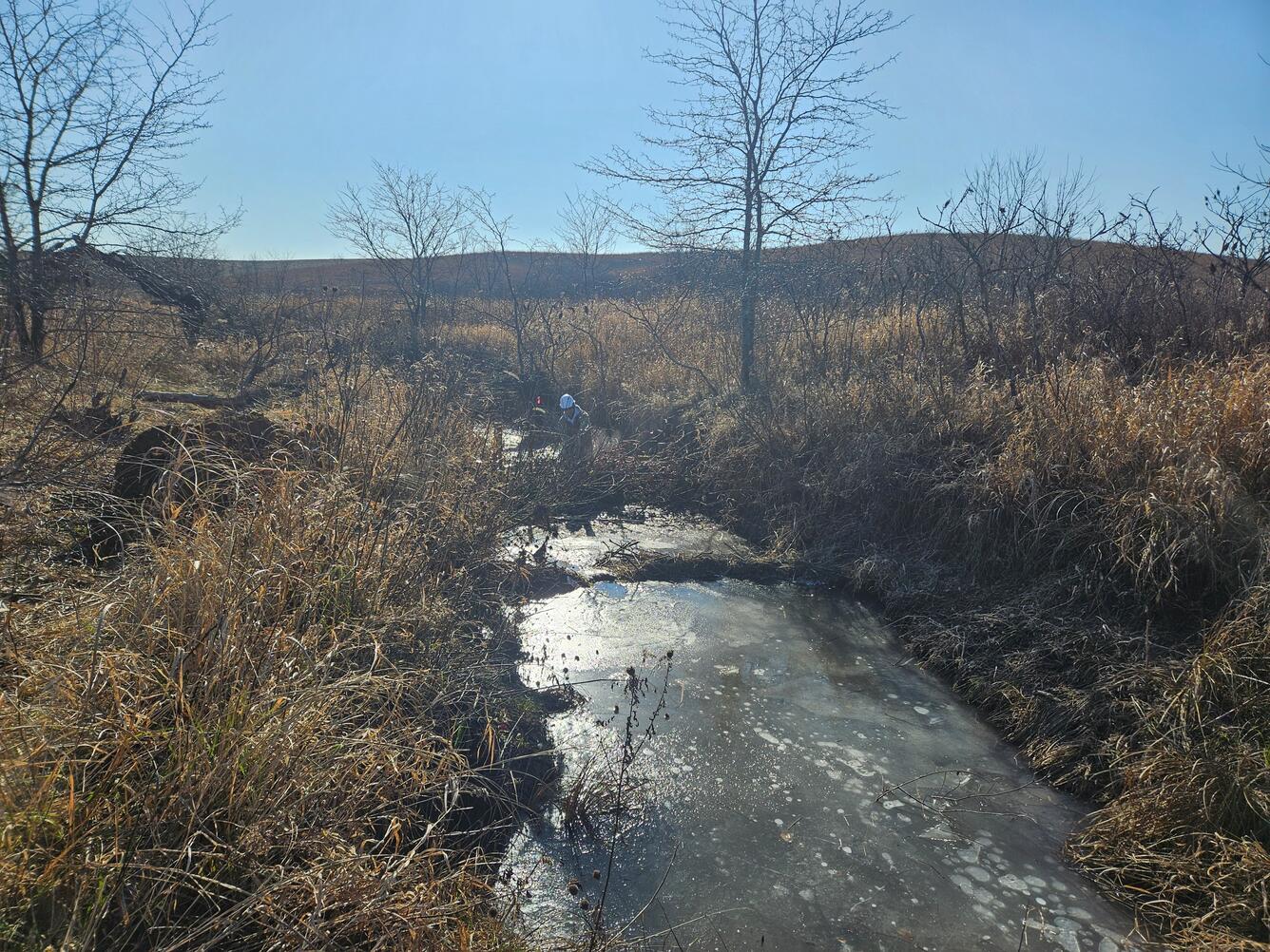
Stream fishes are vulnerable to a variety of natural and anthropogenic stressors. Information on fish movements and habitat use is essential to conserve and manage populations, particularly at the edges of distributions and novel habitats. The Neosho Smallmouth Bass Micropterus dolomieu velox is endemic to the southwestern Ozark Highlands ecoregion, where the riverscape is highly dissected by impoundments. Our study objectives were to determine the pre-spawn, spawn, and post-spawn movements of adult, radio-tagged Neosho Smallmouth Bass, and identify the habitat factors at multiple spatial scales related to suitable spawning habitat. Movements by tagged fish in the Elk River of Oklahoma and Missouri and two Oklahoma tributaries draining to the lower Elk River and Grand Lake O’ the Cherokee were greatest during the spring spawning period and were positively related to discharge and fish size; however, we observed considerable individual and stream-specific variability. Temperature and fish movement rate in the Elk River were positively related in all seasons except for winter, although temperature was less important for Smallmouth Bass movement in the smaller streams. Abstract source: USFWS Cooperator Science Series Report.
USGS researchers are assessing the habitat and movement of Neosho smallmouth bass in Oklahoma and Missouri. Our study objectives were to determine the pre-spawn, spawn, and post-spawn movements of adult, radio-tagged Neosho Smallmouth Bass, and identify the habitat factors at multiple spatial scales related to suitable spawning habitat. Movements by tagged fish in the Elk River of Oklahoma and Missouri and two Oklahoma tributaries draining to the lower Elk River and Grand Lake O’ the Cherokee were greatest during the spring spawning period and were positively related to discharge and fish size; however, we observed considerable individual and stream-specific variability. Abstract source: USFWS Cooperator Science Series.
Stream fishes are vulnerable to a variety of natural and anthropogenic stressors. Information on fish movements and habitat use is essential to conserve and manage populations, particularly at the edges of distributions and novel habitats. The Neosho Smallmouth Bass Micropterus dolomieu velox is endemic to the southwestern Ozark Highlands ecoregion, where the riverscape is highly dissected by impoundments. Our study objectives were to determine the pre-spawn, spawn, and post-spawn movements of adult, radio-tagged Neosho Smallmouth Bass, and identify the habitat factors at multiple spatial scales related to suitable spawning habitat. Movements by tagged fish in the Elk River of Oklahoma and Missouri and two Oklahoma tributaries draining to the lower Elk River and Grand Lake O’ the Cherokee were greatest during the spring spawning period and were positively related to discharge and fish size; however, we observed considerable individual and stream-specific variability. Temperature and fish movement rate in the Elk River were positively related in all seasons except for winter, although temperature was less important for Smallmouth Bass movement in the smaller streams. Abstract source: USFWS Cooperator Science Series Report.