



Guadalupe Bass flow-ecology relationships; with emphasis on the impact of flow on recruitment
USGS researchers assessed the relationship between Guadalupe Bass growth, feeding ecology, and streamflow.
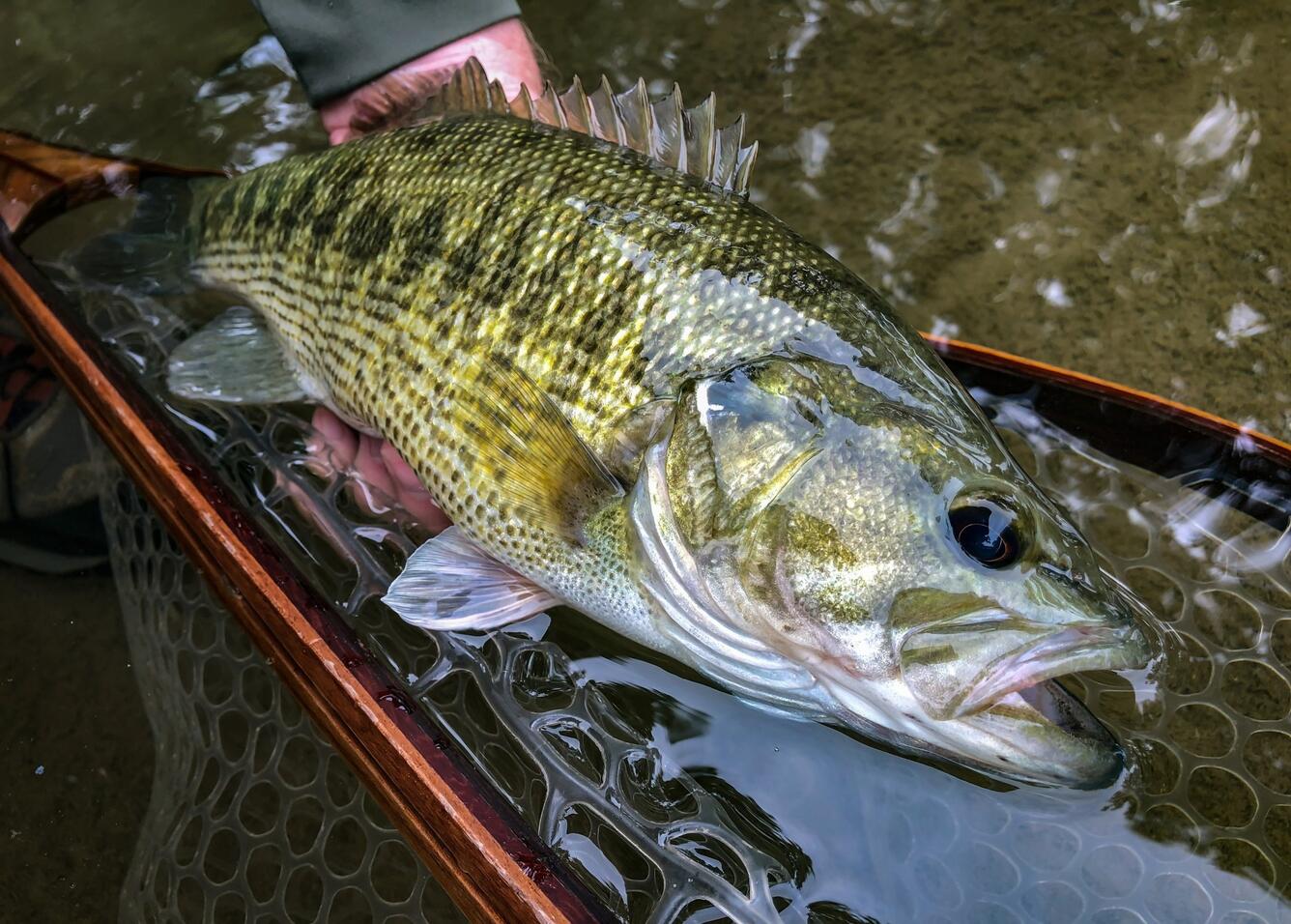
Guadalupe Bass Micropterus treculii is an economically and ecologically important black bass species endemic to the Edwards Plateau ecoregion and the lower portions of the Colorado River in central Texas. It is considered a fluvial specialist and as such, there are concerns that the increasing demands being placed upon the water resources of central Texas by growing human populations have the potential to negatively impact Guadalupe Bass populations. Therefore, this study assessed the relationship between Guadalupe Bass growth, feeding ecology, and streamflow. Sagittal otoliths were removed from Guadalupe Bass collected from throughout their range during 2015-2017 and used to estimate the age and back-calculate the growth trajectory of each individual. Additionally, young-of-year (YOY) Guadalupe Bass were collected every 10-14 days from two second-order streams, the North Llano River and South Llano River, in the Colorado Basin on the Edwards Plateau. Stomach contents of these individuals were identified and the effect of streamflow on the occurrence of the taxa comprising the stomach contents assessed. Abstract narrative source: USFWS Cooperator Science Series.
USGS researchers assessed the relationship between Guadalupe Bass growth, feeding ecology, and streamflow.
Guadalupe Bass Micropterus treculii is an economically and ecologically important black bass species endemic to the Edwards Plateau ecoregion and the lower portions of the Colorado River in central Texas. It is considered a fluvial specialist and as such, there are concerns that the increasing demands being placed upon the water resources of central Texas by growing human populations have the potential to negatively impact Guadalupe Bass populations. Therefore, this study assessed the relationship between Guadalupe Bass growth, feeding ecology, and streamflow. Sagittal otoliths were removed from Guadalupe Bass collected from throughout their range during 2015-2017 and used to estimate the age and back-calculate the growth trajectory of each individual. Additionally, young-of-year (YOY) Guadalupe Bass were collected every 10-14 days from two second-order streams, the North Llano River and South Llano River, in the Colorado Basin on the Edwards Plateau. Stomach contents of these individuals were identified and the effect of streamflow on the occurrence of the taxa comprising the stomach contents assessed. Abstract narrative source: USFWS Cooperator Science Series.