
Indiana Cooperative Fish and Wildlife Research Unit
Active
By Cooperative Research Units
February 18, 2026
The Indiana Cooperative Fish and Wildlife Research Unit (est. 2023) is a partnership among the Indiana Department of Natural Resources, Purdue University, the U.S. Geological Survey, the U.S. Fish and Wildlife Service, and the Wildlife Management Institute.
Media
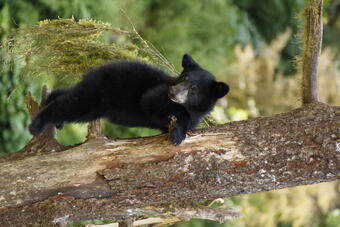
Sources/Usage: Public Domain. View Media Details
Research is primarily focused on management questions in Indiana, but other research is conducted throughout North America. Unit research is supported by State contributions and by contracts from the Indiana Department of Natural Resources, U.S. Fish and Wildlife Service, U.S. Geological Survey, and other federal, state, tribal, and private organizations. In addition to research activities, Unit personnel teach graduate-level courses, serve as advisors for graduate students, and participate in a variety of professional activities. The Unit emphasizes research to:
(1) Help find solutions to problems affecting fish and wildlife resources
(2) Develop and evaluate sampling designs for monitoring fish and wildlife populations
(3) Evaluate population dynamics of fish and wildlife populations
(4) Evaluate how user groups and the public use fish and wildlife resources.
As part of our mission, Unit scientists teach graduate level courses, mentor graduate students, and conduct workshops for our cooperators. By combining teaching, research and technical assistance, the Indiana Cooperative Fish and Wildlife Research Unit provides students not only with an opportunity to pursue a graduate degree, but also receive unparalleled scientific training and applied work experience.
Students in the Indiana Unit Program can pursue an M.S. or Ph.D. degree through the Department of Natural Resources at Purdue University.
Seasonal drivers of density in a subarctic population of northern red-backed voles Seasonal drivers of density in a subarctic population of northern red-backed voles
Northern red-backed voles (Clethrionomys rutilus) are an important species in the boreal forest ecosystem, both as herbivores and as a key food source for many mammalian and avian predators. They exhibit dramatic inter- and intra-annual population fluctuations, for which causes are not entirely known. We monitored northern red-backed vole densities in Denali National Park and Preserve...
Authors
Sarah Swanson, Melanie J. Flamme, Joshua H. Schmidt, Shawn M. Crimmins, Carl A. Roland, Knut Kielland
Occupancy rates of river otters (Lontra canadensis) in the St. Louis River Area of Concern Occupancy rates of river otters (Lontra canadensis) in the St. Louis River Area of Concern
The St. Louis River Area of Concern (AOC), an estuarine system along the northeastern Minnesota-Wisconsin border, experienced significant ecological disturbances and degradation from unregulated industrial development during the 19th and 20th centuries. Recent restoration and remediation efforts in the AOC have led to substantial improvements in water quality, habitat, and fisheries...
Authors
Bryn E. Evans, Madeleine C. Tucker, Timothy R. Van Deelen, Shawn M. Crimmins
Scale-dependence in elk habitat selection for a reintroduced population in Wisconsin, USA Scale-dependence in elk habitat selection for a reintroduced population in Wisconsin, USA
Habitat selection is a critical aspect of a species' ecology, requiring complex decision-making that is both hierarchical and scale-dependent, since factors that influence selection may be nested or unequal across scales. Elk (Cervus canadensis) ranged widely across diverse ecoregions in North America prior to European settlement and subsequent eastern extirpation. Most habitat selection...
Authors
Jennifer L. Merems, Anna L. Brose, Jennifer Price Tack, Shawn M. Crimmins, Timothy R. Van Deelen
Survival of Common Loon chicks appears unaffected by Bald Eagle recovery in northern Minnesota Survival of Common Loon chicks appears unaffected by Bald Eagle recovery in northern Minnesota
Recovering species are not returning to the same environments or communities from which they disappeared. Conservation researchers and practitioners are thus faced with additional challenges in ensuring species resilience in these rapidly changing ecosystems. Assessing the resilience of species in these novel systems can still be guided by species’ ecology, including knowledge of their...
Authors
Jennyffer Cruz, Steve K. Windels, Wayne E. Thogmartin, Shawn M. Crimmins, Benjamin Zuckerberg
Top-down effect of repatriating bald eagles hinder jointly recovering competitors Top-down effect of repatriating bald eagles hinder jointly recovering competitors
1. The recovery of piscivorous birds around the world is touted as one of the great conservation successes of the 21st century, but for some species, this success was short-lived. Bald eagles, ospreys, and great blue herons began repatriating Voyageurs National Park, USA, in the mid-20th century. However, after 1990, only eagles continued their recovery, while osprey and heron recovery...
Authors
Jennyffer Cruz, Steve K. Windels, Wayne E. Thogmartin, Shawn M. Crimmins, Leland H. Grim, James H. Larson, Benjamin Zuckerberg
The Indiana Cooperative Fish and Wildlife Research Unit (est. 2023) is a partnership among the Indiana Department of Natural Resources, Purdue University, the U.S. Geological Survey, the U.S. Fish and Wildlife Service, and the Wildlife Management Institute.
Media
Sources/Usage: Public Domain. View Media Details
Research is primarily focused on management questions in Indiana, but other research is conducted throughout North America. Unit research is supported by State contributions and by contracts from the Indiana Department of Natural Resources, U.S. Fish and Wildlife Service, U.S. Geological Survey, and other federal, state, tribal, and private organizations. In addition to research activities, Unit personnel teach graduate-level courses, serve as advisors for graduate students, and participate in a variety of professional activities. The Unit emphasizes research to:
(1) Help find solutions to problems affecting fish and wildlife resources
(2) Develop and evaluate sampling designs for monitoring fish and wildlife populations
(3) Evaluate population dynamics of fish and wildlife populations
(4) Evaluate how user groups and the public use fish and wildlife resources.
As part of our mission, Unit scientists teach graduate level courses, mentor graduate students, and conduct workshops for our cooperators. By combining teaching, research and technical assistance, the Indiana Cooperative Fish and Wildlife Research Unit provides students not only with an opportunity to pursue a graduate degree, but also receive unparalleled scientific training and applied work experience.
Students in the Indiana Unit Program can pursue an M.S. or Ph.D. degree through the Department of Natural Resources at Purdue University.
Seasonal drivers of density in a subarctic population of northern red-backed voles Seasonal drivers of density in a subarctic population of northern red-backed voles
Northern red-backed voles (Clethrionomys rutilus) are an important species in the boreal forest ecosystem, both as herbivores and as a key food source for many mammalian and avian predators. They exhibit dramatic inter- and intra-annual population fluctuations, for which causes are not entirely known. We monitored northern red-backed vole densities in Denali National Park and Preserve...
Authors
Sarah Swanson, Melanie J. Flamme, Joshua H. Schmidt, Shawn M. Crimmins, Carl A. Roland, Knut Kielland
Occupancy rates of river otters (Lontra canadensis) in the St. Louis River Area of Concern Occupancy rates of river otters (Lontra canadensis) in the St. Louis River Area of Concern
The St. Louis River Area of Concern (AOC), an estuarine system along the northeastern Minnesota-Wisconsin border, experienced significant ecological disturbances and degradation from unregulated industrial development during the 19th and 20th centuries. Recent restoration and remediation efforts in the AOC have led to substantial improvements in water quality, habitat, and fisheries...
Authors
Bryn E. Evans, Madeleine C. Tucker, Timothy R. Van Deelen, Shawn M. Crimmins
Scale-dependence in elk habitat selection for a reintroduced population in Wisconsin, USA Scale-dependence in elk habitat selection for a reintroduced population in Wisconsin, USA
Habitat selection is a critical aspect of a species' ecology, requiring complex decision-making that is both hierarchical and scale-dependent, since factors that influence selection may be nested or unequal across scales. Elk (Cervus canadensis) ranged widely across diverse ecoregions in North America prior to European settlement and subsequent eastern extirpation. Most habitat selection...
Authors
Jennifer L. Merems, Anna L. Brose, Jennifer Price Tack, Shawn M. Crimmins, Timothy R. Van Deelen
Survival of Common Loon chicks appears unaffected by Bald Eagle recovery in northern Minnesota Survival of Common Loon chicks appears unaffected by Bald Eagle recovery in northern Minnesota
Recovering species are not returning to the same environments or communities from which they disappeared. Conservation researchers and practitioners are thus faced with additional challenges in ensuring species resilience in these rapidly changing ecosystems. Assessing the resilience of species in these novel systems can still be guided by species’ ecology, including knowledge of their...
Authors
Jennyffer Cruz, Steve K. Windels, Wayne E. Thogmartin, Shawn M. Crimmins, Benjamin Zuckerberg
Top-down effect of repatriating bald eagles hinder jointly recovering competitors Top-down effect of repatriating bald eagles hinder jointly recovering competitors
1. The recovery of piscivorous birds around the world is touted as one of the great conservation successes of the 21st century, but for some species, this success was short-lived. Bald eagles, ospreys, and great blue herons began repatriating Voyageurs National Park, USA, in the mid-20th century. However, after 1990, only eagles continued their recovery, while osprey and heron recovery...
Authors
Jennyffer Cruz, Steve K. Windels, Wayne E. Thogmartin, Shawn M. Crimmins, Leland H. Grim, James H. Larson, Benjamin Zuckerberg