



Mississippi Cooperative Fish and Wildlife Research Unit
The Mississippi Cooperative Fish and Wildlife Research Unit is a partnership among the Mississippi Department of Wildlife, Fisheries and Parks, the Mississippi State University, the U.S. Geological Survey, the U.S. Fish and Wildlife Service, and the Wildlife Management Institute.
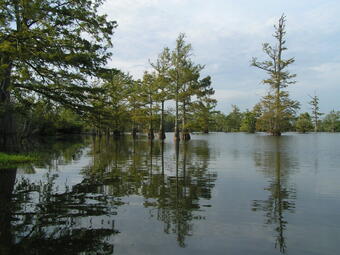
Mississippi is home to oxbow lakes, abundant fisheries and wildlife resources, and enthusiastic recreationists. The Cooperative Fish and wildlife Unit was formed to conduct a research program to specifically address problems of state, regional and national importance regarding aquatic and terrestrial riparian ecosystems in Mississippi and adjacent states.
One of these ecosystems is bottomland hardwoods. Bottomland hardwood ecosystems are being subjected to tremendous stress, primarily through agricultural development, including timber and range uses, navigational and flood control, urbanization, and highway developments, with consequent impact on fish and wildlife resources.
USGS faculty and graduate students conduct a wide range of applied and basic research projects designed to improve or at least avoid, minimize or mitigate fish and wildlife losses resulting from natural resource development and associated human population increases.
This research program has successfully trained hundreds of students who are now leaders in the wildlife and fisheries natural resource fields. Please explore our pages and find out more about the research, students, and discoveries we are making to keep Mississippi's wildlife and fisheries resources plentiful for future generations.
The Mississippi Cooperative Fish and Wildlife Research Unit is a partnership among the Mississippi Department of Wildlife, Fisheries and Parks, the Mississippi State University, the U.S. Geological Survey, the U.S. Fish and Wildlife Service, and the Wildlife Management Institute.
Mississippi is home to oxbow lakes, abundant fisheries and wildlife resources, and enthusiastic recreationists. The Cooperative Fish and wildlife Unit was formed to conduct a research program to specifically address problems of state, regional and national importance regarding aquatic and terrestrial riparian ecosystems in Mississippi and adjacent states.
One of these ecosystems is bottomland hardwoods. Bottomland hardwood ecosystems are being subjected to tremendous stress, primarily through agricultural development, including timber and range uses, navigational and flood control, urbanization, and highway developments, with consequent impact on fish and wildlife resources.
USGS faculty and graduate students conduct a wide range of applied and basic research projects designed to improve or at least avoid, minimize or mitigate fish and wildlife losses resulting from natural resource development and associated human population increases.
This research program has successfully trained hundreds of students who are now leaders in the wildlife and fisheries natural resource fields. Please explore our pages and find out more about the research, students, and discoveries we are making to keep Mississippi's wildlife and fisheries resources plentiful for future generations.