Amy Yackel Adams, PhD
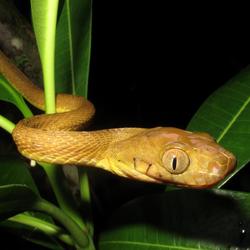
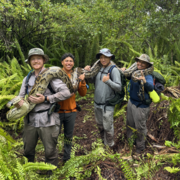
Amy Yackel Adams is a Research Ecologist focusing on improving management decisions of invasive reptiles worldwide.
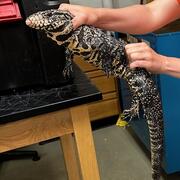
Amy leads a diverse research program with other USGS scientists and various collaborators (NPS, USDA-NWRC, USFWS, DoD, universities, and state agencies) pertaining to early detection and rapid response, biology, ecology, genetics, control tool evaluation, eradication, and quantitative model development to improve adaptive management of invasive reptile species. Yackel Adams’ research areas in the Greater Everglades Ecosystem and Pacific Islands include: 1) Population and vital rate estimation of invasive Burmese Pythons, Veiled Chameleons, and Brown Treesnakes; 2) Estimating the impact of Brown Treesnakes on prey populations; 3) Enhancing early detection of invasive reptiles using new tools; and 4) Development and evaluation of removal and abundance models to inform and optimize eradication efforts.
Education and Certifications
PhD, Ecology, Graduate Degree Program in Ecology, Colorado State University, 2005
MS, Ecology, Graduate Degree Program in Ecology, Colorado State University, 1999
BS, Resource Conservation and Environmental Studies, University of Montana, 1986
Science and Products
Habitat characterization around standard brown treesnake traps on Guam, 2004 - 2017 Habitat characterization around standard brown treesnake traps on Guam, 2004 - 2017
Dataset: Passive restoration following ungulate removal in a highly disturbed tropical wet forest devoid of native seed dispersers Dataset: Passive restoration following ungulate removal in a highly disturbed tropical wet forest devoid of native seed dispersers
Tools for increasing visual encounter probabilities for invasive species removal: A case study of brown treesnakes Tools for increasing visual encounter probabilities for invasive species removal: A case study of brown treesnakes
Olfactory lures in predator control do not increase predation risk to birds in areas of conservation concern Olfactory lures in predator control do not increase predation risk to birds in areas of conservation concern
Female persistence during toxicant treatment predicts survival probability of offspring in invasive brown treesnakes (Boiga irregularis) Female persistence during toxicant treatment predicts survival probability of offspring in invasive brown treesnakes (Boiga irregularis)
Foraging behavior in a generalist snake (brown treesnake, Boiga irregularis) with implications for avian reintroduction and recovery Foraging behavior in a generalist snake (brown treesnake, Boiga irregularis) with implications for avian reintroduction and recovery
Thermal stability of an adaptable, invasive ectotherm: Argentine giant tegus in the Greater Everglades ecosystem, USA Thermal stability of an adaptable, invasive ectotherm: Argentine giant tegus in the Greater Everglades ecosystem, USA
Brown treesnake mortality after aerial application of toxic baits Brown treesnake mortality after aerial application of toxic baits
Evaluation of camera trap-based abundance estimators for unmarked populations Evaluation of camera trap-based abundance estimators for unmarked populations
Trait heritability and its implications for the management of an invasive vertebrate Trait heritability and its implications for the management of an invasive vertebrate
Surface material and snout-vent length predict vertical scaling ability in brown treesnakes:an evaluation of multispecies barriers for invasive species control on Guam Surface material and snout-vent length predict vertical scaling ability in brown treesnakes:an evaluation of multispecies barriers for invasive species control on Guam
Using enclosed Y-mazes to assess chemosensory behavior in reptiles Using enclosed Y-mazes to assess chemosensory behavior in reptiles
Locally abundant, endangered Mariana swiftlets impact the abundance, behavior, and body condition of an invasive predator Locally abundant, endangered Mariana swiftlets impact the abundance, behavior, and body condition of an invasive predator
Evidence for an established population of tegu lizards Salvator merianae in southeastern Georgia, USA Evidence for an established population of tegu lizards Salvator merianae in southeastern Georgia, USA
Non-USGS Publications**
**Disclaimer: The views expressed in Non-USGS publications are those of the author and do not represent the views of the USGS, Department of the Interior, or the U.S. Government.
Science and Products
Habitat characterization around standard brown treesnake traps on Guam, 2004 - 2017 Habitat characterization around standard brown treesnake traps on Guam, 2004 - 2017
Dataset: Passive restoration following ungulate removal in a highly disturbed tropical wet forest devoid of native seed dispersers Dataset: Passive restoration following ungulate removal in a highly disturbed tropical wet forest devoid of native seed dispersers
Tools for increasing visual encounter probabilities for invasive species removal: A case study of brown treesnakes Tools for increasing visual encounter probabilities for invasive species removal: A case study of brown treesnakes
Olfactory lures in predator control do not increase predation risk to birds in areas of conservation concern Olfactory lures in predator control do not increase predation risk to birds in areas of conservation concern
Female persistence during toxicant treatment predicts survival probability of offspring in invasive brown treesnakes (Boiga irregularis) Female persistence during toxicant treatment predicts survival probability of offspring in invasive brown treesnakes (Boiga irregularis)
Foraging behavior in a generalist snake (brown treesnake, Boiga irregularis) with implications for avian reintroduction and recovery Foraging behavior in a generalist snake (brown treesnake, Boiga irregularis) with implications for avian reintroduction and recovery
Thermal stability of an adaptable, invasive ectotherm: Argentine giant tegus in the Greater Everglades ecosystem, USA Thermal stability of an adaptable, invasive ectotherm: Argentine giant tegus in the Greater Everglades ecosystem, USA
Brown treesnake mortality after aerial application of toxic baits Brown treesnake mortality after aerial application of toxic baits
Evaluation of camera trap-based abundance estimators for unmarked populations Evaluation of camera trap-based abundance estimators for unmarked populations
Trait heritability and its implications for the management of an invasive vertebrate Trait heritability and its implications for the management of an invasive vertebrate
Surface material and snout-vent length predict vertical scaling ability in brown treesnakes:an evaluation of multispecies barriers for invasive species control on Guam Surface material and snout-vent length predict vertical scaling ability in brown treesnakes:an evaluation of multispecies barriers for invasive species control on Guam
Using enclosed Y-mazes to assess chemosensory behavior in reptiles Using enclosed Y-mazes to assess chemosensory behavior in reptiles
Locally abundant, endangered Mariana swiftlets impact the abundance, behavior, and body condition of an invasive predator Locally abundant, endangered Mariana swiftlets impact the abundance, behavior, and body condition of an invasive predator
Evidence for an established population of tegu lizards Salvator merianae in southeastern Georgia, USA Evidence for an established population of tegu lizards Salvator merianae in southeastern Georgia, USA
Non-USGS Publications**
**Disclaimer: The views expressed in Non-USGS publications are those of the author and do not represent the views of the USGS, Department of the Interior, or the U.S. Government.