



These are two USGS Western Fisheries Research Center scientists, Carl Ostberg and Jeff Duda (from left to right), sitting on a fallen tree in Skagit, WA. These scientists study critical fish, like salmon, in the Ross Dam reservoir and tributaries.
Carl Ostberg, Ph.D.
Carl is a Research Fish Biologist at the Western Fisheries Research Center.
Research Interests:
Carl’s research interests focus on evolutionary and conservation genetics. Current research projects include several studies directed at generating a greater understanding of intrinsic and extrinsic factors associated with hybridization between rainbow and cutthroat trout, using next generation sequencing to develop species-specific markers that differentiate endangered suckers endemic to the Klamath Lake basin, developing eDNA tool to evaluate recolonization extent of native and non-native fishes in the Elwha River following dam removal, and investigating morphological and genetic diversity of Dolly Varden in the Russian Far East.
Science and Products

Development and Refinement of Methods for Early Detection of European Green Crab
European green crabs are one of the most widespread marine invasive species on the planet. Where they are abundant, green crabs compete with other crabs and disturb sediment which can lead to loss of eelgrass and associated habitat essential for commercial, cultural, and ecologically important fish and invertebrate species. Green crab also are a major predator of clams, mussels, and oysters.

Cutthroat Trout (Oncorhynchus clarkii)
Species Studied - Cutthroat trout ( Oncorhynchus clarkii)

Bull Trout (Salvelinus confluentus)
Species Studied - Bull Trout ( Salvelinus confluentus)
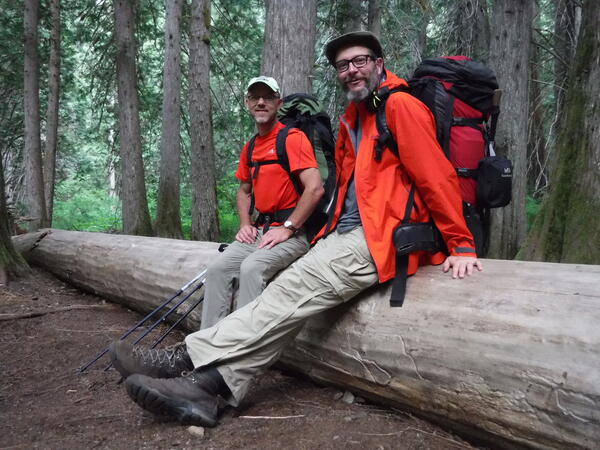
USGS Fisheries Scientists in Skagit County, WA
These are two USGS Western Fisheries Research Center scientists, Carl Ostberg and Jeff Duda (from left to right), sitting on a fallen tree in Skagit, WA. These scientists study critical fish, like salmon, in the Ross Dam reservoir and tributaries.

Sampling for European green crab environmental DNA (eDNA) in Pauls Slough in Willapa Bay, Washington
Sampling for European green crab environmental DNA (eDNA) in Pauls Slough in Willapa Bay, WashingtonSampling for European green crab environmental DNA in Pauls Slough in Willapa Bay, Washington, as part of a study that aims to increase the capacity for early detection monitoring and biosurveillance of invasive green crab.
Sampling for European green crab environmental DNA (eDNA) in Pauls Slough in Willapa Bay, Washington
Sampling for European green crab environmental DNA (eDNA) in Pauls Slough in Willapa Bay, WashingtonSampling for European green crab environmental DNA in Pauls Slough in Willapa Bay, Washington, as part of a study that aims to increase the capacity for early detection monitoring and biosurveillance of invasive green crab.

Sampling for European green crab environmental DNA (eDNA) in Pauls Slough in Willapa Bay, Washington
Sampling for European green crab environmental DNA (eDNA) in Pauls Slough in Willapa Bay, WashingtonSampling for European green crab environmental DNA (eDNA) in Pauls Slough in Willapa Bay, Washington, as part of a study that aims to increase the capacity for early detection monitoring and biosurveillance of invasive green crab.
Sampling for European green crab environmental DNA (eDNA) in Pauls Slough in Willapa Bay, Washington
Sampling for European green crab environmental DNA (eDNA) in Pauls Slough in Willapa Bay, WashingtonSampling for European green crab environmental DNA (eDNA) in Pauls Slough in Willapa Bay, Washington, as part of a study that aims to increase the capacity for early detection monitoring and biosurveillance of invasive green crab.

Sampling for European green crab environmental DNA (eDNA) in a tide channel at Tokeland in Willapa Bay, Washington
Sampling for European green crab environmental DNA (eDNA) in a tide channel at Tokeland in Willapa Bay, WashingtonSampling for European green crab environmental DNA (eDNA) in a tide channel at Tokeland in Willapa Bay, Washington, as part of a study that aims to increase the capacity for early detection monitoring and biosurveillance of invasive green crab.
Sampling for European green crab environmental DNA (eDNA) in a tide channel at Tokeland in Willapa Bay, Washington
Sampling for European green crab environmental DNA (eDNA) in a tide channel at Tokeland in Willapa Bay, WashingtonSampling for European green crab environmental DNA (eDNA) in a tide channel at Tokeland in Willapa Bay, Washington, as part of a study that aims to increase the capacity for early detection monitoring and biosurveillance of invasive green crab.
Science and Products
Development and Refinement of Methods for Early Detection of European Green Crab
European green crabs are one of the most widespread marine invasive species on the planet. Where they are abundant, green crabs compete with other crabs and disturb sediment which can lead to loss of eelgrass and associated habitat essential for commercial, cultural, and ecologically important fish and invertebrate species. Green crab also are a major predator of clams, mussels, and oysters.
Cutthroat Trout (Oncorhynchus clarkii)
Species Studied - Cutthroat trout ( Oncorhynchus clarkii)
Bull Trout (Salvelinus confluentus)
Species Studied - Bull Trout ( Salvelinus confluentus)
USGS Fisheries Scientists in Skagit County, WA
These are two USGS Western Fisheries Research Center scientists, Carl Ostberg and Jeff Duda (from left to right), sitting on a fallen tree in Skagit, WA. These scientists study critical fish, like salmon, in the Ross Dam reservoir and tributaries.
These are two USGS Western Fisheries Research Center scientists, Carl Ostberg and Jeff Duda (from left to right), sitting on a fallen tree in Skagit, WA. These scientists study critical fish, like salmon, in the Ross Dam reservoir and tributaries.
Sampling for European green crab environmental DNA (eDNA) in Pauls Slough in Willapa Bay, Washington
Sampling for European green crab environmental DNA (eDNA) in Pauls Slough in Willapa Bay, WashingtonSampling for European green crab environmental DNA in Pauls Slough in Willapa Bay, Washington, as part of a study that aims to increase the capacity for early detection monitoring and biosurveillance of invasive green crab.
Sampling for European green crab environmental DNA (eDNA) in Pauls Slough in Willapa Bay, Washington
Sampling for European green crab environmental DNA (eDNA) in Pauls Slough in Willapa Bay, WashingtonSampling for European green crab environmental DNA in Pauls Slough in Willapa Bay, Washington, as part of a study that aims to increase the capacity for early detection monitoring and biosurveillance of invasive green crab.
Sampling for European green crab environmental DNA (eDNA) in Pauls Slough in Willapa Bay, Washington
Sampling for European green crab environmental DNA (eDNA) in Pauls Slough in Willapa Bay, WashingtonSampling for European green crab environmental DNA (eDNA) in Pauls Slough in Willapa Bay, Washington, as part of a study that aims to increase the capacity for early detection monitoring and biosurveillance of invasive green crab.
Sampling for European green crab environmental DNA (eDNA) in Pauls Slough in Willapa Bay, Washington
Sampling for European green crab environmental DNA (eDNA) in Pauls Slough in Willapa Bay, WashingtonSampling for European green crab environmental DNA (eDNA) in Pauls Slough in Willapa Bay, Washington, as part of a study that aims to increase the capacity for early detection monitoring and biosurveillance of invasive green crab.
Sampling for European green crab environmental DNA (eDNA) in a tide channel at Tokeland in Willapa Bay, Washington
Sampling for European green crab environmental DNA (eDNA) in a tide channel at Tokeland in Willapa Bay, WashingtonSampling for European green crab environmental DNA (eDNA) in a tide channel at Tokeland in Willapa Bay, Washington, as part of a study that aims to increase the capacity for early detection monitoring and biosurveillance of invasive green crab.
Sampling for European green crab environmental DNA (eDNA) in a tide channel at Tokeland in Willapa Bay, Washington
Sampling for European green crab environmental DNA (eDNA) in a tide channel at Tokeland in Willapa Bay, WashingtonSampling for European green crab environmental DNA (eDNA) in a tide channel at Tokeland in Willapa Bay, Washington, as part of a study that aims to increase the capacity for early detection monitoring and biosurveillance of invasive green crab.
*Disclaimer: Listing outside positions with professional scientific organizations on this Staff Profile are for informational purposes only and do not constitute an endorsement of those professional scientific organizations or their activities by the USGS, Department of the Interior, or U.S. Government