



USGS researchers at the Montana Cooperative Fishery Research Unit are working with Yellowstone National park to understand Yellowstone cutthroat trout. Yellowstone National Park generates \$834 million in economic benefits and supports about 9,000 jobs for the local economy. A key part of this economic engine are the animals that the public come to see and enjoy.
Christopher Guy, PhD (Former Employee)
Science and Products

Montana Cooperative Fishery Research Unit
The Montana Cooperative Fishery Research Unit (est. 1963) is a partnership among the Montana Department of Fish, Wildlife and Parks, Montana State University, and the U.S. Geological Survey.
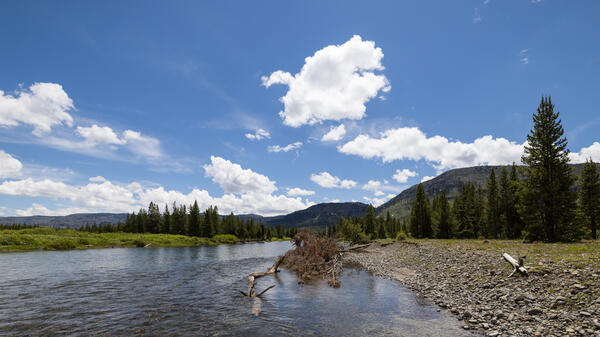
Yellowstone River
USGS researchers at the Montana Cooperative Fishery Research Unit are working with Yellowstone National park to understand Yellowstone cutthroat trout. Yellowstone National Park generates \$834 million in economic benefits and supports about 9,000 jobs for the local economy. A key part of this economic engine are the animals that the public come to see and enjoy.

Denil fishway
USGS researchers at the Montana Fishery Research Unit conducted field experiments in the Big Hole drainage of southwestern Montana to determine the efficacy of Denil fish ladders to pass Arctic grayling and trout at low-head irrigation diversion dams.
USGS researchers at the Montana Fishery Research Unit conducted field experiments in the Big Hole drainage of southwestern Montana to determine the efficacy of Denil fish ladders to pass Arctic grayling and trout at low-head irrigation diversion dams.

Yellowstone cutthroat trout
Yellowstone cutthroat trout from the upper Yellowstone drainage south of Yellowstone National Park.
Yellowstone cutthroat trout from the upper Yellowstone drainage south of Yellowstone National Park.
Science and Products
Montana Cooperative Fishery Research Unit
The Montana Cooperative Fishery Research Unit (est. 1963) is a partnership among the Montana Department of Fish, Wildlife and Parks, Montana State University, and the U.S. Geological Survey.
Yellowstone River
USGS researchers at the Montana Cooperative Fishery Research Unit are working with Yellowstone National park to understand Yellowstone cutthroat trout. Yellowstone National Park generates \$834 million in economic benefits and supports about 9,000 jobs for the local economy. A key part of this economic engine are the animals that the public come to see and enjoy.
USGS researchers at the Montana Cooperative Fishery Research Unit are working with Yellowstone National park to understand Yellowstone cutthroat trout. Yellowstone National Park generates \$834 million in economic benefits and supports about 9,000 jobs for the local economy. A key part of this economic engine are the animals that the public come to see and enjoy.
Denil fishway
USGS researchers at the Montana Fishery Research Unit conducted field experiments in the Big Hole drainage of southwestern Montana to determine the efficacy of Denil fish ladders to pass Arctic grayling and trout at low-head irrigation diversion dams.
USGS researchers at the Montana Fishery Research Unit conducted field experiments in the Big Hole drainage of southwestern Montana to determine the efficacy of Denil fish ladders to pass Arctic grayling and trout at low-head irrigation diversion dams.
Yellowstone cutthroat trout
Yellowstone cutthroat trout from the upper Yellowstone drainage south of Yellowstone National Park.
Yellowstone cutthroat trout from the upper Yellowstone drainage south of Yellowstone National Park.