



Erica M Christensen, PhD (Former Employee)
Science and Products
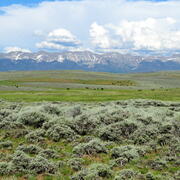
Shrubland, Alpine and Grassland Ecology (SAGE) Wildlife Research Group
The SAGE Wildlife Research Group consists of a large team of research scientists with an interest in conservation and management of wildlife and their ecosystems. Broadly, research involves understanding animal-habitat relationships, with an emphasis on conservation ecology and population demography, and a focus on shrubland, alpine, and grassland ecosystems. We are addressing the effects of...

Predicting Recovery of Sagebrush Ecosystems Across the Sage-grouse Range from Remotely Sensed Vegetation Data
USGS researchers are using remote-sensing and other broadscale datasets to study and predict recovery of sagebrush across the sage-grouse range, assessing influence of disturbance, restoration treatments, soil moisture, and other ecological conditions on trends in sagebrush cover. The results will be used to inform conservation prioritization models, economic analyses, projections of future...

Modeling chronic wasting disease prevalence through time to investigate mechanisms of spread in deer and elk in Wyoming
Diseases are challenging to manage in wild ungulate populations, particularly when there are many ways the disease can spread. Wildlife management agencies often need to take action to control disease spread, but it is unclear which actions are most effective in constraining disease because the importance of different spread mechanisms is not fully understood. This project will aid state wildlife...
Science and Products
Shrubland, Alpine and Grassland Ecology (SAGE) Wildlife Research Group
The SAGE Wildlife Research Group consists of a large team of research scientists with an interest in conservation and management of wildlife and their ecosystems. Broadly, research involves understanding animal-habitat relationships, with an emphasis on conservation ecology and population demography, and a focus on shrubland, alpine, and grassland ecosystems. We are addressing the effects of...
Predicting Recovery of Sagebrush Ecosystems Across the Sage-grouse Range from Remotely Sensed Vegetation Data
USGS researchers are using remote-sensing and other broadscale datasets to study and predict recovery of sagebrush across the sage-grouse range, assessing influence of disturbance, restoration treatments, soil moisture, and other ecological conditions on trends in sagebrush cover. The results will be used to inform conservation prioritization models, economic analyses, projections of future...
Modeling chronic wasting disease prevalence through time to investigate mechanisms of spread in deer and elk in Wyoming
Diseases are challenging to manage in wild ungulate populations, particularly when there are many ways the disease can spread. Wildlife management agencies often need to take action to control disease spread, but it is unclear which actions are most effective in constraining disease because the importance of different spread mechanisms is not fully understood. This project will aid state wildlife...