



Meredith A Hartwell (Former Employee)
Science and Products
Filter Total Items: 17

Riparian Vegetation in Grand Canyon: An Overview
Riparian plant communities, associated with rivers and streams, are ecologically and culturally important areas in the southwestern U.S. Despite covering less than 2% of the land area in the southwest, the resources provided by these communities make them valuable to wildlife, the public, scientists, and resource managers.

SBSC science supports invasive species management
Invasive species can harm ecosystems, increase wildfires, damage forests, and outcompete native species. The US Geological Survey's Southwest Biological Science Center conducts research that provides our federal and state partners, cooperators and land managers with the tools, data and strategies to enhance biosecurity management. Scroll through the information below to read about different SBSC...

The Gemini Solar Project
The United States is developing renewable energy resources, especially solar, at a rapid rate. Although renewable energy development is widely perceived by the public as “green technology,” construction, operation, maintenance, and eventual decommissioning of facilities all have known and potential negative impacts to natural resources, including plant communities and wildlife. This is especially...

Study Uncovers Migration Patterns of Native Fish in the Colorado River
A study conducted by the USGS provides new insights into the migration patterns of three native fish species in the Colorado River: humpback chub, flannelmouth sucker, and bluehead sucker. This research highlights the importance of understanding native fish population dynamics within the Colorado River ecosystem in Grand Canyon, AZ.

Colorado River Basin Science
The Grand Canyon Monitoring and Research Center, a branch of the Southwest Biological Science Center, conducts scientific assessments of the Colorado River in Grand Canyon, focused primarily on Lake Powell and the river ecosystem downstream of Glen Canyon Dam. On this page, we'd like to share related interactive tools and projects by other USGS Centers that cover science across the upper and lower...

Smallmouth bass expansion downstream of Glen Canyon Dam
In the Upper Colorado River Basin, smallmouth bass ( Micropterus dolomieu) are considered the greatest threat to native fishes and have been linked to declines in federally protected humpback chub ( Gila cypha), including one population that was rapidly extirpated in the past. Long-term management efforts have been underway to remove smallmouth bass from rivers in the Upper Basin, but smallmouth...
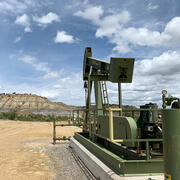
New guidelines for successful oil and gas reclamation New guidelines for successful oil and gas reclamation
The report provides specific and comprehensive reclamation guidance for surface oil and gas exploration and development.
Science and Products
Filter Total Items: 17
Riparian Vegetation in Grand Canyon: An Overview
Riparian plant communities, associated with rivers and streams, are ecologically and culturally important areas in the southwestern U.S. Despite covering less than 2% of the land area in the southwest, the resources provided by these communities make them valuable to wildlife, the public, scientists, and resource managers.
SBSC science supports invasive species management
Invasive species can harm ecosystems, increase wildfires, damage forests, and outcompete native species. The US Geological Survey's Southwest Biological Science Center conducts research that provides our federal and state partners, cooperators and land managers with the tools, data and strategies to enhance biosecurity management. Scroll through the information below to read about different SBSC...
The Gemini Solar Project
The United States is developing renewable energy resources, especially solar, at a rapid rate. Although renewable energy development is widely perceived by the public as “green technology,” construction, operation, maintenance, and eventual decommissioning of facilities all have known and potential negative impacts to natural resources, including plant communities and wildlife. This is especially...
Study Uncovers Migration Patterns of Native Fish in the Colorado River
A study conducted by the USGS provides new insights into the migration patterns of three native fish species in the Colorado River: humpback chub, flannelmouth sucker, and bluehead sucker. This research highlights the importance of understanding native fish population dynamics within the Colorado River ecosystem in Grand Canyon, AZ.
Colorado River Basin Science
The Grand Canyon Monitoring and Research Center, a branch of the Southwest Biological Science Center, conducts scientific assessments of the Colorado River in Grand Canyon, focused primarily on Lake Powell and the river ecosystem downstream of Glen Canyon Dam. On this page, we'd like to share related interactive tools and projects by other USGS Centers that cover science across the upper and lower...
Smallmouth bass expansion downstream of Glen Canyon Dam
In the Upper Colorado River Basin, smallmouth bass ( Micropterus dolomieu) are considered the greatest threat to native fishes and have been linked to declines in federally protected humpback chub ( Gila cypha), including one population that was rapidly extirpated in the past. Long-term management efforts have been underway to remove smallmouth bass from rivers in the Upper Basin, but smallmouth...
New guidelines for successful oil and gas reclamation New guidelines for successful oil and gas reclamation
The report provides specific and comprehensive reclamation guidance for surface oil and gas exploration and development.