



Lava from the Pu'u 'Ō'ō-Kupaianaha eruption, active since 1983, enters the ocean on the south flank of Kīlauea Volcano.
Images
Kīlauea images of eruptive activity, field work, and more.
Filter Total Items: 3092

Lava Enters The Ocean At Kilauea Volcano, Hawai'i
Lava from the Pu'u 'Ō'ō-Kupaianaha eruption, active since 1983, enters the ocean on the south flank of Kīlauea Volcano.

USGS Hawaiian Volcano Observatory geologist Janet Babb
USGS Hawaiian Volcano Observatory geologist Janet BabbThe degassing lava lake within Halema‘uma‘u at the summit of Kīlauea was a fitting backdrop in 2009 for USGS Hawaiian Volcano Observatory geologist Janet Babb, who later co-produced a video about the summit eruption.
USGS Hawaiian Volcano Observatory geologist Janet Babb
USGS Hawaiian Volcano Observatory geologist Janet BabbThe degassing lava lake within Halema‘uma‘u at the summit of Kīlauea was a fitting backdrop in 2009 for USGS Hawaiian Volcano Observatory geologist Janet Babb, who later co-produced a video about the summit eruption.

Vog obscures view during slack or no tradewinds at summit of Kīlauea
Vog obscures view during slack or no tradewinds at summit of KīlaueaVog obscures view during slack or no tradewinds at the summit of Kīlauea Volcano, Hawai‘i
Vog obscures view during slack or no tradewinds at summit of Kīlauea
Vog obscures view during slack or no tradewinds at summit of KīlaueaVog obscures view during slack or no tradewinds at the summit of Kīlauea Volcano, Hawai‘i

Side-by-side comparison of the NW wall of Kīlauea Caldera on a clea...
Side-by-side comparison of the NW wall of Kīlauea Caldera on a clea...Side-by-side comparison of the northwest wall of Kīlauea Caldera on a clear day (left) and a day with thick vog (right). HVO observation tower and building can be seen near the center in each photo.
Side-by-side comparison of the NW wall of Kīlauea Caldera on a clea...
Side-by-side comparison of the NW wall of Kīlauea Caldera on a clea...Side-by-side comparison of the northwest wall of Kīlauea Caldera on a clear day (left) and a day with thick vog (right). HVO observation tower and building can be seen near the center in each photo.

Geologist on rim of Halema‘uma‘u downloading camera images, Kīlauea...
Geologist on rim of Halema‘uma‘u downloading camera images, Kīlauea...HVO geologist downloads images collected with infrared cameras set up on the rim of Halema‘uma‘u Crater. The cameras are aimed at an erupting lava lake to conduct a thermal survey of the lake's surface.
Geologist on rim of Halema‘uma‘u downloading camera images, Kīlauea...
Geologist on rim of Halema‘uma‘u downloading camera images, Kīlauea...HVO geologist downloads images collected with infrared cameras set up on the rim of Halema‘uma‘u Crater. The cameras are aimed at an erupting lava lake to conduct a thermal survey of the lake's surface.

HVO on rim of Kīlauea's summit caldera overlooking Halema‘uma‘u, Ha...
HVO on rim of Kīlauea's summit caldera overlooking Halema‘uma‘u, Ha...The Hawaiian Volcano Observatory, the first volcano observatory in the United States, is located on the west rim of Kīlauea Volcano's summit caldera in Hawai‘i Volcanoes National Park. A volcanic gas plume rises from a vent that opened in 2008 at the base of the south wall of Halema‘uma‘u Crater. Crater Rim Drive in foreground.
HVO on rim of Kīlauea's summit caldera overlooking Halema‘uma‘u, Ha...
HVO on rim of Kīlauea's summit caldera overlooking Halema‘uma‘u, Ha...The Hawaiian Volcano Observatory, the first volcano observatory in the United States, is located on the west rim of Kīlauea Volcano's summit caldera in Hawai‘i Volcanoes National Park. A volcanic gas plume rises from a vent that opened in 2008 at the base of the south wall of Halema‘uma‘u Crater. Crater Rim Drive in foreground.

USGS HVO, Kīlauea, Hawaii
The Hawaiian Volcano Observatory perched on the west rim of Kīlauea Volcano's summit caldera, overlooks Halema‘uma‘u Crater, where a new vent that opened in March 2008 emits a volcanic gas plume.
The Hawaiian Volcano Observatory perched on the west rim of Kīlauea Volcano's summit caldera, overlooks Halema‘uma‘u Crater, where a new vent that opened in March 2008 emits a volcanic gas plume.

HVO on rim of Kīlauea's summit caldera overlooking Halema‘uma‘u, Ha...
HVO on rim of Kīlauea's summit caldera overlooking Halema‘uma‘u, Ha...The U.S. Geological Survey's Hawaiian Volcano Observatory, the first volcano observatory in the United States, is located on the west rim of Kīlauea Volcano's summit caldera in Hawai‘i Volcanoes National Park. A volcanic gas plume rises from a vent that opened in 2008 at the base of the south wall of Halema‘uma‘u Crater. Crater Rim Drive in foreground.
HVO on rim of Kīlauea's summit caldera overlooking Halema‘uma‘u, Ha...
HVO on rim of Kīlauea's summit caldera overlooking Halema‘uma‘u, Ha...The U.S. Geological Survey's Hawaiian Volcano Observatory, the first volcano observatory in the United States, is located on the west rim of Kīlauea Volcano's summit caldera in Hawai‘i Volcanoes National Park. A volcanic gas plume rises from a vent that opened in 2008 at the base of the south wall of Halema‘uma‘u Crater. Crater Rim Drive in foreground.
The USGS Hawaiian Volcano Observatory Monitors Kilauea's Summit Eruption
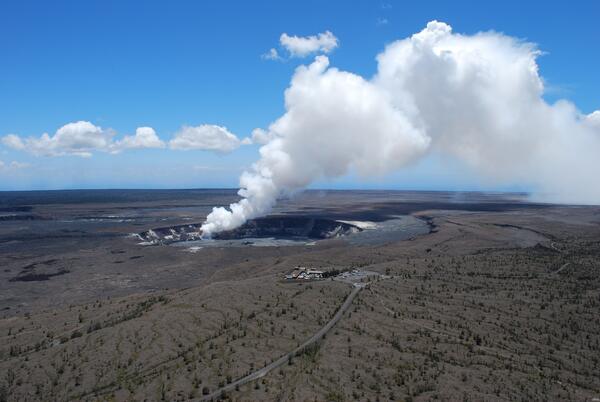
The USGS Hawaiian Volcano Observatory Monitors Kilauea's Summit EruptionThe USGS Hawaiian Volcano Observatory (foreground) is located on the caldera rim of Kilauea Volcano, Hawai'ithe most active volcano in the world. The observatory's location provides an excellent view of summit eruptive activity, which began in 2008.
The USGS Hawaiian Volcano Observatory Monitors Kilauea's Summit Eruption
The USGS Hawaiian Volcano Observatory Monitors Kilauea's Summit EruptionThe USGS Hawaiian Volcano Observatory (foreground) is located on the caldera rim of Kilauea Volcano, Hawai'ithe most active volcano in the world. The observatory's location provides an excellent view of summit eruptive activity, which began in 2008.

USGS Hawaiian Volcano Observatory Monitors Kilauea's Summit Eruption
USGS Hawaiian Volcano Observatory Monitors Kilauea's Summit EruptionThe USGS Hawaiian Volcano Observatory (foreground) is located on the caldera rim of Kilauea Volcano, Hawai'i—the most active volcano in the world. The observatory's location provides an excellent view of summit eruptive activity, which began in 2008.
USGS Hawaiian Volcano Observatory Monitors Kilauea's Summit Eruption
USGS Hawaiian Volcano Observatory Monitors Kilauea's Summit EruptionThe USGS Hawaiian Volcano Observatory (foreground) is located on the caldera rim of Kilauea Volcano, Hawai'i—the most active volcano in the world. The observatory's location provides an excellent view of summit eruptive activity, which began in 2008.

Nighttime view of tephra-jet explosion, Kīlauea, Hawai‘i
Nighttime view of tephra-jet explosion, Kīlauea, Hawai‘iIncandescent arcs trace the path of lava fragments cast out during a tephra-jet explosion at the Waikupanaha ocean entry in 2008. This is a relatively small explosion, reaching a few tens of meters (yards) height, while one earlier in the day was nearly 70 meters (230 ft) in height.
Nighttime view of tephra-jet explosion, Kīlauea, Hawai‘i
Nighttime view of tephra-jet explosion, Kīlauea, Hawai‘iIncandescent arcs trace the path of lava fragments cast out during a tephra-jet explosion at the Waikupanaha ocean entry in 2008. This is a relatively small explosion, reaching a few tens of meters (yards) height, while one earlier in the day was nearly 70 meters (230 ft) in height.

Littoral Explosion At Kilauea Volcano, Hawai'i
When lava from the Pu'u 'Ō'ō-Kupaianaha eruption, active since 1983, meets the ocean, large littoral explosions can result.
When lava from the Pu'u 'Ō'ō-Kupaianaha eruption, active since 1983, meets the ocean, large littoral explosions can result.

Clear day during tradewind conditions at the summit of Kīlauea
Clear day during tradewind conditions at the summit of KīlaueaClear day during tradewind conditions at the summit of Kīlauea Volcano, Hawai‘i
Clear day during tradewind conditions at the summit of Kīlauea
Clear day during tradewind conditions at the summit of KīlaueaClear day during tradewind conditions at the summit of Kīlauea Volcano, Hawai‘i

Gas plume rising from Halema‘uma‘u, Kīlauea, Hawai‘i
Gas plume rising from Halema‘uma‘u, Kīlauea, Hawai‘iGas plume rising from Halema‘uma‘u Crater, Kīlauea Volcano, Hawai‘i
Gas plume rising from Halema‘uma‘u, Kīlauea, Hawai‘i
Gas plume rising from Halema‘uma‘u, Kīlauea, Hawai‘iGas plume rising from Halema‘uma‘u Crater, Kīlauea Volcano, Hawai‘i

Volcanic-gas plume rises from Halema‘uma‘u, Kīlauea
Volcanic-gas plume rises from Halema‘uma‘u, KīlaueaVolcanic-gas plume rises from Halema‘uma‘u Crater, Kīlauea Volcano, Hawai‘i
Volcanic-gas plume rises from Halema‘uma‘u, Kīlauea
Volcanic-gas plume rises from Halema‘uma‘u, KīlaueaVolcanic-gas plume rises from Halema‘uma‘u Crater, Kīlauea Volcano, Hawai‘i

Volcanic-gas plume rises from Halema‘uma‘u, Kīlauea
Volcanic-gas plume rises from Halema‘uma‘u, KīlaueaA plume of volcanic gases (chiefly water vapor, carbon dioxide, and sulfur dioxide), tiny lava and rock particles, and droplets drifts southwest in the tradewinds from Halema‘uma‘u Crater.
Volcanic-gas plume rises from Halema‘uma‘u, Kīlauea
Volcanic-gas plume rises from Halema‘uma‘u, KīlaueaA plume of volcanic gases (chiefly water vapor, carbon dioxide, and sulfur dioxide), tiny lava and rock particles, and droplets drifts southwest in the tradewinds from Halema‘uma‘u Crater.

USGS's HVO perched on the rim of Kīlauea's summit caldera, Hawai‘i
USGS's HVO perched on the rim of Kīlauea's summit caldera, Hawai‘iU.S. Geological Survey's Hawaiian Volcano Observatory perched on the rim of Kīlauea Volcano's summit caldera, Hawai‘i
USGS's HVO perched on the rim of Kīlauea's summit caldera, Hawai‘i
USGS's HVO perched on the rim of Kīlauea's summit caldera, Hawai‘iU.S. Geological Survey's Hawaiian Volcano Observatory perched on the rim of Kīlauea Volcano's summit caldera, Hawai‘i

HVO and Jaggar Museum on Kīlauea's caldera rim, Hawai‘i
HVO and Jaggar Museum on Kīlauea's caldera rim, Hawai‘iClose view of the USGS Hawaiian Volcano Observatory (right, with viewing tower) and National Park Service Jaggar Museum and overlook (left) on Kīlauea Volcano's caldera rim. At least three fault blocks can be seen below the observatory, which developed when Kīlauea's summit collapsed about 500 years ago to form the present-day caldera.
HVO and Jaggar Museum on Kīlauea's caldera rim, Hawai‘i
HVO and Jaggar Museum on Kīlauea's caldera rim, Hawai‘iClose view of the USGS Hawaiian Volcano Observatory (right, with viewing tower) and National Park Service Jaggar Museum and overlook (left) on Kīlauea Volcano's caldera rim. At least three fault blocks can be seen below the observatory, which developed when Kīlauea's summit collapsed about 500 years ago to form the present-day caldera.

Gas plume blown by tradewinds across Crater Rim Drive, Kīlauea
Gas plume blown by tradewinds across Crater Rim Drive, KīlaueaThis section of Crater Rim Drive in Hawai‘i Volcanoes National Park was closed in February 2008 because of the high concentration of volcanic gas blowing across the road from Halema‘uma‘u Crater by prevailing trade winds. The concentration of sulfur dioxide gas in this area is considered hazardous to human health.
Gas plume blown by tradewinds across Crater Rim Drive, Kīlauea
Gas plume blown by tradewinds across Crater Rim Drive, KīlaueaThis section of Crater Rim Drive in Hawai‘i Volcanoes National Park was closed in February 2008 because of the high concentration of volcanic gas blowing across the road from Halema‘uma‘u Crater by prevailing trade winds. The concentration of sulfur dioxide gas in this area is considered hazardous to human health.

Volcanic-gas plume from Halema‘uma‘u drifts SW, Kīlauea
Volcanic-gas plume from Halema‘uma‘u drifts SW, KīlaueaVolcanic-gas plume rises from Halema‘uma‘u Crater as seen from the Jaggar Museum (Hawai‘i Volcanoes National Park) viewing area next to the U.S. Geological Survey's Hawaiian Volcano Observatory.
Volcanic-gas plume from Halema‘uma‘u drifts SW, Kīlauea
Volcanic-gas plume from Halema‘uma‘u drifts SW, KīlaueaVolcanic-gas plume rises from Halema‘uma‘u Crater as seen from the Jaggar Museum (Hawai‘i Volcanoes National Park) viewing area next to the U.S. Geological Survey's Hawaiian Volcano Observatory.

Volcanic gas plume rises from Halema‘uma‘u, Kīlauea
Volcanic gas plume rises from Halema‘uma‘u, KīlaueaVolcanic gas plume rises from Halema‘uma‘u Crater, Kīlauea Volcano, Hawai‘i
Volcanic gas plume rises from Halema‘uma‘u, Kīlauea
Volcanic gas plume rises from Halema‘uma‘u, KīlaueaVolcanic gas plume rises from Halema‘uma‘u Crater, Kīlauea Volcano, Hawai‘i