U.S. flag

An official website of the United States government

Images

Kīlauea images of eruptive activity, field work, and more.

Filter Total Items: 2978
Color photograph of scientists in the field
Scientists temporarily deploy instruments to collect ground-based magnetotelluric (MT) data

During the first half of June, Hawaiian Volcano Observatory (HVO) staff, along with collaborators from other parts of USGS,  temporarily deployed instruments to collect ground-based magnetotelluric (MT) data to image structure and fluids beneath the surface of Kīlauea.

During the first half of June, Hawaiian Volcano Observatory (HVO) staff, along with collaborators from other parts of USGS,  temporarily deployed instruments to collect ground-based magnetotelluric (MT) data to image structure and fluids beneath the surface of Kīlauea.

Color photograph of scientists in field
Scientists temporarily deploy instruments to collect ground-based magnetotelluric (MT) data

HVO staff and collaborators install temporary instruments to collect magnetotelluric (MT) data on Kīlauea volcano’s south flank. At each location, electrodes, induction-coil magnetometers, and data loggers are deployed for 1–2 days. This photo shows a magnetometer being prepared for burial in a narrow and shallow trench to minimize wind noise.

HVO staff and collaborators install temporary instruments to collect magnetotelluric (MT) data on Kīlauea volcano’s south flank. At each location, electrodes, induction-coil magnetometers, and data loggers are deployed for 1–2 days. This photo shows a magnetometer being prepared for burial in a narrow and shallow trench to minimize wind noise.

Color photograph of scientist in field
Scientists temporarily deploy instruments to collect ground-based magnetotelluric (MT) data

At each magnetotelluric (MT) site, three electrodes are installed. The electrodes require electrical contact with the ground and are buried in shallow holes about the width and depth of a spade head. The electrode is encapsulated in a canvas bag filled with bentonite, and water is poured in the electrode hole to improve the contact resistance.

At each magnetotelluric (MT) site, three electrodes are installed. The electrodes require electrical contact with the ground and are buried in shallow holes about the width and depth of a spade head. The electrode is encapsulated in a canvas bag filled with bentonite, and water is poured in the electrode hole to improve the contact resistance.

Color photograph of volcanic vent
June 2, 2022 — Kīlauea, Eruption Continues within Halema‘uma‘u Crater

Telephoto view of the west vent within Halema‘uma‘u Crater, at the summit of Kīlauea. USGS photo taken by J.M. Chang at 12:01 p.m. HST from the south rim. USGS photo by J.M. Chang.

Color image of active lava
May 26, 2022 — Kīlauea — Lava lake activity continues at the summit

Lava lake activity continues in Halema‘uma‘u, at the summit of Kīlauea Volcano. A small stream of lava was pouring into a small pond northwest of the main lava lake, near the west vent. USGS photo by M. Patrick.

Lava lake activity continues in Halema‘uma‘u, at the summit of Kīlauea Volcano. A small stream of lava was pouring into a small pond northwest of the main lava lake, near the west vent. USGS photo by M. Patrick.

Color photograph of lava lake and profile of lava lake depth
Kīlauea Volcano crater filling as of May 2022

This map of the Kīlauea summit is mostly identical to the May 16, 2022, eruption reference map, but also included here are west to east topographic profiles across the caldera.

This map of the Kīlauea summit is mostly identical to the May 16, 2022, eruption reference map, but also included here are west to east topographic profiles across the caldera.

Color map of lava lake temperature
May 18, 2022—Kīlauea summit UAS thermal maps

Unoccupied aircraft systems (UAS) flights on May 18, 2022, allowed for aerial visual and thermal imagery to be collected of Halema‘uma‘u crater at the summit of Kīlauea. The active lake surface is limited to the western portion of the crater.

Unoccupied aircraft systems (UAS) flights on May 18, 2022, allowed for aerial visual and thermal imagery to be collected of Halema‘uma‘u crater at the summit of Kīlauea. The active lake surface is limited to the western portion of the crater.

Color photograph of active lava
A close up view of an outlet channel at Halema‘uma‘u, Kīlauea — May 18, 2022

The feature shown in the photograph is a drainage outlet for the active lava lake of Halema‘uma‘u, a crater within the summit caldera of Kīlauea volcano. Surface plates from the active lake surface are dragged into the outlet and churned up. A small standing wave, about 1 meter or 1 yard tall, is present in the center of the outlet structure.

The feature shown in the photograph is a drainage outlet for the active lava lake of Halema‘uma‘u, a crater within the summit caldera of Kīlauea volcano. Surface plates from the active lake surface are dragged into the outlet and churned up. A small standing wave, about 1 meter or 1 yard tall, is present in the center of the outlet structure.

Color photograph of volcanic vent
Steaming vent of Halema‘uma‘u, Kīlauea — May 18, 2022

The vent within Halema‘uma‘u, at the summit of Kīlauea, was degassing during a field observation visit on the morning of May 18, 2022. The vent is 56 feet tall (17 meters) and has a small puka (hole) visible with bright red glowing lava within on the right side of the photograph.

The vent within Halema‘uma‘u, at the summit of Kīlauea, was degassing during a field observation visit on the morning of May 18, 2022. The vent is 56 feet tall (17 meters) and has a small puka (hole) visible with bright red glowing lava within on the right side of the photograph.

Color photograph of lava lake
Active lake surface of Halema‘uma‘u, Kīlauea — May 18, 2022

A view of the active lava lake within Halema‘uma‘u, taken during a Kīlauea summit monitoring field shift on the morning of May 18, 2022. The active lake is draining into the small pond on the right of the photograph. Spattering along the margins of the lake is common, seen here in the center of the photograph.

A view of the active lava lake within Halema‘uma‘u, taken during a Kīlauea summit monitoring field shift on the morning of May 18, 2022. The active lake is draining into the small pond on the right of the photograph. Spattering along the margins of the lake is common, seen here in the center of the photograph.

Color map of lava lake temperature
May 18, 2022—Kīlauea summit UAS thermal maps

Unoccupied aircraft systems (UAS) flights on May 18, 2022, allowed for aerial visual and thermal imagery to be collected of Halema‘uma‘u crater at the summit of Kīlauea. The active lake surface is limited to the western portion of the crater.

Unoccupied aircraft systems (UAS) flights on May 18, 2022, allowed for aerial visual and thermal imagery to be collected of Halema‘uma‘u crater at the summit of Kīlauea. The active lake surface is limited to the western portion of the crater.

Color photograph of coastline
Isaac Hale Beach Park (Pohoiki) - May 12, 2022

A view of Isaac Hale Beach Park (also known as Pohoiki) in the lower Puna District on the Island of Hawai‘i. Lava from the 2018 Kīlauea lower East Rift Zone eruption, emplaced in late July 2018, is visible on the left. USGS photo taken during a helicopter overflight on May 12, 2022, by N. Deligne.

A view of Isaac Hale Beach Park (also known as Pohoiki) in the lower Puna District on the Island of Hawai‘i. Lava from the 2018 Kīlauea lower East Rift Zone eruption, emplaced in late July 2018, is visible on the left. USGS photo taken during a helicopter overflight on May 12, 2022, by N. Deligne.

Color photograph of inactive vents and lava flows
Ahuʻailāʻau (Fissure 8) — May 12, 2022

 Ahuʻailāʻau (the cone built during the eruption of Fissure 8) was the most active vent during the 2018 lower East Rift Zone eruption of Kīlauea on the Island of Hawai‘i. During a USGS Hawaiian Volcano Observatory routine monitoring overflight on May 12, 2022, the prominent feature was visible in the row of fissures. USGS photo J. Schmith.

 Ahuʻailāʻau (the cone built during the eruption of Fissure 8) was the most active vent during the 2018 lower East Rift Zone eruption of Kīlauea on the Island of Hawai‘i. During a USGS Hawaiian Volcano Observatory routine monitoring overflight on May 12, 2022, the prominent feature was visible in the row of fissures. USGS photo J. Schmith.

Color photograph of inactive lava flow
Kapoho Crater in a frozen lava sea

Kapoho Crater, with its lush green slopes, was surrounded by lava during the 2018 lower East Rift Zone eruption of Kīlauea. Lava flowed all the way around and into the center of the crater, covering the lower part of the cone. Now, the slopes of the crater form a Kīpuka, or area surrounded by younger lava flows. USGS photo by J. Schmith on May 12, 2022.

Kapoho Crater, with its lush green slopes, was surrounded by lava during the 2018 lower East Rift Zone eruption of Kīlauea. Lava flowed all the way around and into the center of the crater, covering the lower part of the cone. Now, the slopes of the crater form a Kīpuka, or area surrounded by younger lava flows. USGS photo by J. Schmith on May 12, 2022.

Color photograph of lava lake
Kīlauea Summit Overflight - May 10, 2022

A view of the lava lake within Halema‘uma‘u at the summit of Kīlauea, taken during a helicopter overflight the morning of May 10, 2022. The image is taken from the east side of the crater looking to the west. The west vent cone complex can be seen in the far western side of the lake.

A view of the lava lake within Halema‘uma‘u at the summit of Kīlauea, taken during a helicopter overflight the morning of May 10, 2022. The image is taken from the east side of the crater looking to the west. The west vent cone complex can be seen in the far western side of the lake.

Color map of eruption at summit of volcano
May 16, 2022—Kīlauea summit eruption reference map

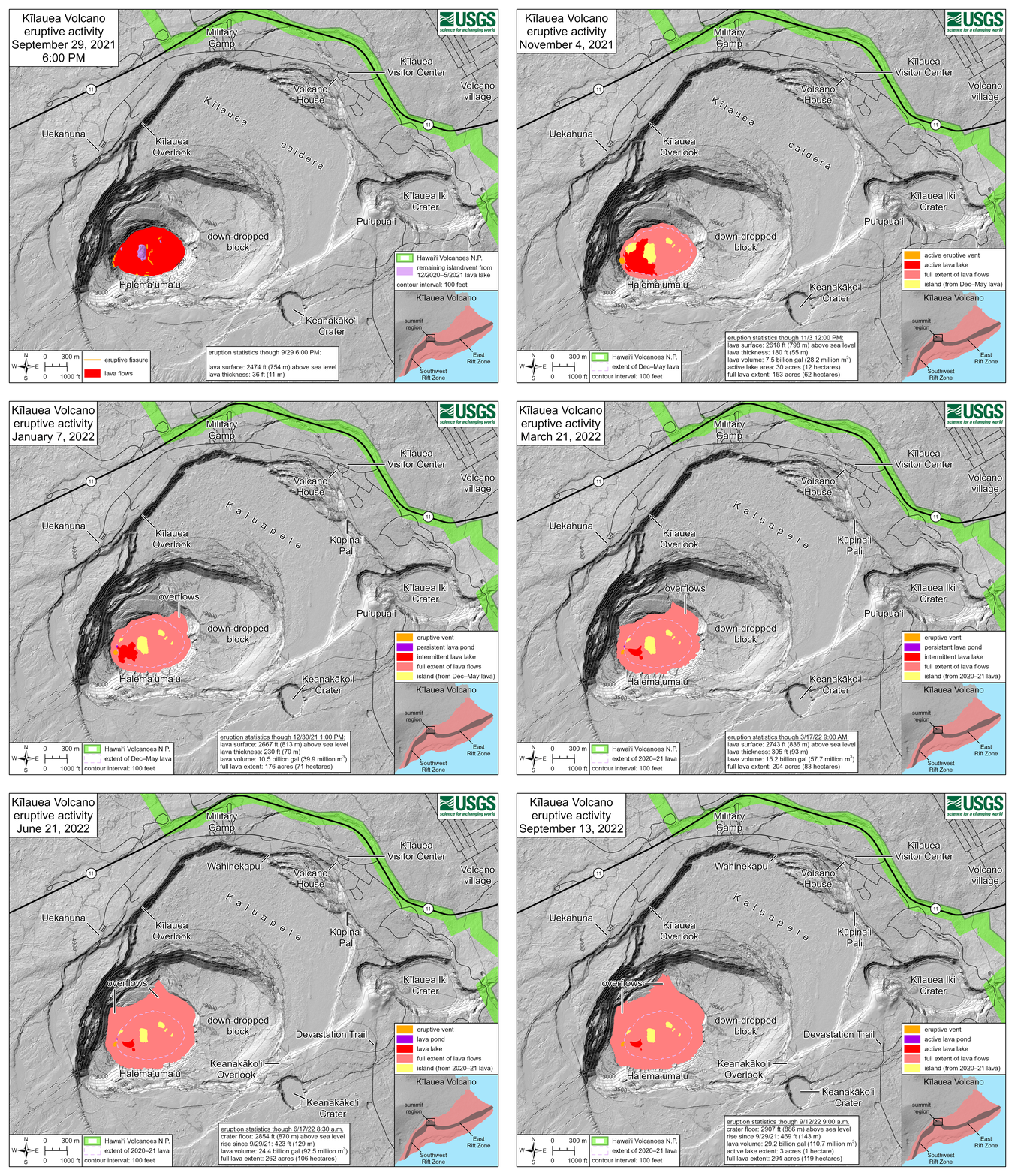
This reference map depicts the ongoing Kīlauea summit eruption on May 16, 2022. One eruptive vent (orange) is active within Halema‘uma‘u, on the western side of the crater floor.

This reference map depicts the ongoing Kīlauea summit eruption on May 16, 2022. One eruptive vent (orange) is active within Halema‘uma‘u, on the western side of the crater floor.

Color photograph of lava lake
Kīlauea summit overflight – May 10, 2022

An overflight at approximately 10 a.m. on May 10, 2022, provided aerial views of the eruption within Halema‘uma‘u crater. Lava continues to erupt from the west vent area, supplying an active lava pond in the western portion of Halema‘uma‘u within Kīlauea summit caldera. USGS photograph by K. Mulliken. 

An overflight at approximately 10 a.m. on May 10, 2022, provided aerial views of the eruption within Halema‘uma‘u crater. Lava continues to erupt from the west vent area, supplying an active lava pond in the western portion of Halema‘uma‘u within Kīlauea summit caldera. USGS photograph by K. Mulliken. 

Color photograph of lava lake
Kīlauea Summit Overflight - May 10, 2022

A view of the lava lake within Halema‘uma‘u at the summit of Kīlauea taken from the south, looking north. An orange glow can be seen in the active part of the lava lake. The dark gray area at the bottom of the photo is a lava flow from September 1982. The dark tan exposure to the north of the 1982 flow is the Keanakāko‘i Ash (ca. 1500–1820 CE).

A view of the lava lake within Halema‘uma‘u at the summit of Kīlauea taken from the south, looking north. An orange glow can be seen in the active part of the lava lake. The dark gray area at the bottom of the photo is a lava flow from September 1982. The dark tan exposure to the north of the 1982 flow is the Keanakāko‘i Ash (ca. 1500–1820 CE).

Color photograph of lava lake
Kīlauea summit eruption - May 10, 2022

A wide view of Halema‘uma‘u crater, at the summit of Kīlauea, looking east. Volcanic gas emission rates remain elevated, with sulfur dioxide measured at about 2,800 tonnes per day on May 12. Volcanic gasses are emitted from the west vent complex, the active lava lake, and from other cracks around the crater floor. USGS photo taken by L.

A wide view of Halema‘uma‘u crater, at the summit of Kīlauea, looking east. Volcanic gas emission rates remain elevated, with sulfur dioxide measured at about 2,800 tonnes per day on May 12. Volcanic gasses are emitted from the west vent complex, the active lava lake, and from other cracks around the crater floor. USGS photo taken by L.

Color map of buildings at summit of volcano
Kīlauea Summit Overflight - May 10, 2022

A view of the former Jaggar Museum and Hawaiian Volcano Observatory buildings, located on the northwest rim of Halema‘uma‘u at the summit of Kīlauea within Hawai‘i Volcanoes National Park. The buildings were closed in 2018 due to damage to the buildings during the Kīlauea summit collapse events of that year.

A view of the former Jaggar Museum and Hawaiian Volcano Observatory buildings, located on the northwest rim of Halema‘uma‘u at the summit of Kīlauea within Hawai‘i Volcanoes National Park. The buildings were closed in 2018 due to damage to the buildings during the Kīlauea summit collapse events of that year.

Color map of lava lake temperature
May 10, 2022—Kīlauea summit thermal map

A helicopter overflight on May 10, 2022, allowed for aerial visual and thermal imagery to be collected of Halema‘uma‘u crater at the summit of Kīlauea. The active lake surface is limited to the western portion of the crater.

A helicopter overflight on May 10, 2022, allowed for aerial visual and thermal imagery to be collected of Halema‘uma‘u crater at the summit of Kīlauea. The active lake surface is limited to the western portion of the crater.

Was this page helpful?