U.S. flag

An official website of the United States government

Images

Kīlauea images of eruptive activity, field work, and more.

Filter Total Items: 2920
Color photograph of scientist taking photos from helicopter
July 24, 2025 — HVO scientist collects data during summit overflight of Kīlauea volcano

A USGS Hawaiian Volcano Observatory scientist takes a series of photos at a constant angle and zoom during a summit overflight of Kīlauea volcano. These images are then processed using structure-from-motion photogrammetry methods to construct a new digital elevation model of the summit.

A USGS Hawaiian Volcano Observatory scientist takes a series of photos at a constant angle and zoom during a summit overflight of Kīlauea volcano. These images are then processed using structure-from-motion photogrammetry methods to construct a new digital elevation model of the summit.

Color photograph of tephra cone
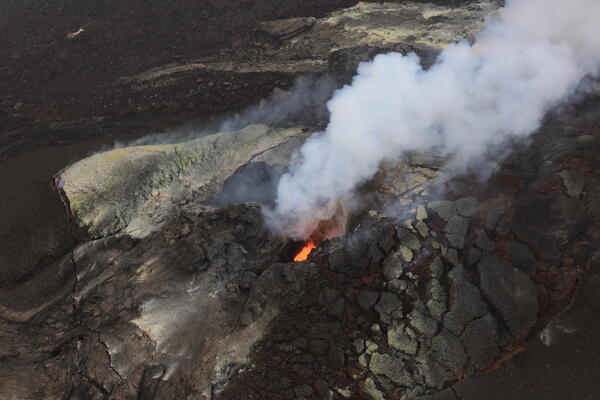
July 25, 2025 — UAS view of tephra cone

This oblique aerial view of the tephra cone from the ongoing Kīlauea summit eruption was captured during a USGS Hawaiian Volcano Observatory UAS (uncrewed aircraft systems) flight on July 25, 2025. The aircraft was flying about 120 m (400 ft) above ground level, with the image captured looking to the northeast.

This oblique aerial view of the tephra cone from the ongoing Kīlauea summit eruption was captured during a USGS Hawaiian Volcano Observatory UAS (uncrewed aircraft systems) flight on July 25, 2025. The aircraft was flying about 120 m (400 ft) above ground level, with the image captured looking to the northeast.

Color photograph of volcanic eruption
July 20, 2025 — Panoramic image showing episode 29 of Halema‘uma‘u eruption within Kaluapele

This panoramic image, taken at 5:39 p.m. H.S.T. on July 20, 2025, shows episode 29 of the ongoing eruption in Halema‘uma‘u crater, within Kaluapele (the summit caldera of Kīlauea volcano).

Color photograph of scientist monitoring volcanic eruption
July 20, 2025 — Monitoring Kīlauea summit eruption episode 29

During episode 29 of lava fountaining from the ongoing Kīlauea summit eruption, a USGS scientist uses a laser rangefinder from the caldera rim to measure the width and distance of lava channels—data that helps estimate the flow’s velocity. USGS staff visit this hazardous area with permission from Hawai‘i Volcanoes National Park.

During episode 29 of lava fountaining from the ongoing Kīlauea summit eruption, a USGS scientist uses a laser rangefinder from the caldera rim to measure the width and distance of lava channels—data that helps estimate the flow’s velocity. USGS staff visit this hazardous area with permission from Hawai‘i Volcanoes National Park.

Color photograph of eruption through a lens
July 20, 2025 — Telephoto view of episode 29 at Kīlauea's summit

This view of episode 29 lava fountains within Halema‘uma‘u crater at the summit of Kīlauea was captured through the lens of a laser rangefinder device that USGS Hawaiian Volcano Observatory scientists were using to measure eruptive features. This photo was taken at 7:10 a.m. H.S.T. on July 20, 2025, nearly 2 hours after the start of episode 29.

This view of episode 29 lava fountains within Halema‘uma‘u crater at the summit of Kīlauea was captured through the lens of a laser rangefinder device that USGS Hawaiian Volcano Observatory scientists were using to measure eruptive features. This photo was taken at 7:10 a.m. H.S.T. on July 20, 2025, nearly 2 hours after the start of episode 29.

Color photograph of scientist measuring volcanic deposit
July 15, 2025 — Kīlauea summit kinematic GPS survey

Following episode 28 of lava fountaining during the ongoing Kīlauea summit eruption, USGS scientists conducted a kinematic GPS survey to measure changes in the newly formed tephra hill along the caldera rim. This work was carried out with permission from Hawai‘i Volcanoes National Park.

Following episode 28 of lava fountaining during the ongoing Kīlauea summit eruption, USGS scientists conducted a kinematic GPS survey to measure changes in the newly formed tephra hill along the caldera rim. This work was carried out with permission from Hawai‘i Volcanoes National Park.

Color photograph of a lava fountain
July 20, 2025 — Episode 29 at Kīlauea

Lava fountaining from episode 29 of the ongoing Halemaʻumaʻu eruption began around 5:15 a.m. HST on July 20. The eruption produced large lava flows from the north vent, which traveled approximately 1.5 miles (2.5 kilometers) across the caldera floor. USGS photo by M. Benage.

Lava fountaining from episode 29 of the ongoing Halemaʻumaʻu eruption began around 5:15 a.m. HST on July 20. The eruption produced large lava flows from the north vent, which traveled approximately 1.5 miles (2.5 kilometers) across the caldera floor. USGS photo by M. Benage.

Color photograph of volcanic deposits around eruptive vents in Halemaʻumaʻu
July 17, 2025 — Cone growth around Halema‘uma‘u eruptive vents within Kaluapele

Significant cracks have appeared in the cone around the eruptive vents in Halemaʻumaʻu, as this feature has slumped downwards following episode 28. The south vent, which did not erupt during episode 28, was completely covered but the north vent remains visibly degassing. Mauna Kea is on the horizon in the background of the image. USGS photo by K. Mulliken. 

Significant cracks have appeared in the cone around the eruptive vents in Halemaʻumaʻu, as this feature has slumped downwards following episode 28. The south vent, which did not erupt during episode 28, was completely covered but the north vent remains visibly degassing. Mauna Kea is on the horizon in the background of the image. USGS photo by K. Mulliken. 

Color photograph of UAS pilot and UAS in air
July 17, 2025 — UAS pilot lands UAS after flight over Halema‘uma‘u

A USGS Hawaiian Volcano Observatory pilot guides a UAS (uncrewed aircraft systems) to the landing pad after an observational flight over the eruptive vents in Halemaʻumaʻu.

Color photograph of volcanic landscape
July 17, 2025 — Tephra hill southwest of Halema‘uma‘u eruption, Mauna Loa in background

The tephra mound on the crater rim southwest of the active vents in Halemaʻumaʻu is nearly 100 feet (30 m) tall after 28 episodes of lava fountaining since December 23, 2024. The profile of the tephra mound nearly mirrors that of Mauna Loa, outlined behind it. USGS photo by K. Mulliken. 

The tephra mound on the crater rim southwest of the active vents in Halemaʻumaʻu is nearly 100 feet (30 m) tall after 28 episodes of lava fountaining since December 23, 2024. The profile of the tephra mound nearly mirrors that of Mauna Loa, outlined behind it. USGS photo by K. Mulliken. 

Color photograph of volcanic vent degassing
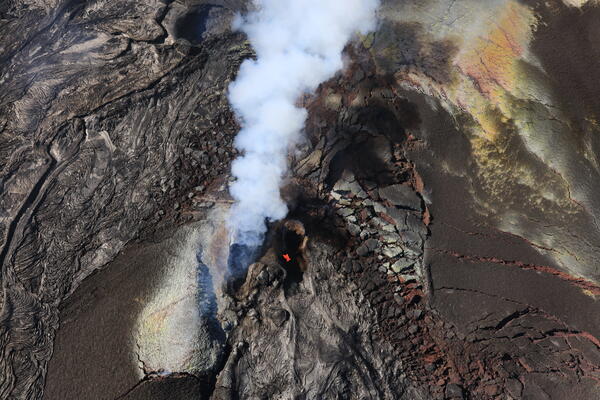
July 17, 2025 — UAS view into north vent

This near-vertical view into the north vent within Halema‘uma‘u crater was captured during a USGS Hawaiian Volcano Observatory UAS (uncrewed aircraft systems) flight on July 17, 2025. The aircraft was about 150 m (500 ft) above the vent, with north oriented to the upper left in this view. No incandescence or lava was visible within the vent.

This near-vertical view into the north vent within Halema‘uma‘u crater was captured during a USGS Hawaiian Volcano Observatory UAS (uncrewed aircraft systems) flight on July 17, 2025. The aircraft was about 150 m (500 ft) above the vent, with north oriented to the upper left in this view. No incandescence or lava was visible within the vent.

Color photograph of tephra on road
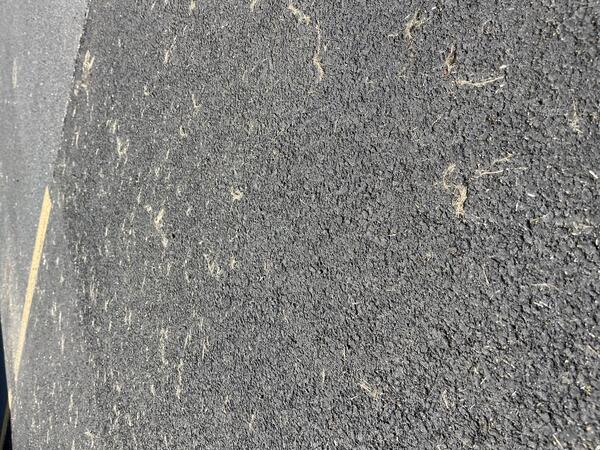
July 17, 2025 — Tephra on damaged part of Crater Rim Drive

Crater Rim Drive within Hawaiʻi Volcanoes National Park was damaged during the earthquakes and collapse events in 2018. Tephra has been deposited parts of the damaged road during recent lava fountaining episodes in Halemaʻumaʻu, underscoring the hazardous nature of this area that has remained closed to the public since 2008. USGS photo by K. Mulliken. 

Crater Rim Drive within Hawaiʻi Volcanoes National Park was damaged during the earthquakes and collapse events in 2018. Tephra has been deposited parts of the damaged road during recent lava fountaining episodes in Halemaʻumaʻu, underscoring the hazardous nature of this area that has remained closed to the public since 2008. USGS photo by K. Mulliken. 

Color satellite image of eruption area
July 17, 2025 — Satellite image of Kīlauea tephra and lava flow deposits from ongoing eruption

Following episode 28 of lava fountaining at the summit of Kīlauea on July 9, this satellite image was acquired on July 11. It shows the tephra deposit extending in the predominant downwind direction to the southwest in the closed area of Hawaiʻi Volcanoes National Park.

Following episode 28 of lava fountaining at the summit of Kīlauea on July 9, this satellite image was acquired on July 11. It shows the tephra deposit extending in the predominant downwind direction to the southwest in the closed area of Hawaiʻi Volcanoes National Park.

Scientists work gather around a volcano monitoring station
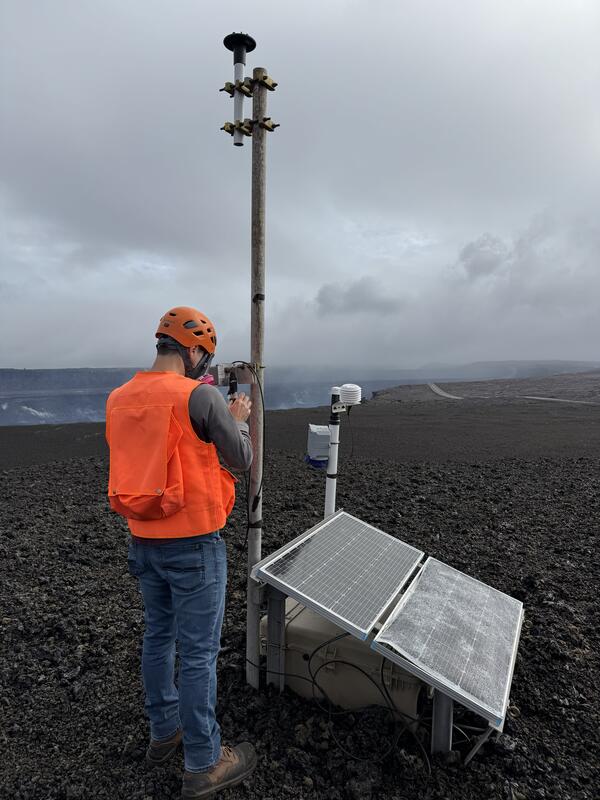
July 10, 2025 — USGS field engineers service a volcano monitoring station at the summit of Kīlauea

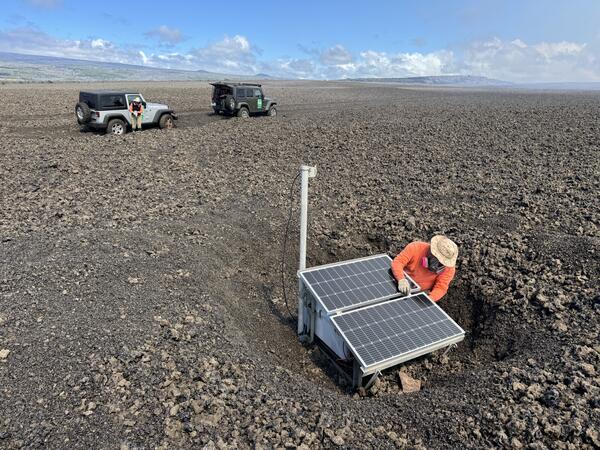
On July 10, USGS field engineers visited one of the volcanic gas monitoring stations downwind of the summit of Kīlauea, within the closed area of Hawaiʻi Volcanoes National Park. This area has been blanketed with tephra material during recent eruptive episodes within Halemaʻumaʻu. USGS photo by M. Cappos. 

On July 10, USGS field engineers visited one of the volcanic gas monitoring stations downwind of the summit of Kīlauea, within the closed area of Hawaiʻi Volcanoes National Park. This area has been blanketed with tephra material during recent eruptive episodes within Halemaʻumaʻu. USGS photo by M. Cappos. 

Scientist uses power washer to spray off solar panels
July 10, 2025 — Cleaning off solar panels of monitoring equipment at the summit of Kīlauea

Solar panels that power USGS volcano monitoring equipment can be covered with tephra during eruptive episodes at the summit of Kīlauea. These tephra particles can range in size from fine ash to tennis-ball sized and larger.  USGS field engineers visit these stations after eruptive episodes to clean them off and restore power to the stations. USGS photo by M.

Solar panels that power USGS volcano monitoring equipment can be covered with tephra during eruptive episodes at the summit of Kīlauea. These tephra particles can range in size from fine ash to tennis-ball sized and larger.  USGS field engineers visit these stations after eruptive episodes to clean them off and restore power to the stations. USGS photo by M.

Color photograph of scientist walking on new volcanic deposit
July 10, 2025 — Using snowshoes on Kīlauea

USGS Hawaiian Volcano Observatory field engineers visited monitoring stations downwind of the Kīlauea summit eruptive vents on July 10. They wore snowshoes as the large footprint keeps the field engineers walking on top of the frothy pumice everywhere, rather than through it. USGS photo by M. Warren. 

USGS Hawaiian Volcano Observatory field engineers visited monitoring stations downwind of the Kīlauea summit eruptive vents on July 10. They wore snowshoes as the large footprint keeps the field engineers walking on top of the frothy pumice everywhere, rather than through it. USGS photo by M. Warren. 

Color photograph of lava fountain
July 9, 2025 — Episode 28 of the Halema‘uma‘u Kīlauea summit eruption

Lava fountaining associated with episode 28 of the ongoing Halemaʻumaʻu eruption began at 4:10 a.m. HST on July 9,  following several days of gas pistoning cycles, some of which produced small lava overflows at the north vent on July 8. USGS photo by L. Gallant. 

Lava fountaining associated with episode 28 of the ongoing Halemaʻumaʻu eruption began at 4:10 a.m. HST on July 9,  following several days of gas pistoning cycles, some of which produced small lava overflows at the north vent on July 8. USGS photo by L. Gallant. 

Color photograph of lava fountain and eruption plume
July 9, 2025 — Episode 28 Halema‘uma‘u lava fountain and eruption plume at Kīlauea summit

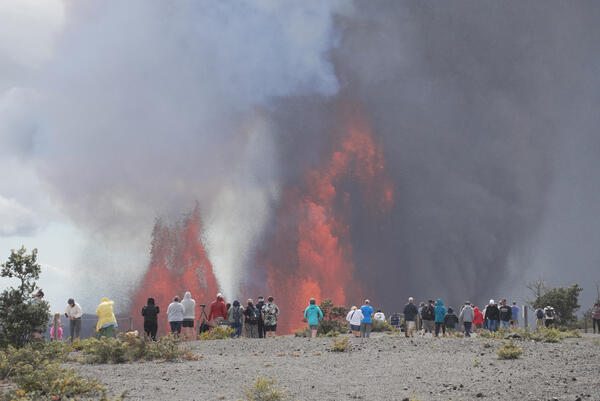
Episode 28 of the ongoing Halemaʻumaʻu eruption began just after 4 a.m. HST on July 9, 2025. This photograph was taken from the north rim of the caldera around 6:30 a.m., as Hawaiʻi Volcanoes National Park visitors gathered to view the episode. USGS photo by K. Mulliken.

Episode 28 of the ongoing Halemaʻumaʻu eruption began just after 4 a.m. HST on July 9, 2025. This photograph was taken from the north rim of the caldera around 6:30 a.m., as Hawaiʻi Volcanoes National Park visitors gathered to view the episode. USGS photo by K. Mulliken.

Color panoramic photo of a volcanic caldera with eruption
July 9, 2025 — Panoramic image showing episode 28 of Halema‘uma‘u eruption within Kaluapele

This panoramic image, taken around 6:30 a.m. HST on July 9, 2025, shows episode 28 of the ongoing eruption in Halemaʻumaʻu crater, within Kaluapele (the summit caldera of Kīlauea volcano). This view, from the north rim of the caldera, shows that the ongoing eruption has been occurring in the southwest part of the caldera. USGS photo by K. Mulliken. 

This panoramic image, taken around 6:30 a.m. HST on July 9, 2025, shows episode 28 of the ongoing eruption in Halemaʻumaʻu crater, within Kaluapele (the summit caldera of Kīlauea volcano). This view, from the north rim of the caldera, shows that the ongoing eruption has been occurring in the southwest part of the caldera. USGS photo by K. Mulliken. 

Color photograph of volcanic material deposited on landscape
July 9, 2025 — View of the growing tephra hill after episode 28 at Kīlauea

After episode 28 ended, USGS geologists inspected the tephra deposit southwest of the eruptive vents, in the closed area of Hawai‘i Volcanoes National Park. The tephra continues to accumulate and build up a hill that is more than 80 ft (~25 m) high, covering parts of Crater Rim Drive.

After episode 28 ended, USGS geologists inspected the tephra deposit southwest of the eruptive vents, in the closed area of Hawai‘i Volcanoes National Park. The tephra continues to accumulate and build up a hill that is more than 80 ft (~25 m) high, covering parts of Crater Rim Drive.

Was this page helpful?