An official website of the United States government
Here's how you know
Official websites use .gov
A .gov website belongs to an official government organization in the United States.
Secure .gov websites use HTTPS
A lock () or https:// means you’ve safely connected to the .gov website. Share sensitive information only on official, secure websites.
Kīlauea's summit is no longer erupting; lava supply to the Halemaʻumaʻu lava lake has ceased and sulfur dioxide emissions have decreased to near pre-eruption background levels. HVO field crews—equipped with specialized safety gear—monitor for new changes from within the closed area of Hawai‘i Volcanoes National Park with NPS permission.
HVO scientists collect detailed data to assess hazards and understand evolving processes at Kīlauea's summit, all of which are shared with the National Park Service and emergency managers. Access to this hazardous area is by permission from, and in coordination with, Hawai‘i Volcanoes National Park.
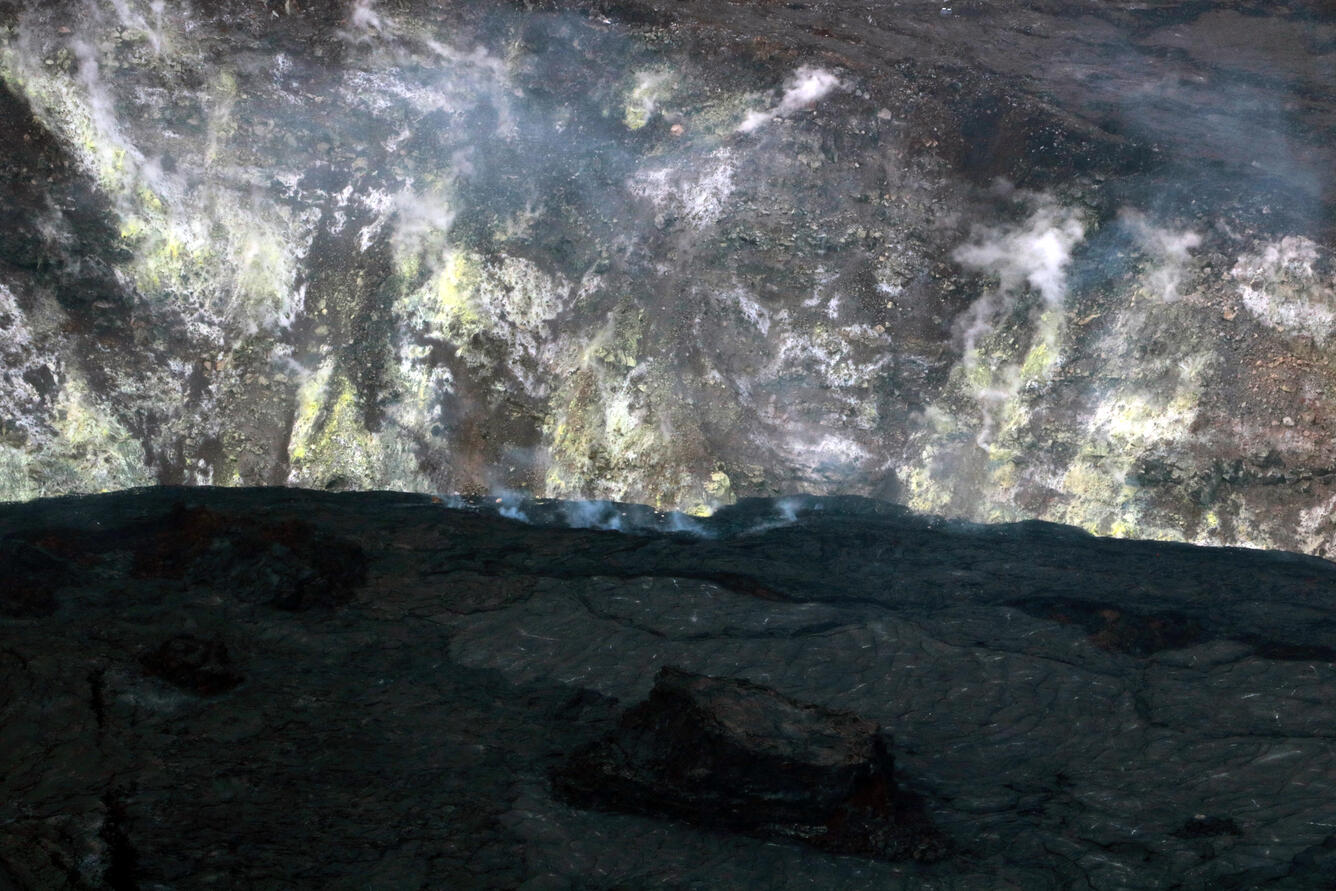
No eruptive activity or major changes were observed during a USGS Hawaiian Volcano Observatory Kīlauea summit monitoring shift on June 8, 2021. An area near the north wall of Halema‘uma‘u continues to visibly emit gases, though the eruption has paused. The most recent sulfur dioxide emission rate, measured on June 4, remains slightly elevated at 54 tonnes per day. USGS photo by K. Mulliken.
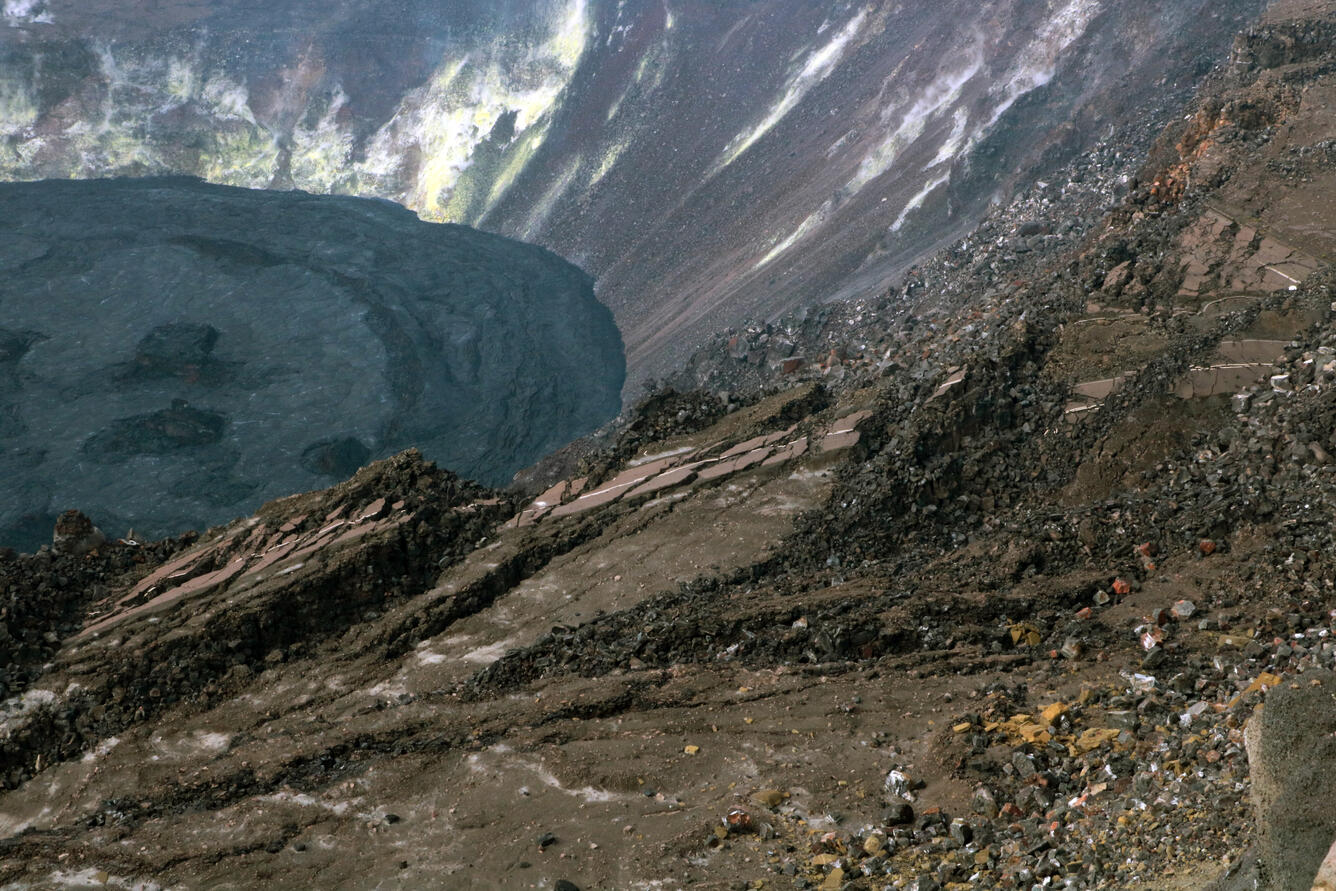
Portions of Crater Rim Drive, which was damaged during the 2018 Kīlauea summit collapse, are visible from the south rim of Halema‘uma‘u. The lava lake within Halema‘uma‘u and the east wall of Halema‘uma‘u crater are visible in the background. This area of Hawai‘i Volcanoes National Park remains closed to the public due to hazardous conditions. With permission from the National Park Service, USGS Hawaiian Volcano Observatory staff, equipped with personal protective equipment, monitor Kīlauea from within this closed area. USGS photo taken by K. Mulliken.