An official website of the United States government
Here's how you know
Official websites use .gov
A .gov website belongs to an official government organization in the United States.
Secure .gov websites use HTTPS
A lock () or https:// means you’ve safely connected to the .gov website. Share sensitive information only on official, secure websites.
The ongoing eruption at Kīlauea's summit began at 3:21 p.m. HST on September 29, 2021. Lava activity is currently confined within Halema'uma'u crater. Gas emissions and seismic activity at the summit remain elevated. HVO field crews—equipped with specialized safety gear—monitor the eruption from within the closed area of Hawai‘i Volc
HVO scientists collect detailed data to assess hazards and understand how the eruption is evolving at Kīlauea's summit, all of which are shared with the National Park Service and emergency managers. Access to this hazardous area is by permission from, and in coordination with, Hawai‘i Volcanoes National Park.
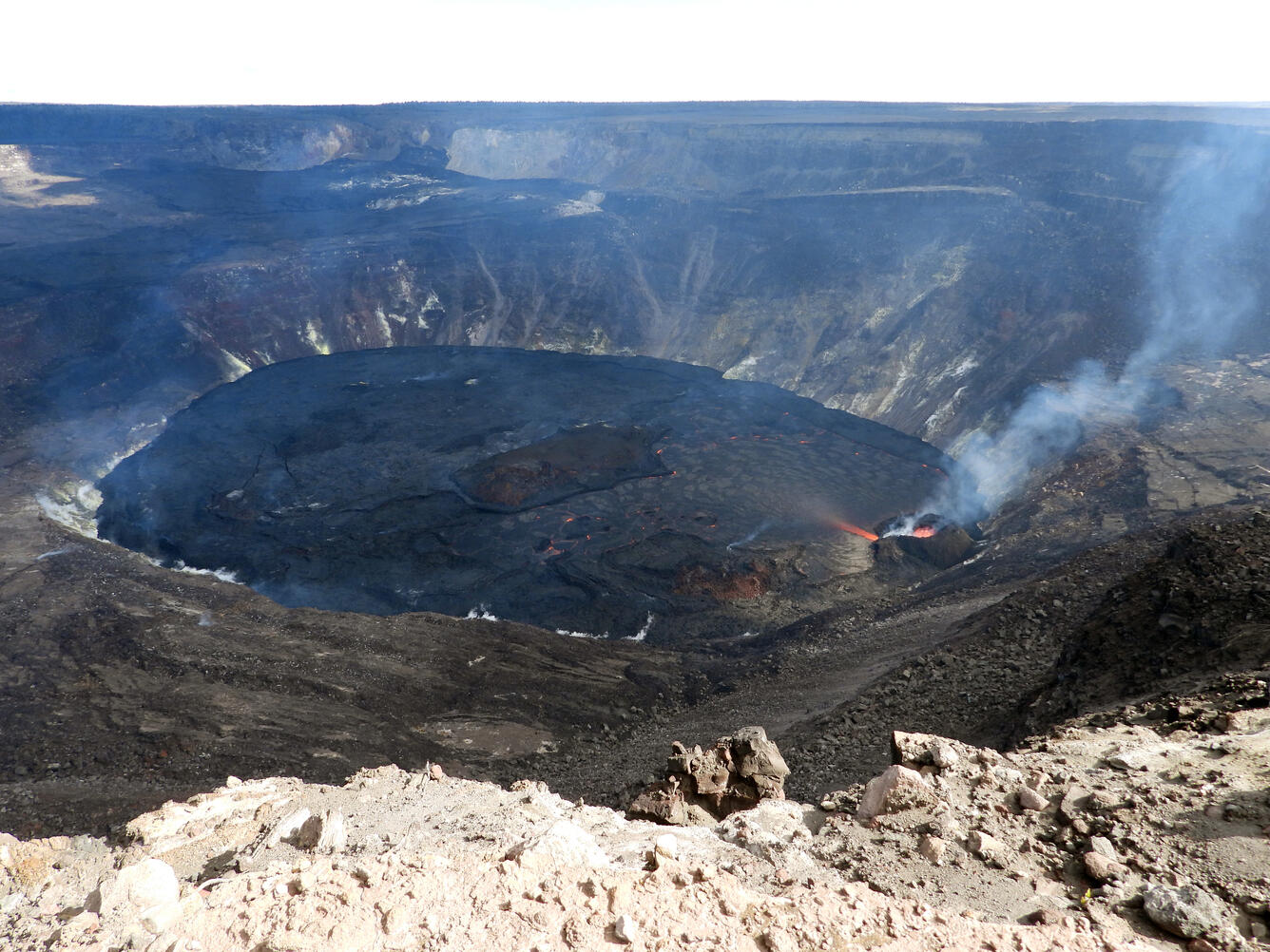
The vent in the western wall of Halema‘uma‘u continues to erupt at the summit of Kīlauea. Volcanic gas emissions, primarily from the west vent (right), remain elevated. Sulfur dioxide (SO2) emission rates were measured at around 3,600 tonnes per day on October 28, 2021. USGS photo taken on November 3, 2021, by L. DeSmither.
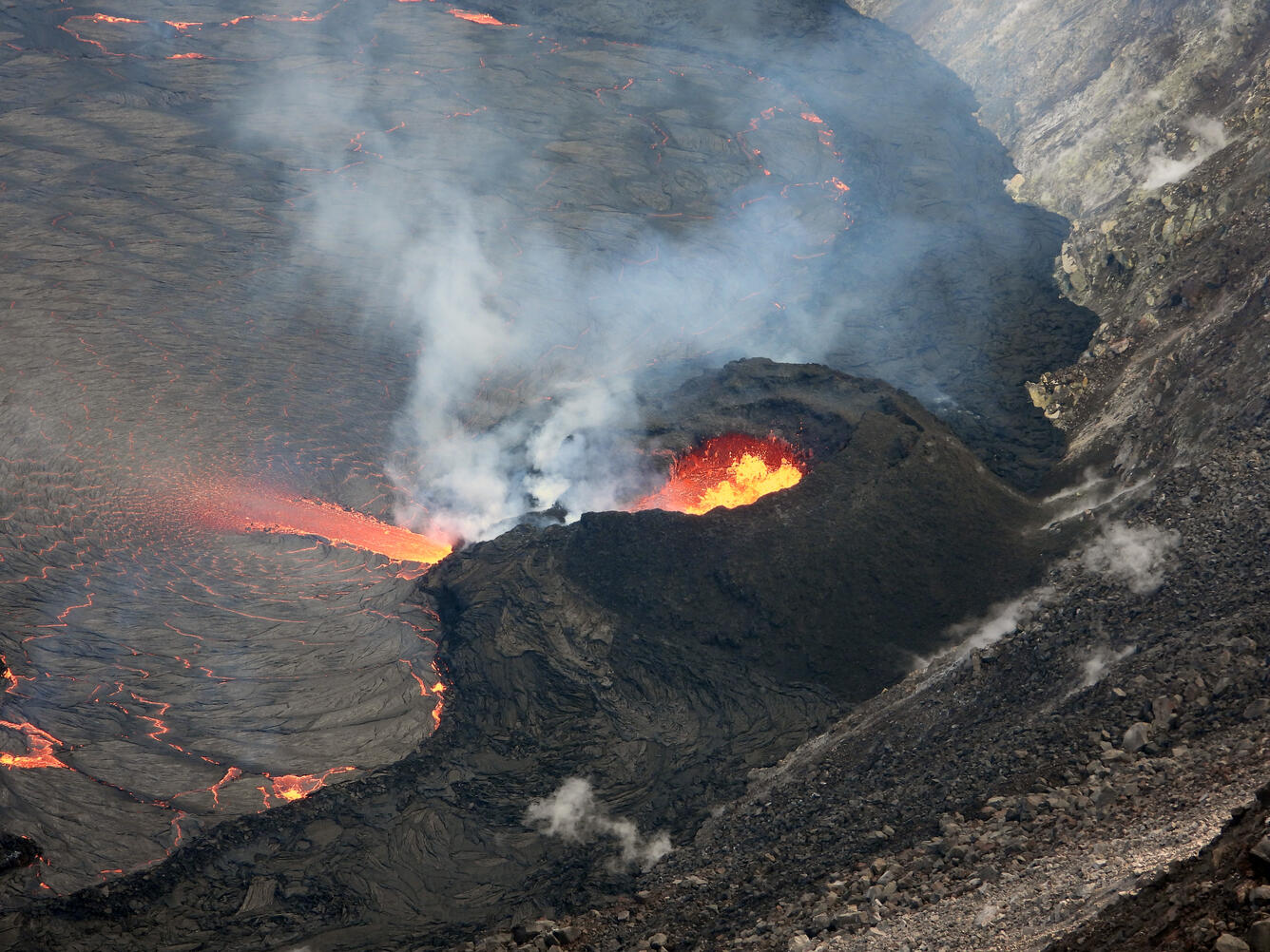
A telephoto image of the west vent in Halema‘uma‘u, taken from the northwest rim on November 3. Low roiling lava continues to erupt from the west vent, with occasional larger bursts of spatter. The spatter cone that has built up since the eruption began on September 29, contains ponded lava that supplies the lava lake through the tubed-over spillway. This photo was taken from an area of Kīlauea's summit within Hawai‘i Volcanoes National Park that remains closed to the public due to hazardous conditions. USGS photo by L. DeSmither.
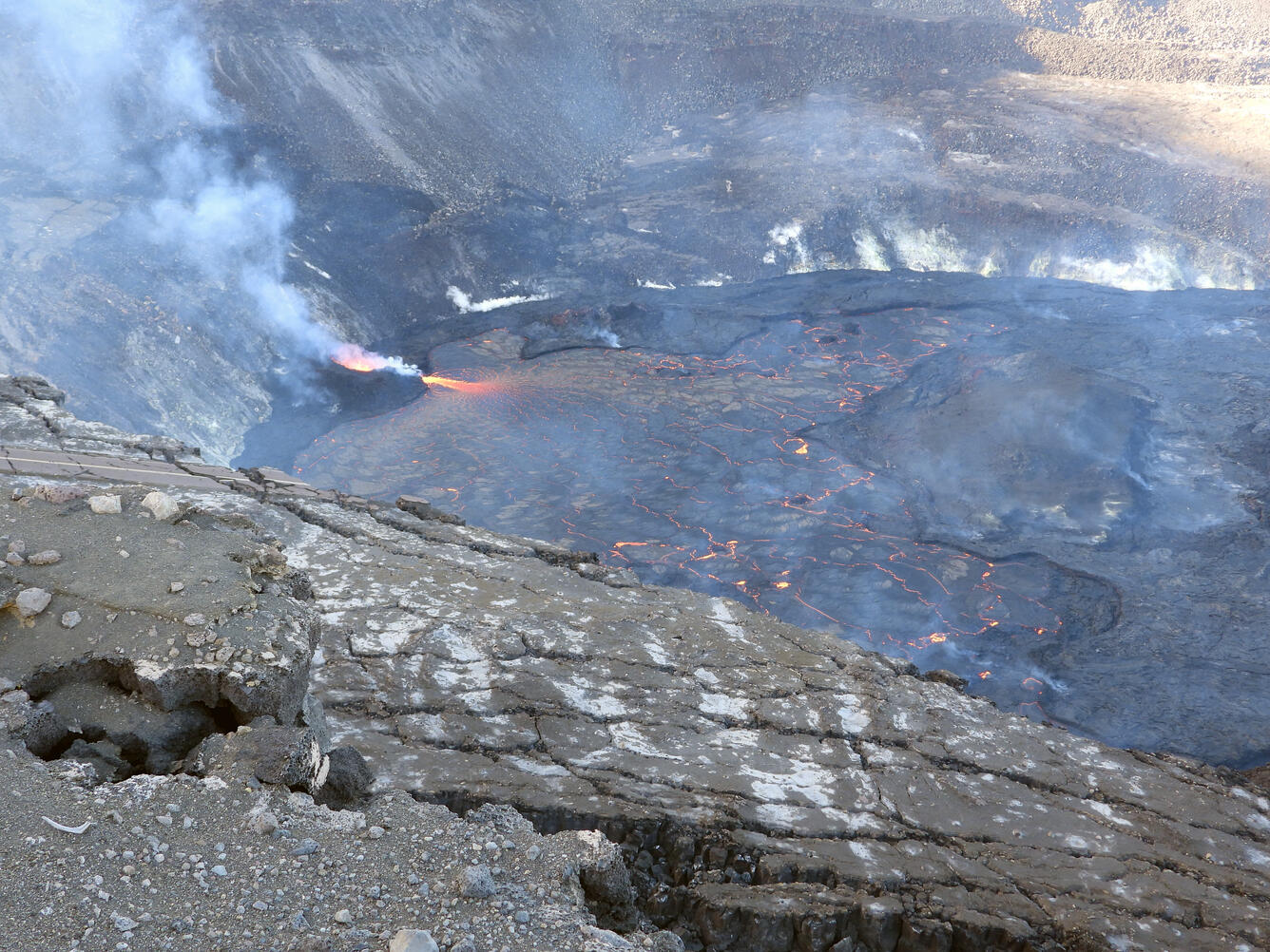
A photo of the west vent and active western portion of the lava lake within Halema‘uma‘u, at Kīlauea summit. The eastern side of the lava lake (out of view to the right), has a stagnant solidified crust on the surface. USGS photo taken by L. DeSmither on November 3, 2021.
A telephoto image of the west vent in Halema‘uma‘u crater at the summit of Kīlauea. Ponded lava within the spatter cone supplies lava into the lava lake through the tubed-over spillway. The fast-moving lava stream is incandescent as it enters into the lava lake at the base of the cone. As the lava slows and cools, a thin crust begins to form on the surface (center right). This photo was taken from the southern crater rim on November 3, in an area of Hawai‘i Volcanoes National Park that remains closed to the public due to hazardous conditions. USGS photo by L. DeSmither.