



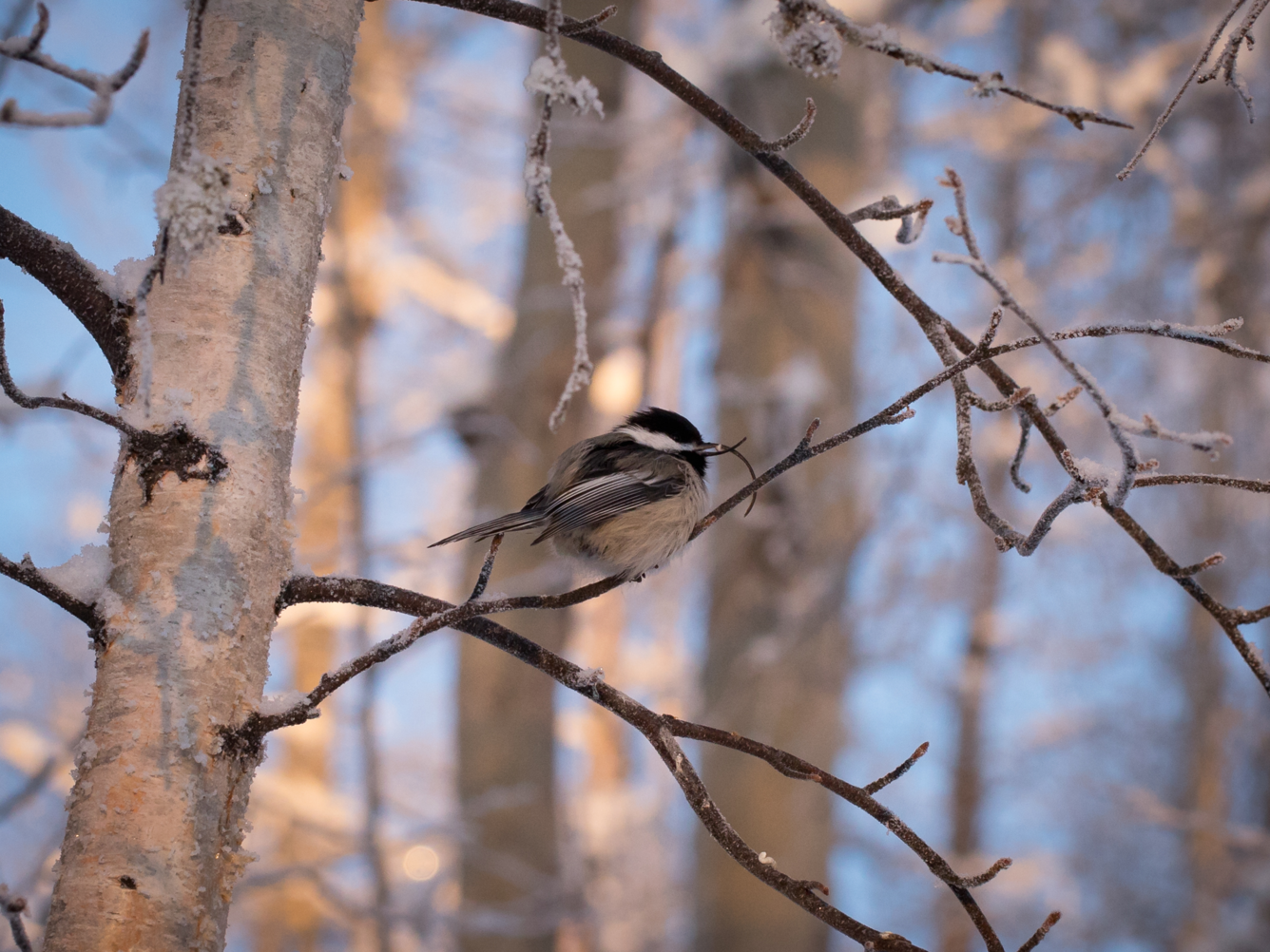
Black-capped Chickadee with beak deformity
Northern Flicker with beak deformity
Steller's Jay with beak deformity
Over the past 26 years, Alaskans have witnessed a startling increase of beak deformities among Black-capped Chickadees and other species of resident birds. This disease, called avian keratin disorder (AKD), is characterized by debilitating beak overgrowth and other abnormalities of keratinized tissues. Affected birds have difficulty feeding and preening and may suffer high rates of mortality. If you see a bird with a deformed beak, please click the link below to report your observation.
We began research in 1999 and have since identified more than 3,000 affected Black-capped Chickadees in Alaska—the highest concentration of gross deformities ever recorded in a wild bird population. Increasing numbers of other species, including American Crows, Downy Woodpeckers, Steller’s Jays, and Black-billed Magpies have also been observed with beak deformities throughout the state. Growing numbers of reports from North America and Europe suggest that avian keratin disorder (AKD) may be spreading to a larger geographic area.
In 2016, we identified a novel picornavirus (Poecivirus) in Alaskan Black-capped Chickadees with AKD. We’ve subsequently confirmed a strong association between Poecivirus and beak deformities in chickadees and detected a closely related virus in other species with similar beak deformities. Together, this evidence suggests that Poecivirus is a likely candidate cause of AKD.
Our investigations are focusing on understanding more about this virus, including how it may be contributing to beak deformities, whether it occurs in multiple species, and how it is transmitted. Previously, we examined potential factors, such as environmental contaminants, nutritional deficiencies, and parasites, found no clear evidence linking these to AKD in Alaskan birds.
Click on each link below to learn more about beak deformities
Background
Physical Description
Effects on Birds
Prevalence, Distribution and Timing
Species Affected
Possible Causes
Below are other science projects associated with this project.

Landbird Research in Alaska
Over the past 26 years, Alaskans have witnessed a startling increase of beak deformities among Black-capped Chickadees and other species of resident birds. This disease, called avian keratin disorder (AKD), is characterized by debilitating beak overgrowth and other abnormalities of keratinized tissues. Affected birds have difficulty feeding and preening and may suffer high rates of mortality. If you see a bird with a deformed beak, please click the link below to report your observation.
We began research in 1999 and have since identified more than 3,000 affected Black-capped Chickadees in Alaska—the highest concentration of gross deformities ever recorded in a wild bird population. Increasing numbers of other species, including American Crows, Downy Woodpeckers, Steller’s Jays, and Black-billed Magpies have also been observed with beak deformities throughout the state. Growing numbers of reports from North America and Europe suggest that avian keratin disorder (AKD) may be spreading to a larger geographic area.
In 2016, we identified a novel picornavirus (Poecivirus) in Alaskan Black-capped Chickadees with AKD. We’ve subsequently confirmed a strong association between Poecivirus and beak deformities in chickadees and detected a closely related virus in other species with similar beak deformities. Together, this evidence suggests that Poecivirus is a likely candidate cause of AKD.
Our investigations are focusing on understanding more about this virus, including how it may be contributing to beak deformities, whether it occurs in multiple species, and how it is transmitted. Previously, we examined potential factors, such as environmental contaminants, nutritional deficiencies, and parasites, found no clear evidence linking these to AKD in Alaskan birds.
Click on each link below to learn more about beak deformities
Background
Physical Description
Effects on Birds
Prevalence, Distribution and Timing
Species Affected
Possible Causes
Below are other science projects associated with this project.