



Modeling and Ecology in Action: Informing Invasive Species Management
The modeling team is at the forefront of developing and applying advanced quantitative methods to better understand and manage invasive species.
Principal Investigator: Matthew R. Acre
Additional CERC staff: Sophia Bonjour and Dustin Broaddus
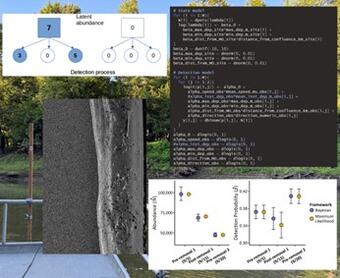
Our work centers on designing robust population dynamics and species distribution models that quantify abundance, stock status, and behavioral patterns of invasive carps, such as Grass Carp and Silver Carp. By integrating data from acoustic telemetry, side-scan sonar, and other field sampling techniques, we evaluate the effectiveness of current management strategies and provide actionable insights to resource managers. This innovative approach not only supports ongoing efforts to optimize harvest and removal operations but also lays the groundwork for predicting future invasion risks under various management scenarios.
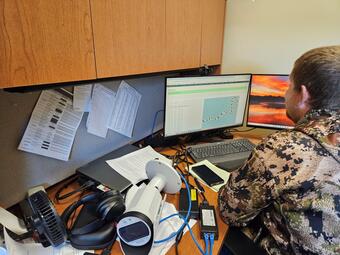
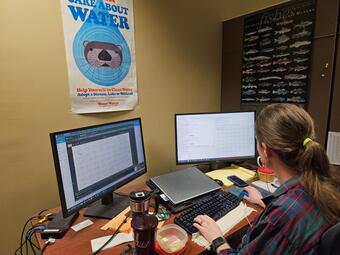
In close collaboration with partners from other federal entities, state agencies, and academic institutions, our team plays a critical role within national advisory committees like the Grass Carp Advisory Committee. Our adaptable modeling framework allows us to promptly address emerging questions and adapt our methods to meet diverse needs, from optimizing sampling protocols to informing large-scale stock assessments and management planning. The tangible outcomes of our research, including improved capture rates and refined data collection methods, underscore the scientific rigor and practical impact of our work on invasive species control at local, regional, and international scales.
Return to Invasive Species Ecology
Return to Fisheries and Invasive Species
The modeling team is at the forefront of developing and applying advanced quantitative methods to better understand and manage invasive species.
Principal Investigator: Matthew R. Acre
Additional CERC staff: Sophia Bonjour and Dustin Broaddus
Our work centers on designing robust population dynamics and species distribution models that quantify abundance, stock status, and behavioral patterns of invasive carps, such as Grass Carp and Silver Carp. By integrating data from acoustic telemetry, side-scan sonar, and other field sampling techniques, we evaluate the effectiveness of current management strategies and provide actionable insights to resource managers. This innovative approach not only supports ongoing efforts to optimize harvest and removal operations but also lays the groundwork for predicting future invasion risks under various management scenarios.
In close collaboration with partners from other federal entities, state agencies, and academic institutions, our team plays a critical role within national advisory committees like the Grass Carp Advisory Committee. Our adaptable modeling framework allows us to promptly address emerging questions and adapt our methods to meet diverse needs, from optimizing sampling protocols to informing large-scale stock assessments and management planning. The tangible outcomes of our research, including improved capture rates and refined data collection methods, underscore the scientific rigor and practical impact of our work on invasive species control at local, regional, and international scales.
Return to Invasive Species Ecology
Return to Fisheries and Invasive Species