



Every Bird Counts – Delivering Gold Standard Science for North America’s Birds
Each spring, as migratory birds span continents, our ability to protect them depends on one simple but powerful force: people paying attention. This World Migratory Bird Day, the theme “Every Bird Counts – Your Observations Matter!” underscores how everyday observers and community scientists provide the essential data that drives bird conservation.
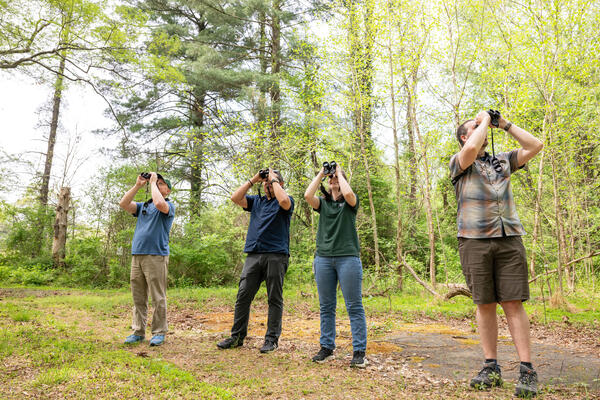
Every spring, as migratory birds cross continents and connect ecosystems, our ability to understand and protect them depends on something both powerful and profoundly simple – people paying attention. This World Migratory Bird Day, the theme “Every Bird Counts – Your Observations Matter!” is more than a celebration of birdwatching, it’s a recognition of the essential role that everyday observers, volunteers, and community scientists play in shaping the future of bird conservation.
For the USGS, nowhere is this more evident than in two of our most influential long-term bird monitoring programs: the Bird Banding Laboratory (BBL), established in 1920, and the North American Breeding Bird Survey (BBS), which marks its 60th year in 2026. Each system operates differently, yet together they form the backbone of how we understand birds across the continent.
The BBL provides science at the scale of individual birds. It is the regulatory cornerstone of federal banding efforts, coordinating nearly all permitted banding activities in the U.S. and processing millions of band reports that offer unmatched insight into survival, migration, and harvest rates. For species like waterfowl, these band recoveries are the raw ingredients that inform long-term harvest models and management guidelines. Every time someone reports a band at the USGS’s ReportBand.gov, that single action transforms a personal moment into a critical data point. One bird, one band, one report – each observation matters.
The BBS offers a different, and equally vital, lens. Instead of tracking individual birds, the BBS captures how entire bird populations are faring across their breeding range. Each spring, thousands of volunteers follow standardized 24.5‑mile roadside routes, counting every bird they see or hear. This consistency is what allows the BBS to act like a “Dow Jones Index for birds,” providing reliable, long-term population trends. Because the method is repeated the same way every year, the BBS gives federal agencies, states, and researchers a stable and scientifically rigorous foundation for decision making.
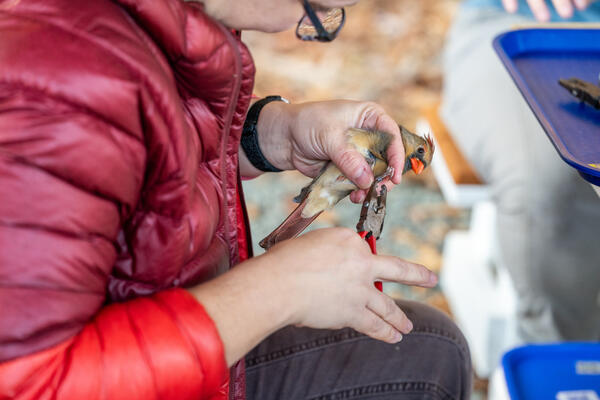
These data are indispensable. State wildlife action plans rely on BBS trends to identify species of greatest conservation need. The Department of Agriculture Animal and Plant Inspection Service (or APHIS) uses BBS population metrics when evaluating wildlife take permits to ensure actions won’t harm species across their entire range. Even when the BBS doesn’t capture rare or highly specialized species, like California condors or Kirtland’s warblers; it provides a landscape-scale framework that helps determine when more specialized surveys must step in. And for species not easily banded or not captured through banding efforts, like songbirds deep in the forest canopy, the BBS fills essential knowledge gaps.
Together, the BBL and BBS show that bird conservation is a shared responsibility, powered by partnerships between scientists, agencies, and the public. Whether it's one wood duck carrying a leg band or a dawn chorus recorded by a volunteer along a quiet back road, every observation becomes part of a much bigger picture. Because when it comes to understanding migratory birds, every bird counts, and your observations truly matter.
Shannon Skalos is a biologist with the North American Breeding Bird Survey at the USGS Eastern Ecological Science Center, where they help implement and maintain this long‑term, community‑science program. An ornithologist specializing in avian ecology and applied conservation, Shannon’s work spans migration, spatial ecology, habitat selection, reproduction, population ecology, and behavior. Shannon’s research has supported conservation and management of numerous listed and sensitive species, including birds, mammals, reptiles, and amphibians.
Antonio Celis-Murillo is the chief of the USGS’s Bird Banding Laboratory, one of the nation’s longest‑running wildlife monitoring programs supporting more than a century of migratory bird research across North America. Under Antonio’s leadership, the laboratory upholds the scientific integrity, coordination, and delivery of critical bird‑banding data that inform conservation and management nationwide.