



Preserving a Legacy: The Chan Robbins Records Project
The Eastern Ecological Science Center (EESC) successfully transferred Chandler “Chan” Robbins’ extensive archives from Patuxent Wildlife Research Center to the U.S. Fish & Wildlife Service Museum and Archives at NCTC, ensuring their permanent preservation and accessibility.
The Eastern Ecological Science Center (EESC) reached an enormous records management milestone in 2025 with the transfer of priceless Chan Robbins’ records from the basement of Gabrielson Laboratory to the U. S. Fish & Wildlife Service (USFWS) Museum and Archives at the National Conservation Training Center (NCTC) in Shepherdstown, W.V.
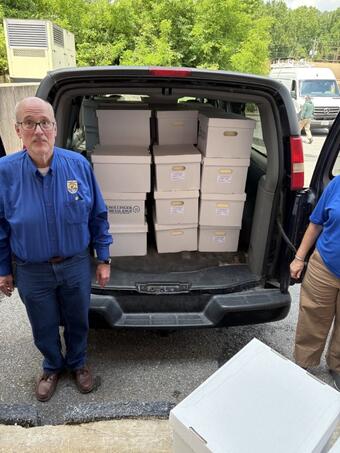
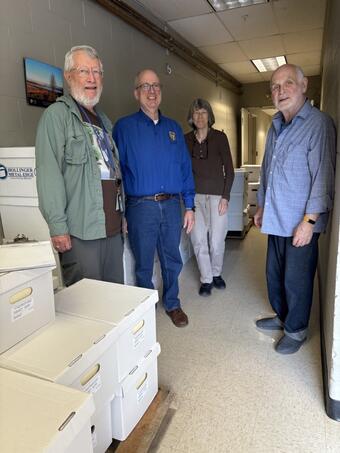
A dedicated team of volunteers, Phil Davis and Dave Bridge with the Maryland Ornithological Society and EESC emeritus scientist Deanna Dawson, worked with the support of EESC records manager Mary Maxey (and Shannon Beliew prior) to organize, package, document, and ship thousands of records to NCTC where they have safe, permanent storage and are accessible to researchers. Steve Floray, the museum’s designated contact, played a key role in coordinating the transfer and integration of the materials into the NCTC archives.
Chandler “Chan” Robbins was a renowned ornithologist whose entire 60-year career, first with USFWS and later with USGS, was based at the Patuxent Wildlife Research Center, where he established the North American Breeding Bird Survey and co-authored the influential Birds of North America field guide. His groundbreaking work on bird population monitoring, habitat fragmentation, and bird banding—including banding the world’s oldest known wild bird, Wisdom—cemented his legacy as a foundational figure in American bird conservation.
In May 2017, shortly after Chan’s death, his emeritus office was packed up by colleagues from the EESC, resulting in more than 120 boxes of unsorted records. Recognizing the historical value of these materials, a volunteer team stepped forward to undertake the monumental task of sorting, categorizing, and documenting the collection for posterity.
The project, however, faced an unexpected pause due to the COVID-19 pandemic, which halted progress for nearly two years. Despite this setback, the team remained committed to their mission. Upon resumption, the scope of the project expanded significantly. What began as an effort to preserve one individual’s professional legacy evolved into a broader initiative to safeguard additional historical records at Patuxent of the USFWS and its predecessor, the Bureau of Biological Survey.
Thanks to the perseverance and vision of the volunteer team, this project not only preserved Chan’s contributions but also ensured that a broad range of U.S. conservation history would be accessible to future generations.
Photos: Museum Curator Steve Floray is shown along with the tireless volunteers Phil Davis, Deanna Dawson, and Dave Bridge.