



EESC Makes an Impact: Restoring the Chesapeake Bay Watershed
The Chesapeake Bay provides over $100 billion in annual economic value and is home to 18 million people. The USGS, including scientists from the Eastern Ecological Science Center (EESC), works with Federal, State, local, and academic partners to provide research and monitoring and to communicate results to inform management for the Chesapeake and other important landscapes across the Nation.
"Mother of Waters"
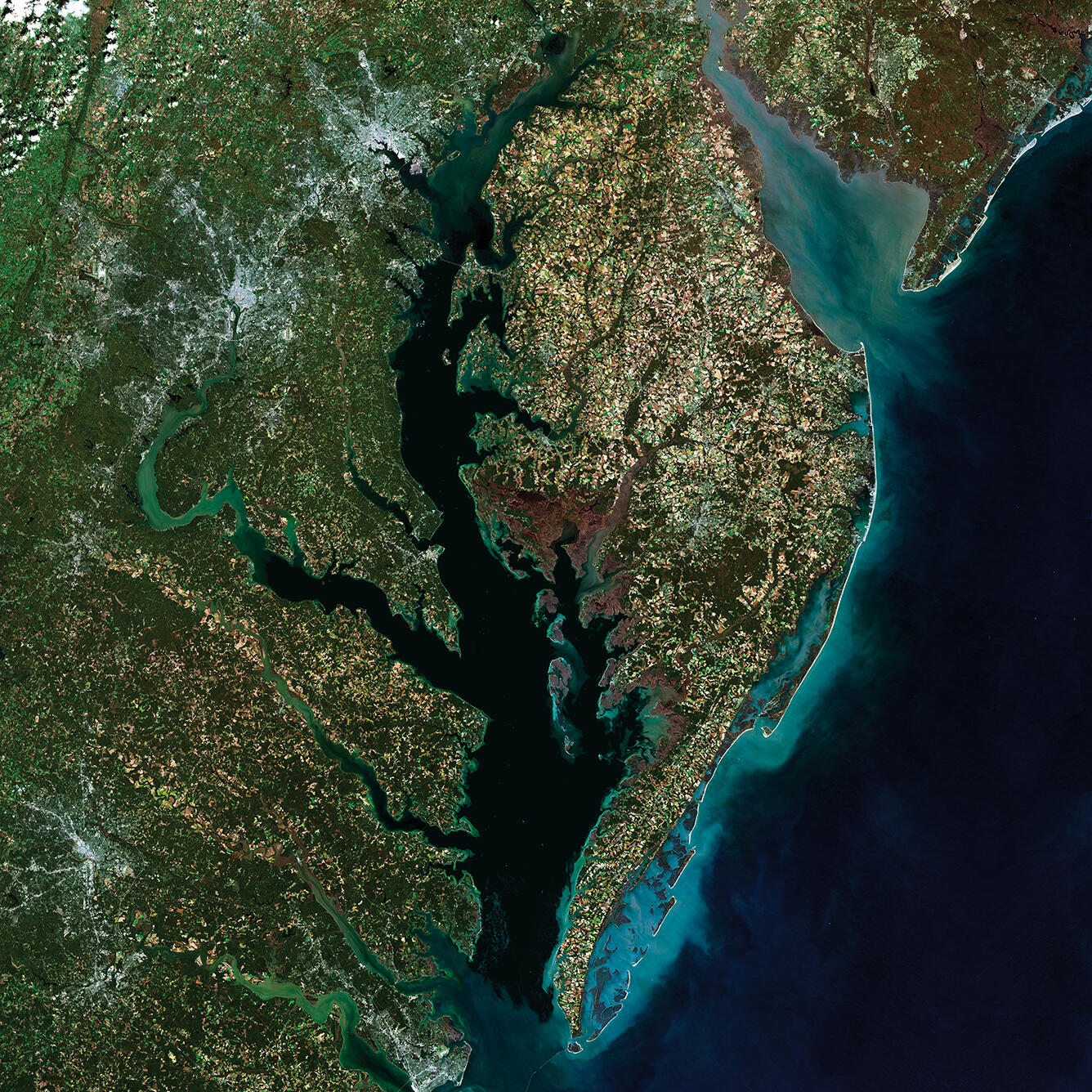
Chesapeake Bay (“mother of waters” or the “great shellfish Bay” in Algonquin), is the largest estuary in the United States. Chesapeake Bay is immense, with the main stem stretching 200 nautical miles (315 km) from the mouth of the Susquehanna River to its terminus at the Atlantic Ocean and an overall watershed encompassing 64,000 mi2 (165,000 km2).
The mainstem, tributaries, and Bay islands form thousands of miles of coastline. Because of its prominence in estuarine science and ecosystem restoration, developing a working knowledge of Chesapeake Bay science and restoration is important.
Invasive Blue Catfish - A Threat to Bay Restoration Goals
The partners of the Chesapeake Bay are investing billions of dollars in the restoration of critical habitats to improve conditions for people and living resources throughout the Bay and its watershed.
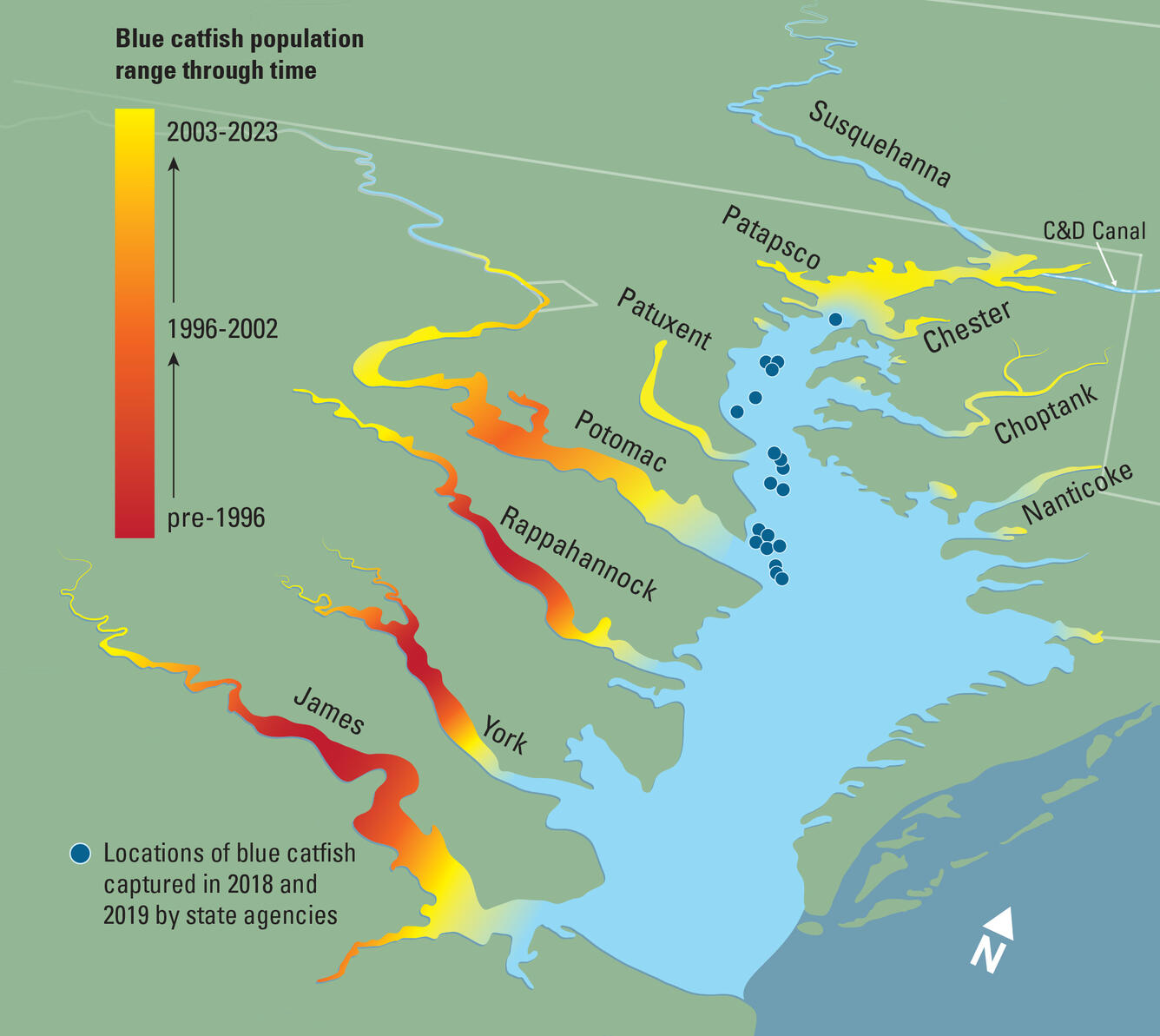
However, the recent proliferation of invasive blue catfish in the Chesapeake Bay’s major rivers has the potential to disrupt these restoration efforts and limit the full potential improvement of the ecosystem.

Invasive blue catfish are a growing concern for scientists and fisheries managers. The species is quickly becoming abundant in Maryland’s rivers and outcompeting native fish for food and habitat. Blue catfish are preying on blue crab, Atlantic menhaden, American eel, and other economically and ecologically important species.


Coastal Habitats - Home to Vulnerable Species
Coastal wetlands of the Chesapeake Bay provide many ecosystem services. In addition to providing critical habitat for fish and wildlife, coastal wetlands improve water quality, store carbon, protect coastal communities from storms by reducing wave energy, and provide recreational and educational opportunities. Coastal wetlands also support commercially and culturally important fisheries.

There is a pressing need for information that can be used by coastal managers and scientists to better anticipate and prepare for future changes to coastal wetlands and adjacent upland and estuarine ecosystems.

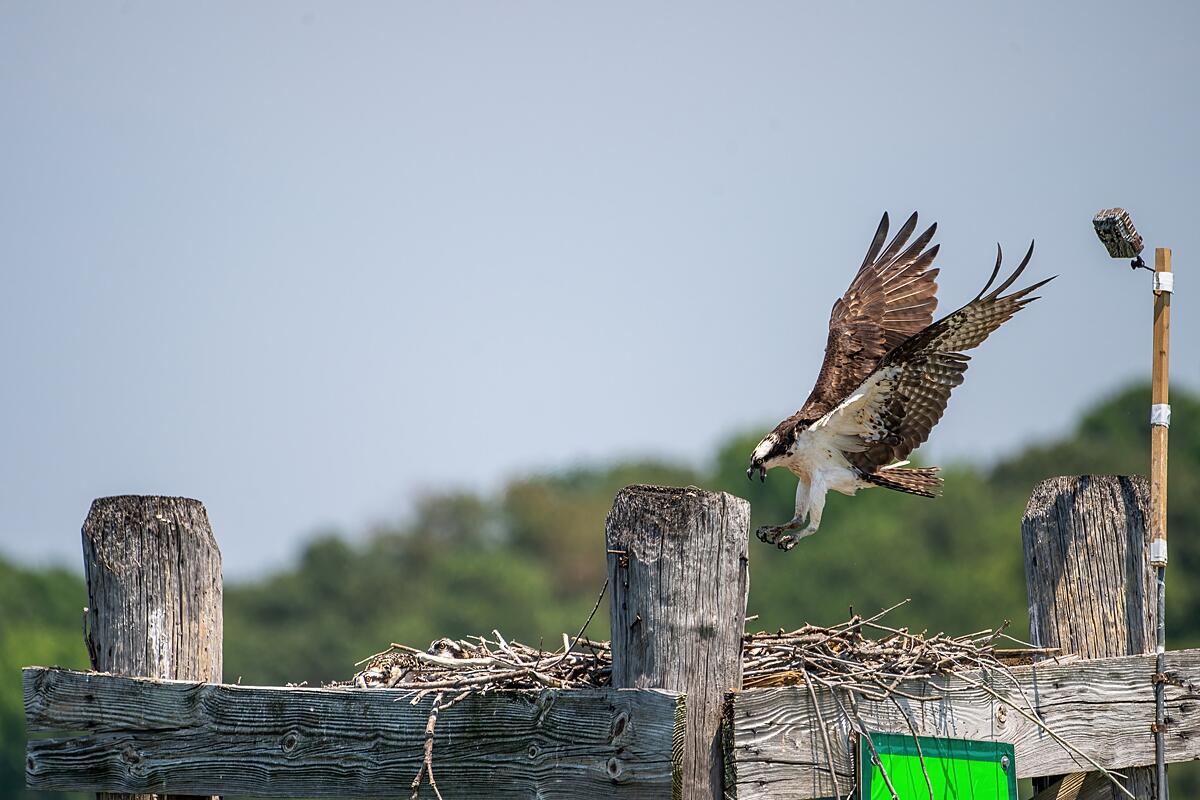
USGS is collaborating with other area scientists in analysis of data on osprey and their prey menhaden, and other species of fish in the middle and lower Chesapeake Bay and its tributaries. The data compiled and collected will help determine if a lack of menhaden or other environmental factors are affecting osprey reproductive success in portions of the Chesapeake Bay.

Atlantic menhaden, are a schooling, migratory clupeid fish common in coastal waters spanning from Florida to Nova Scotia, Canada. They are a critical forage species for coastal birds like osprey and mammals in the region. Their importance as forage species in the ecosystem has led to stock management using ecological reference points to ensure the stability of the population while also considering interactions with predators and prey in the ecosystem.
Stream Health - A Critical Indicator for Overall Bay Health
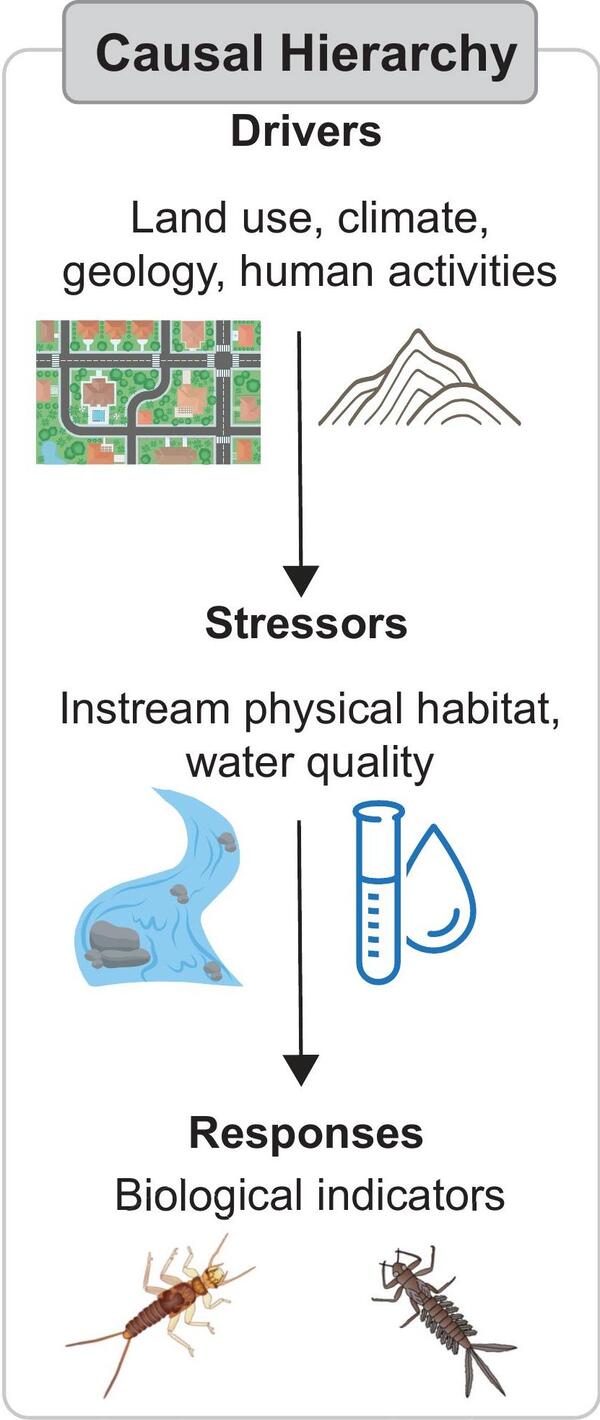
Urban development and agricultural intensification can degrade habitat and water-quality conditions in streams through sedimentation, nutrient runoff, and changes to instream habitat.
A major goal of the Chesapeake Bay Program restoration effort is to improve stream health conditions in 10% of streams throughout the watershed. Given limited resources, identifying what stressors are most influential and where management is most likely to result in a positive change in stream health can help resource managers better plan and direct restoration efforts.


Streams and rivers are strongly influenced by conditions in the surrounding landscape. Urban development and intensification of agriculture practices have resulted in altered habitat, degraded water quality, and poor biological conditions in many streams within the Chesapeake Bay watershed.
USGS is working with federal, state and local partners to develop multiple assessments of stream and river conditions in non-tidal areas of the Chesapeake Bay watershed. These assessments will help managers preserve stream health and improve biological conditions in impaired streams as the human population and climate continue to change in this region.

The Chesapeake Bay provides over $100 billion in annual economic value and is home to 18 million people. The USGS, including scientists from the Eastern Ecological Science Center (EESC), works with Federal, State, local, and academic partners to provide research and monitoring and to communicate results to inform management for the Chesapeake and other important landscapes across the Nation.
"Mother of Waters"
Chesapeake Bay (“mother of waters” or the “great shellfish Bay” in Algonquin), is the largest estuary in the United States. Chesapeake Bay is immense, with the main stem stretching 200 nautical miles (315 km) from the mouth of the Susquehanna River to its terminus at the Atlantic Ocean and an overall watershed encompassing 64,000 mi2 (165,000 km2).
The mainstem, tributaries, and Bay islands form thousands of miles of coastline. Because of its prominence in estuarine science and ecosystem restoration, developing a working knowledge of Chesapeake Bay science and restoration is important.
Invasive Blue Catfish - A Threat to Bay Restoration Goals
The partners of the Chesapeake Bay are investing billions of dollars in the restoration of critical habitats to improve conditions for people and living resources throughout the Bay and its watershed.
However, the recent proliferation of invasive blue catfish in the Chesapeake Bay’s major rivers has the potential to disrupt these restoration efforts and limit the full potential improvement of the ecosystem.
Invasive blue catfish are a growing concern for scientists and fisheries managers. The species is quickly becoming abundant in Maryland’s rivers and outcompeting native fish for food and habitat. Blue catfish are preying on blue crab, Atlantic menhaden, American eel, and other economically and ecologically important species.
Coastal Habitats - Home to Vulnerable Species
Coastal wetlands of the Chesapeake Bay provide many ecosystem services. In addition to providing critical habitat for fish and wildlife, coastal wetlands improve water quality, store carbon, protect coastal communities from storms by reducing wave energy, and provide recreational and educational opportunities. Coastal wetlands also support commercially and culturally important fisheries.
There is a pressing need for information that can be used by coastal managers and scientists to better anticipate and prepare for future changes to coastal wetlands and adjacent upland and estuarine ecosystems.
USGS is collaborating with other area scientists in analysis of data on osprey and their prey menhaden, and other species of fish in the middle and lower Chesapeake Bay and its tributaries. The data compiled and collected will help determine if a lack of menhaden or other environmental factors are affecting osprey reproductive success in portions of the Chesapeake Bay.
Atlantic menhaden, are a schooling, migratory clupeid fish common in coastal waters spanning from Florida to Nova Scotia, Canada. They are a critical forage species for coastal birds like osprey and mammals in the region. Their importance as forage species in the ecosystem has led to stock management using ecological reference points to ensure the stability of the population while also considering interactions with predators and prey in the ecosystem.
Stream Health - A Critical Indicator for Overall Bay Health
Urban development and agricultural intensification can degrade habitat and water-quality conditions in streams through sedimentation, nutrient runoff, and changes to instream habitat.
A major goal of the Chesapeake Bay Program restoration effort is to improve stream health conditions in 10% of streams throughout the watershed. Given limited resources, identifying what stressors are most influential and where management is most likely to result in a positive change in stream health can help resource managers better plan and direct restoration efforts.
Streams and rivers are strongly influenced by conditions in the surrounding landscape. Urban development and intensification of agriculture practices have resulted in altered habitat, degraded water quality, and poor biological conditions in many streams within the Chesapeake Bay watershed.
USGS is working with federal, state and local partners to develop multiple assessments of stream and river conditions in non-tidal areas of the Chesapeake Bay watershed. These assessments will help managers preserve stream health and improve biological conditions in impaired streams as the human population and climate continue to change in this region.