



DOI scientists engage with Southeast Alaska Indigenous Guardians to discuss local sea otter ecology and economics
Aaron Enriquez (USGS-FORT), Joe Eisaguirre (USGS-ASC), and Paul Schette (USFWS) presented at the Tlingit & Haida Seacoast Indigenous Guardian Network (SIGN) Gathering in Juneau, Alaska from February 17-20. They discussed collaborative research related to changing Southeast Alaska sea otter distribution and abundance and the associated economic impacts of sea otters on local communities.
The sea otter population in Southeast Alaska has continued to grow ever since the animals were reintroduced to the region in the 1960s. Today, sea otter management is complicated, in part because sea otters simultaneously contribute a wide range of economic benefits and damages to society. On one hand, subsistence harvests of sea otters can contribute to traditional food, clothing, and handicrafts. People enjoy seeing sea otters in the wild, and sea otters generate cultural and existence value. On the other hand, sea otters prey on marine life, including sea cucumbers, urchins, and crabs, impacting both subsistence and commercial dive and shellfish fisheries.
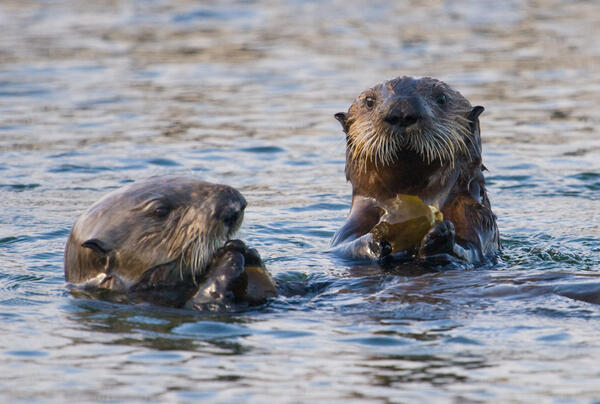
USGS Research Economist Aaron Enriquez and USGS Research Wildlife Biologist Joseph Eisaguirre are exploring the relationship between sea otter population sizes, subsistence harvest levels, and the magnitudes of economic damages and benefits generated. The long-term aim is to help inform management strategies that could balance the economic impacts from sea otters.
Recently, Enriquez, Eisaguirre, and Schuette were invited to attend and present at the Annual Gathering of the Seacoast Indigenous Guardians Network in Juneau, Alaska. Tlingit & Haida's SIGN is a collaborative partnership created to empower Southeast Alaska Tribes and communities with the tools and resources they need to steward and restore balance to their traditional homelands and waters in perpetuity.
Related

Wildlife Economics

Expanding Wildlife Populations in Alaska
Related
Wildlife Economics