



FORT Science in Action 2026, Part 2: New research advances methods for removal of invasive brown treesnakes in the Pacific
Invasive brown treesnakes are the cause of significant ecological and economic damage on the island of Guam, including the local extinction or decline of 17 of Guam’s 18 native bird species, and numerous power outages across the island. Recent studies out of FORT advance early detection and rapid response to this invasive species, to aid managers in preventing further spread and destruction.
Brown treesnake populations respond quickly to increases in prey abundance
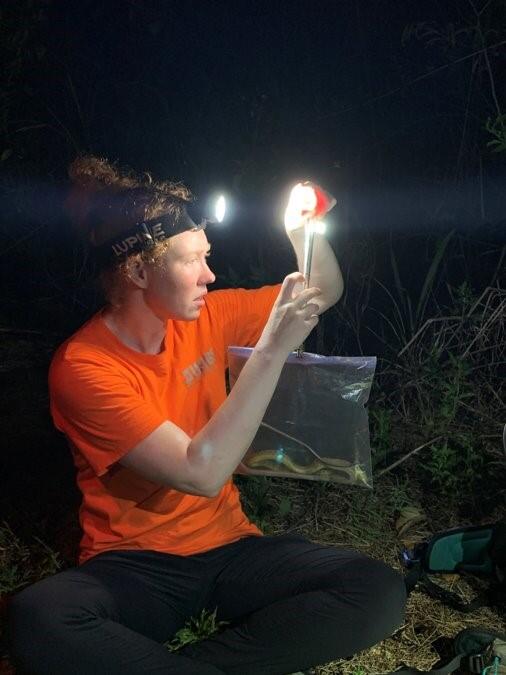
Brown treesnakes are voracious predators of native species in Guam where their introduction is associated with declines in native birds and small reptiles. Researchers and resource managers predict that brown treesnakes could similarly damage native ecosystems on neighboring islands in the Commonwealth of the Northern Mariana Islands if a population were introduced and grew unimpeded. Understanding what causes rapid population growth of brown treesnakes on Guam can help invasive species managers reduce the potential for destructive invasions throughout other Pacific islands.
In May, FORT researchers led a publication investigating the relationship between prey availability, snake removal, and population growth in brown treesnakes. Analyzing data from a long-term capture-mark-recapture study, they found that the brown treesnake population grew rapidly when prey was abundant. Removal of snakes resulted in short-term reductions in population growth, but the population growth rate rebounded within a year. They suggest multi-year removal efforts would likely be more effective at reducing population growth long-term, and that brown treesnake populations on new islands with abundant prey will likely grow rapidly if there is no intervention.
More FORT Science in Action
This September, FORT is highlighting how our science projects support sound decision-making. Each day, we will highlight a new project and its applications. To see more, follow the tabs below.
FORT Science in Action, Part 1
FORT Science in Action, Part 3
Related

A citizen science program for brown treesnake removal and native species recovery at a National Historical Park in Guam
Related