



FORT Science in Action, Part 8: Enhancing visitor data in support of the EXPLORE Act
The Department of Interior (DOI) manages 480 million acres of public lands that attract over 565 million visitors every year, generating $1.2 trillion in economic output. Social scientists at the USGS Fort Collins Science Center work on a variety of projects that help inform outdoor recreation management on DOI lands.
Secretarial Order 3435 directs DOI to implement the Expanding Public Lands Outdoor Recreation Experiences (EXPLORE) Act; Section 132 requires that agencies report accurate annual visitation data and activity participation data for each unit of Federal recreational lands and waters, and that the reporting is consistent across agencies. However, estimating recreational visitation across hundreds of millions of acres of public lands can be a challenging task. FORT social scientists provide critical science support for this implementation, working with partners across DOI bureaus to inform consistent approaches and to develop potential opportunities to leverage data and technology for efficient visitor use and activity monitoring.
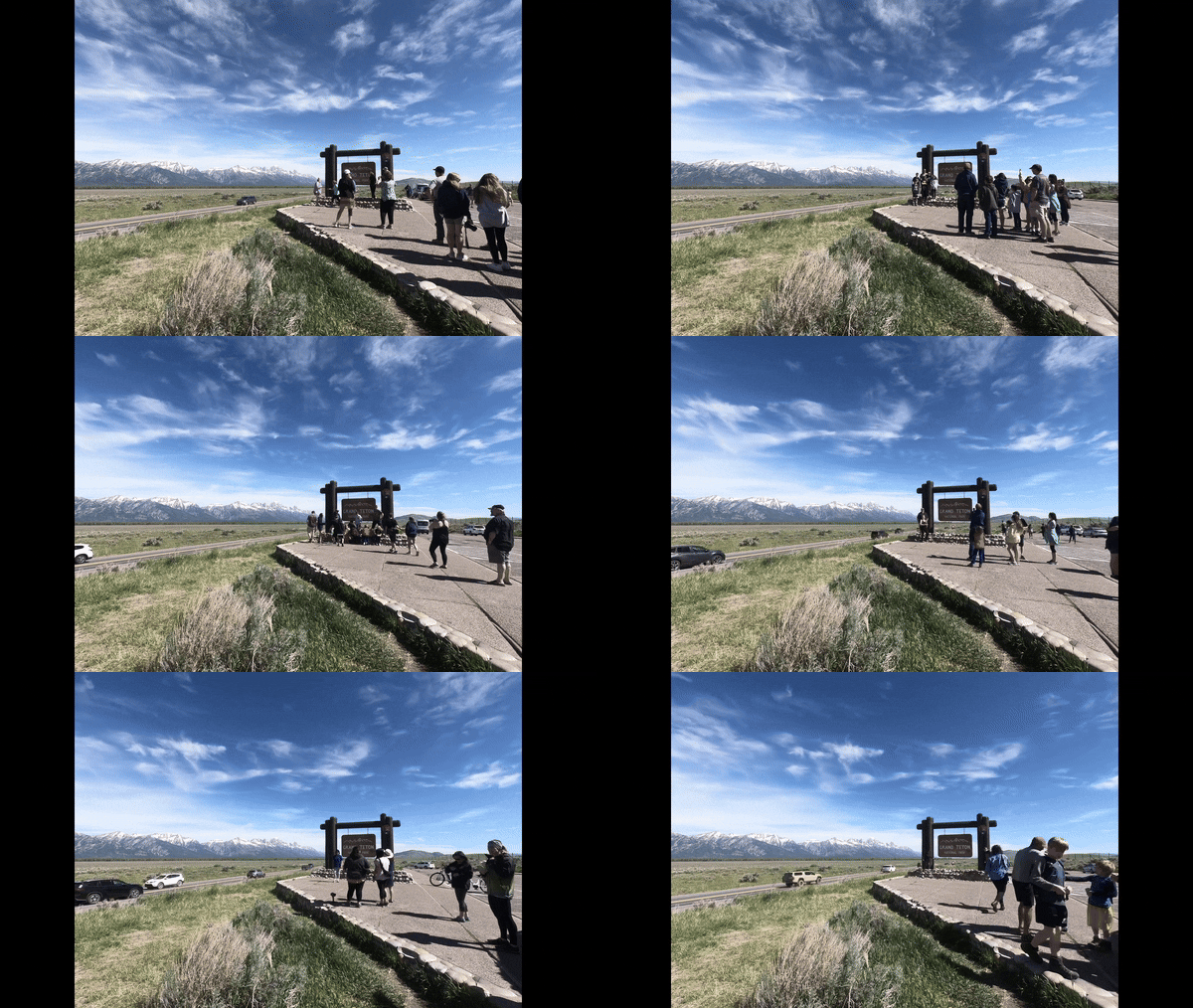
Earlier this year scientists released a report detailing methods used to estimate visitation across Federal agencies and opportunities to improve consistency, as required by EXPLORE. In addition to documenting current methods, USGS social scientists evaluated emerging technologies, including social media, mobile device activity, and community science, for their potential to improve visitation estimation. Although these technologies offer promising opportunities, they come with challenges such as data biases, the need for calibration, costs, and privacy concerns. The report concludes with opportunities to enhance data collection and coordination - both to comply with requirements in the EXPLORE Act as well as ensure efficient resource management.
FORT social scientists are also studying new and emerging methods that may help provide data on visitor use, for example, mobile device location data. They are currently working to understand the uses, limitations, and accuracy of using mobile device data to estimate visitation to DOI lands. Finally, FORT scientists have also facilitated workshops bringing agencies together to share information and tackle challenges associated with emerging approaches. Understanding the potential of emerging methods can help inform a provision in section 132 of the EXPLORE Act calling for a real-time data pilot program.
More FORT Science in Action
This September, FORT is highlighting how our science projects support sound decision-making. Each day, we will highlight a new project and its applications. To see more, follow the tab below.
FORT Science in Action Part 7
FORT Science in Action Part 9
Related

Human Dimensions of Resource Management
Related