



FORT Science in Action, Part 7: Science in support of invasive reptile management in the Greater Everglades
The USGS leads federal research efforts to address the growing threat of invasive reptiles in the Greater Everglades Ecosystem.
Two species take precedence in these efforts: 1) Burmese pythons, a large constrictor capable of exceeding 17 feet in length, have severely impacted native wildlife populations and is considered a primary driver of mammal declines in southern Florida; 2) Argentine tegus pose serious threats to native ecosystems and agriculture, preying on plants, invertebrates, small vertebrates, and eggs—including those of the threatened gopher tortoise. The continued spread of both these invasive reptiles poses a major challenge to the long-term success of Everglades restoration—an effort backed by billions of dollars in federal and state investment.
Research to eradicate Burmese pythons in the Everglades

To confront the threat of Burmese pythons, USGS and its partners have implemented a comprehensive, multi-faceted research program focused on the python’s biology and ecology. Ongoing radio telemetry studies—conducted both on foot and by air—are examining key factors such as survival rates, reproduction, habitat use, movement patterns, feeding behavior, and population dynamics. These studies are designed to fill critical knowledge gaps that have hindered effective control strategies. In tandem, uncrewed aircraft systems (UAS) are being tested as an innovative tool to detect and monitor pythons across the vast and often inaccessible terrain of the Everglades.
Research to suppress the spread of Argentine tegus in the Everglades
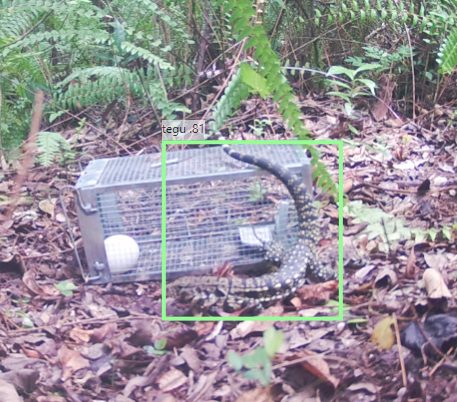
To proactively address the risks posed by invasive tegus before they escalate into costly and resource-intensive challenges, FORT scientists are developing a scalable early detection rapid response (EDRR) framework for use partners. This framework includes three key innovations:
- Terrestrial environmental DNA (eDNA) sampling to detect tegu DNA from vegetation and other surfaces, alongside research into how long DNA remains detectable in varying conditions.
- AI-powered image detection tools to improve tegu surveillance, automate alerts, and guide trap placement—reducing the time, cost, and effort required to monitor for this invasive species.
- Enhanced trapping techniques, developed with the National Park Service, to evaluate the effectiveness of decoy and multiple-egg baits in increasing capture rates.
Collaborative, innovative research for successful invasive species management
Collaboration is a cornerstone of both of these efforts. USGS scientists work closely with National Park Service, state wildlife agencies, universities, tribal governments, and non-governmental organizations to share data, leverage expertise, and develop coordinated, science-driven approaches. This cooperative framework strengthens research outcomes and supports more effective management responses.
Looking ahead, USGS is exploring scalable control tools, including emerging technologies such as genetic biocontrol, to reduce invasive species populations and mitigate ecological damage. By grounding these strategies in rigorous scientific research, USGS aims to provide actionable guidance for land managers and policymakers committed to the restoration and protection of the Everglades ecosystem.
More FORT Science in Action
This September, FORT is highlighting how our science projects support sound decision-making. Each day, we will highlight a new project and its applications. To see more, follow the tabs below.
FORT Science in Action, Part 6
FORT Science in Action, Part 8
Related
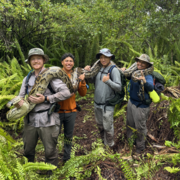
Invasive Burmese python research in the Greater Everglades
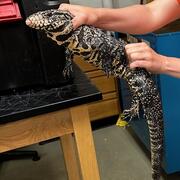
Early detection and rapid response tools for invasive tegu lizards

Invasive species science in support of public safety, America’s natural resources, and economic growth
Related
Invasive Burmese python research in the Greater Everglades
Early detection and rapid response tools for invasive tegu lizards