



New habitat suitability model to inform decision making and recover rare species in New Mexico
In collaboration with multiple land management agencies, FORT scientists developed a new habitat suitability model to inform decision making on public lands and help conserve a rare plant.
Many federal public lands in the United States are managed for multiple resources, uses, and values to serve the needs of current and future generations of the American public. Uses on these lands include mining, energy development, livestock grazing, outdoor recreation, and conservation. Given ongoing initiatives to expand development of public lands, land managers need robust science and tools to make informed, defensible decisions that balance land uses in a sustainable way.
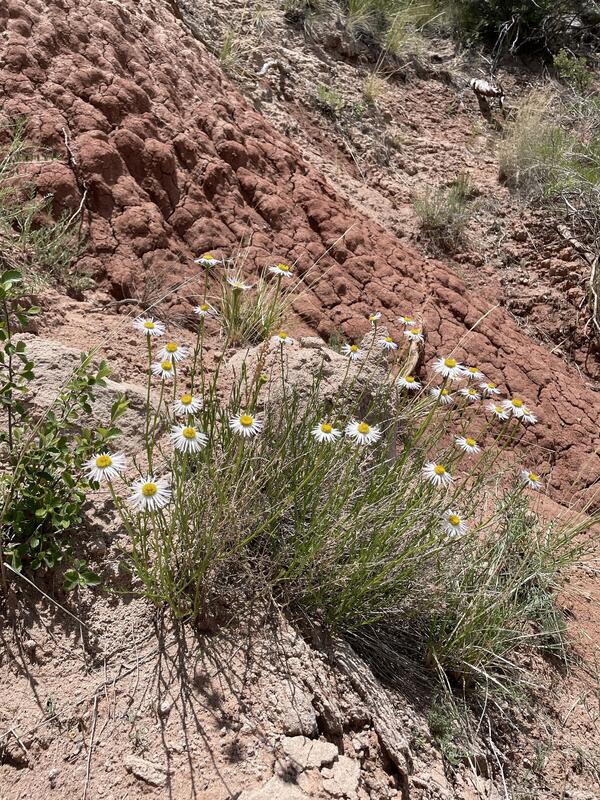
Zuni fleabane is listed as a federally Threatened and New Mexico state endangered plant, and is known to occur almost entirely in remote locations of northwestern New Mexico on lands managed by the US Forest Service (USFS), the Bureau of Land Management (BLM), Navajo Nation, and the state of New Mexico. The work of recovering the species has been challenging for resource managers. It takes time and resources to monitor the remote populations of this rare species, and better information on where it occurs is crucial to its conservation. Models that predict habitat suitability can estimate and map where a species might occur based on its known habitat characteristics such as rainfall, slope, canopy cover, temperature, and elevation.
Working with BLM, USFS, the Navajo Nation, U.S. Fish and Wildlife Service, and the New Mexico Energy, Minerals & Natural Resources Department, FORT scientists coproduced and field-validated a new model of habitat suitability for Zuni fleabane. Throughout the process, modelers, biologists, and resource managers iteratively improved model accuracy and field characterization of suitable habitat to generate a final habitat suitability model expected to aid land managers in mapping, monitoring, and conserving populations of this species, including the overarching management goal of recovering the species to a level where it is no longer in danger of extinction.
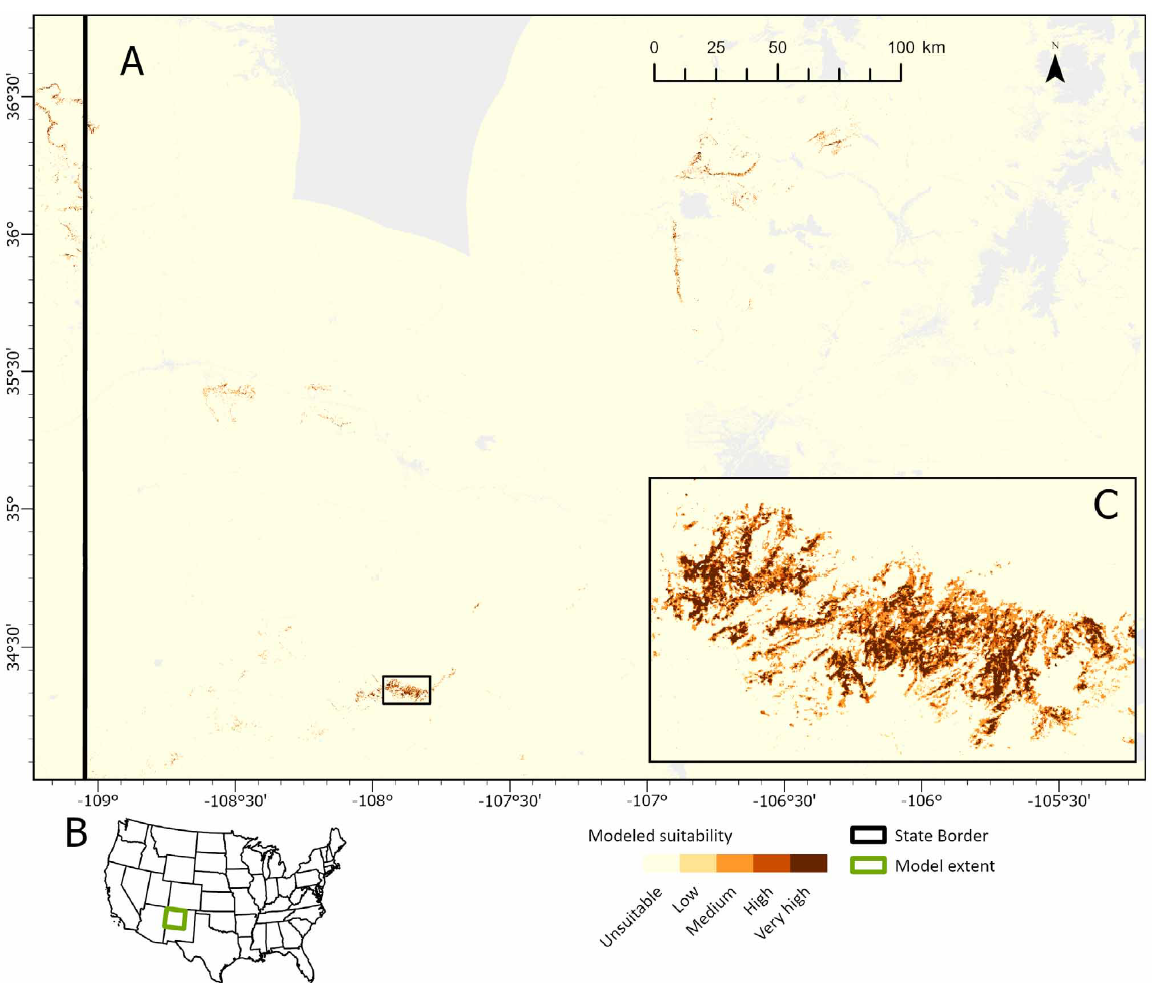
This new tool can help managers meet the recovery criteria listed in the Zuni Fleabane Recovery Plan (USFWS 1988, 2019) by reducing the time and survey effort it takes to search for these plants in the vast expanse of remote lands in which they occur. In the first year of using this model to guide survey efforts, a novel occurrence of Zuni fleabane was found in the Gila Mountains where it was previously unknown.
The model is also currently being used by the USFS to more efficiently conduct the environmental compliance required for uranium exploration and mining projects in New Mexico. It can expedite and improve the analysis of where plant surveys are needed. These projects contribute to the current presidential administration’s initiative to Increase American Mineral Production by facilitating more efficient permitting to support mineral development, foster economic growth, and help lower U.S. reliance on foreign energy sources while also supporting responsible stewardship of natural resources and conserving rare species.
Related

Developing habitat models for rare plants to inform decision making on multiple-use public lands
Related