



USMIN: Mineral Deposit Database
USMIN provides geospatial databases of publicly available information on U.S. mineral deposits with reported production and (or) resource estimates of mineral commodities. These databases provide location, geology, production, and resource details to support research and mineral exploration. This work advances the Federal strategic objective of securing reliable supplies of critical minerals by delivering essential information to Federal and State agencies, industry, and the public.
The Mineral Deposit Database currently focuses on U.S. critical mineral deposits. USGS defines critical minerals as non-fuel or mineral materials essential to the economic or national security of the country, including those which have an external supply chain that is vulnerable to disruption. Critical minerals are essential for modern technologies, including alloyed steel, construction materials, fiber optics, medical implants, rechargeable batteries, semi-conductors, and touch screens. Current domestic resources alone cannot meet the demands of today’s economy, making it essential to compile and evaluate existing information to strengthen our understanding and support future needs.
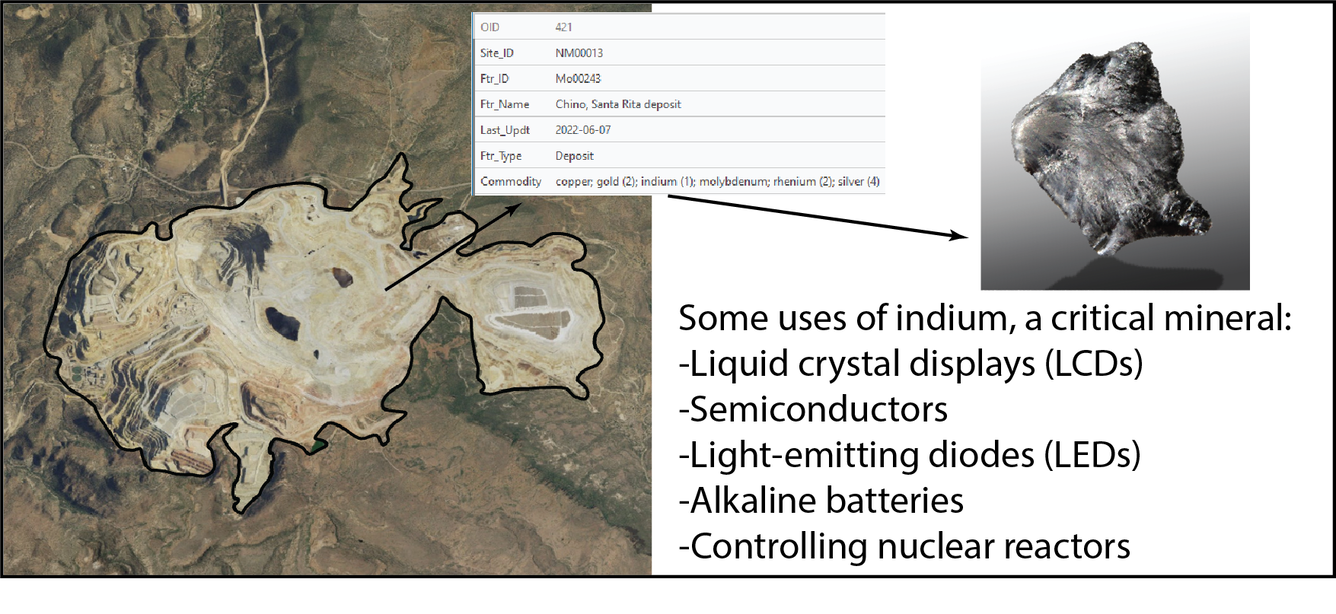
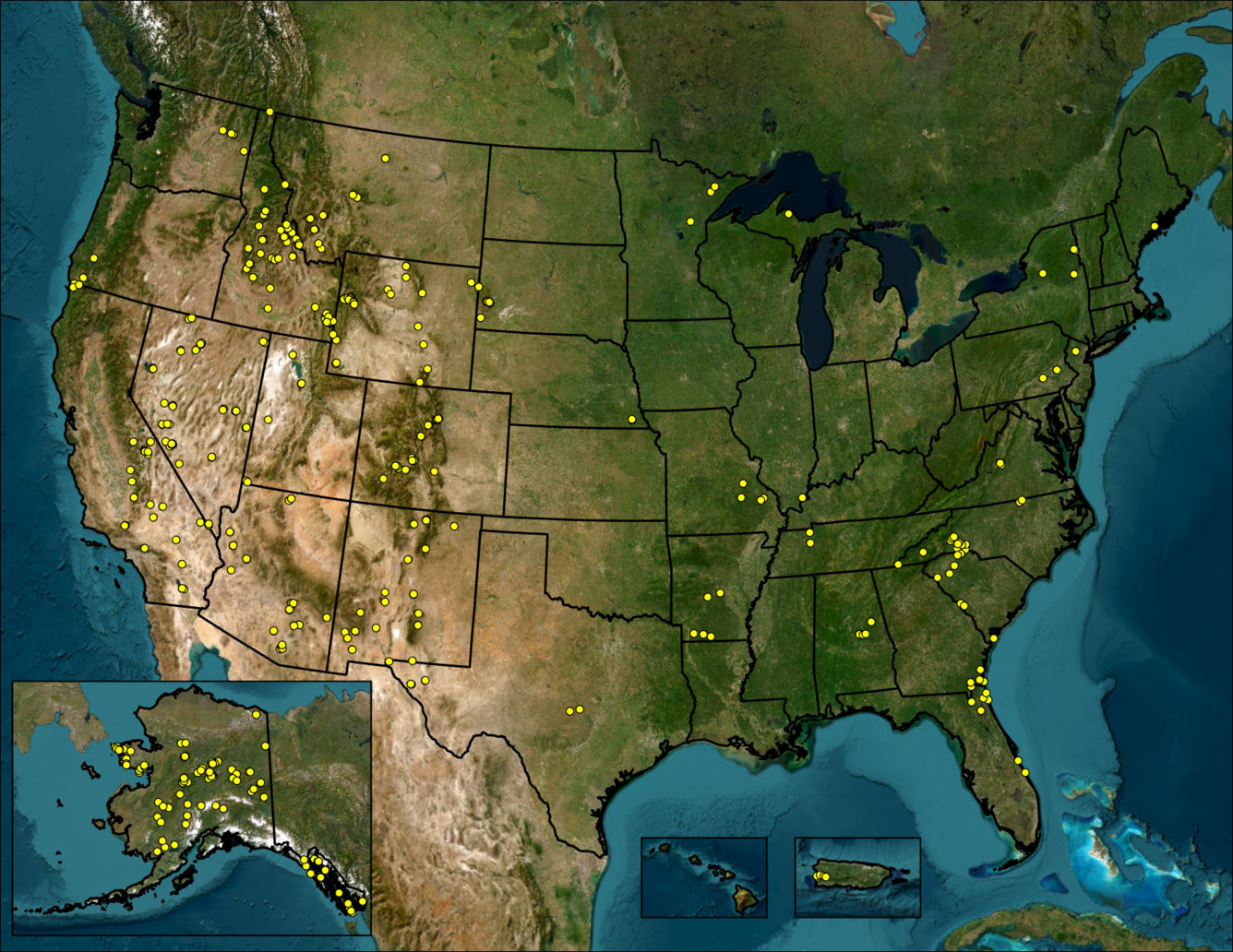
USMIN is developing geospatial datasets for all critical minerals defined by the USGS. Currently, a dozen datasets are available, with more in progress. These datasets can be downloaded from USGS ScienceBase.
References
Karl, N.A., Gnesda, W.R., Funk, J.A., Mauk, J.L., and Forbush, C.R., 2022, Indium deposits in the United States: U.S. Geological Survey data release, https://doi.org/10.5066/P97FRY3M.
U.S. Geological Survey, 2025, Mineral commodity summaries 2025 (ver. 1.2, March 2025): U.S. Geological Survey, 212 p., https://doi.org/10.3133/mcs2025.
Goonan, T.G., 2012, Materials flow of indium in the United States in 2008 and 2009: U.S. Geological Survey Circular 1377, iv, 12 p.; Appendix; ill. (col.), https://doi.org/10.3133/cir1377.
This is a task of the USGS Mineral Deposit Database Project (USMIN)

USMIN Mineral Deposit Database
USMIN provides geospatial databases of publicly available information on U.S. mineral deposits with reported production and (or) resource estimates of mineral commodities. These databases provide location, geology, production, and resource details to support research and mineral exploration. This work advances the Federal strategic objective of securing reliable supplies of critical minerals by delivering essential information to Federal and State agencies, industry, and the public.
The Mineral Deposit Database currently focuses on U.S. critical mineral deposits. USGS defines critical minerals as non-fuel or mineral materials essential to the economic or national security of the country, including those which have an external supply chain that is vulnerable to disruption. Critical minerals are essential for modern technologies, including alloyed steel, construction materials, fiber optics, medical implants, rechargeable batteries, semi-conductors, and touch screens. Current domestic resources alone cannot meet the demands of today’s economy, making it essential to compile and evaluate existing information to strengthen our understanding and support future needs.
USMIN is developing geospatial datasets for all critical minerals defined by the USGS. Currently, a dozen datasets are available, with more in progress. These datasets can be downloaded from USGS ScienceBase.
References
Karl, N.A., Gnesda, W.R., Funk, J.A., Mauk, J.L., and Forbush, C.R., 2022, Indium deposits in the United States: U.S. Geological Survey data release, https://doi.org/10.5066/P97FRY3M.
U.S. Geological Survey, 2025, Mineral commodity summaries 2025 (ver. 1.2, March 2025): U.S. Geological Survey, 212 p., https://doi.org/10.3133/mcs2025.
Goonan, T.G., 2012, Materials flow of indium in the United States in 2008 and 2009: U.S. Geological Survey Circular 1377, iv, 12 p.; Appendix; ill. (col.), https://doi.org/10.3133/cir1377.
This is a task of the USGS Mineral Deposit Database Project (USMIN)