



Nuclear research activities at the U.S. Department of Energy (DOE) Idaho National Laboratory (INL) have resulted in the generation of liquid and solid chemical and radiochemical wastes, which have been disposed of in the subsurface. This disposal has led to detectable concentrations of certain waste constituents in the eastern Snake River Plain (ESRP) aquifer, potentially impacting water-quality and posing risks to public health. To address these concerns, the U.S. Geological Survey (USGS), in collaboration with the DOE, is conducting geochemistry studies alongside groundwater-flow and contaminant-transport modeling. These efforts aim to enhance the understanding of hydrologic and chemical processes in the ESRP aquifer at and near the INL, and to determine how these processes influence the behavior of waste constituents in the aquifer.
Geochemistry studies are crucial for investigating various hydrologic and chemical processes, providing essential information for evaluating, improving, and calibrating groundwater-flow and contaminant-transport models. By analyzing geochemical data and utilizing groundwater tracers, researchers can identify sources of recharge, assess water mixing, and determine groundwater flow directions and velocities (Rattray, 2018).
Current Projects
Current projects within the geochemistry program primarily focus on characterizing the geochemistry of groundwater and surface water to assess the impact of wastewater disposal on the background water-quality of the aquifer. Between May 2018 and April 2023, the INL project office published four chapters of a USGS Professional Paper that provide comprehensive geochemistry data and modeling of groundwater and surface water at the INL. Most recently, our office published an update on an ongoing project monitoring concentrations of the long-lived radionuclide Iodine-129 in groundwater (Treinen and others, 2024).
Looking ahead, we will leverage the geochemical data collected from our water-quality monitoring network and hydrogeologic modeling to predict the transport of radiochemical and chemical constituents in the aquifer and perched groundwater systems. Additionally, we will employ groundwater age-dating techniques to determine the age and transport times of water at and near the INL, as well as to the aquifer terminus at the Thousand Springs area in southern Idaho.
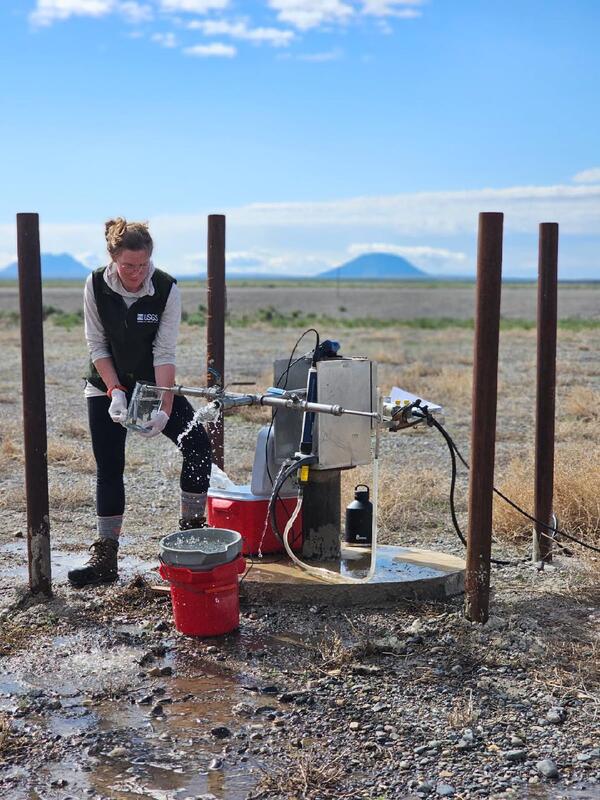
Nuclear research activities at the U.S. Department of Energy (DOE) Idaho National Laboratory (INL) have resulted in the generation of liquid and solid chemical and radiochemical wastes, which have been disposed of in the subsurface. This disposal has led to detectable concentrations of certain waste constituents in the eastern Snake River Plain (ESRP) aquifer, potentially impacting water-quality and posing risks to public health. To address these concerns, the U.S. Geological Survey (USGS), in collaboration with the DOE, is conducting geochemistry studies alongside groundwater-flow and contaminant-transport modeling. These efforts aim to enhance the understanding of hydrologic and chemical processes in the ESRP aquifer at and near the INL, and to determine how these processes influence the behavior of waste constituents in the aquifer.
Geochemistry studies are crucial for investigating various hydrologic and chemical processes, providing essential information for evaluating, improving, and calibrating groundwater-flow and contaminant-transport models. By analyzing geochemical data and utilizing groundwater tracers, researchers can identify sources of recharge, assess water mixing, and determine groundwater flow directions and velocities (Rattray, 2018).
Current Projects
Current projects within the geochemistry program primarily focus on characterizing the geochemistry of groundwater and surface water to assess the impact of wastewater disposal on the background water-quality of the aquifer. Between May 2018 and April 2023, the INL project office published four chapters of a USGS Professional Paper that provide comprehensive geochemistry data and modeling of groundwater and surface water at the INL. Most recently, our office published an update on an ongoing project monitoring concentrations of the long-lived radionuclide Iodine-129 in groundwater (Treinen and others, 2024).
Looking ahead, we will leverage the geochemical data collected from our water-quality monitoring network and hydrogeologic modeling to predict the transport of radiochemical and chemical constituents in the aquifer and perched groundwater systems. Additionally, we will employ groundwater age-dating techniques to determine the age and transport times of water at and near the INL, as well as to the aquifer terminus at the Thousand Springs area in southern Idaho.