



Changes in Nitrogen Contributions from Groundwater to the Niantic River Before and After Sewering
Onsite residential septic systems can be a major nonpoint source of nitrogen contamination. The excess nitrogen entering Connecticut’s Niantic River estuary is associated with high nitrate concentrations in the groundwater of the river’s 28-square-mile watershed, creating unsuitable habitat for the growth and recovery of eelgrass (Zostera marina). In an attempt to improve the river’s water quality, the town of East Lyme moved away from onsite septic systems in 2008 in the Pine Grove peninsula and installed a town sewer system to process and discharge residential wastewater. The U.S. Geological Survey (USGS) studied nitrogen concentrations in the groundwater at Pine Grove from 2005 – 2011, before, during, and after sewer installation, and found decreases in nitrogen after switching to sewer. In 2025, USGS is revisiting the study sites to identify how the water-quality has changed over the past decade.
Many coastal communities in Connecticut continue to utilize onsite residential septic systems that do not process wastewater for nitrate, allowing it to seep into the groundwater. The replacement of traditional septic systems to municipal sewer systems reduces the outflow of nitrogen into groundwater and, ultimately, into rivers and estuaries connected to Long Island Sound. The findings from this study can inform similar towns about the best alternatives for coastal wastewater management to improve Long Island Sound’s ecological health.
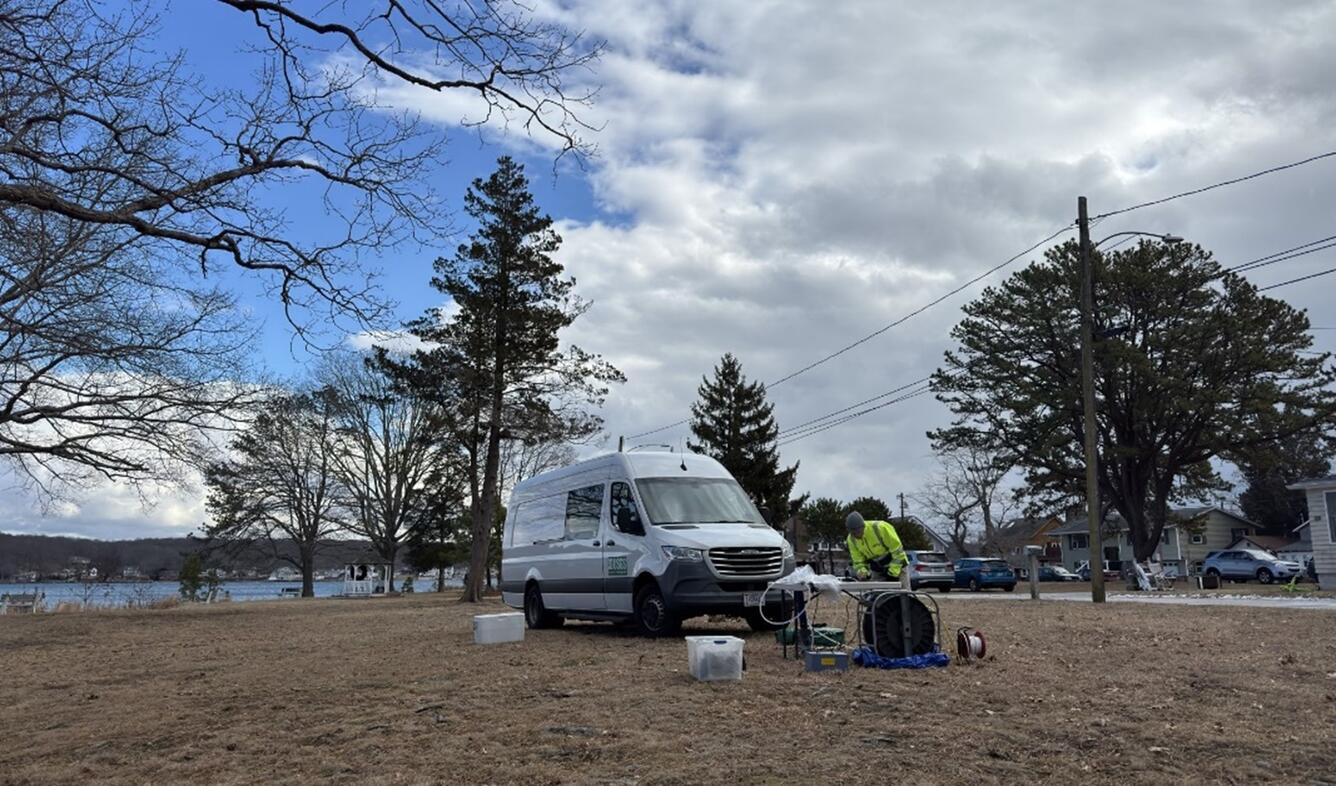
USGS Hydrologist John Mullaney collects groundwater samples from a USGS monitoring well on the Pine Grove peninsula in February 2025.
The Consequences of Too Much Nitrogen
Nitrogen is a natural part of aquatic ecosystems, but when there is too much nitrogen (often from human activities), it can promote the growth of nuisance vegetation, degrade the growth of beneficial vegetation, and fuel algal blooms that degrade aquatic habitats. Excess levels of nitrogen and phosphorous support the growth of algae, which can significantly shade submerged aquatic vegetation inhibiting their growth.
A vital habitat species for shellfish and fisheries, eelgrass is one type of aquatic plant negatively impacted by excess nitrogen. Eelgrass is a foundation of a healthy estuarine ecosystem providing areas for foraging, shelter, and nurseries for fish and invertebrates. Beds of eelgrass also trap sediment that stabilize sand and dampen wave energy during storms. Eelgrass habitat and, subsequently, bay scallop populations have declined in the Niantic River estuary since the mid-1980s and have not rebounded. The Niantic River estuary is the most western embayment in Connecticut that has eelgrass, and restoration of this critical habitat is crucial.
Study Methods
In 2005, the USGS drilled 18 groundwater wells for water-quality testing, some of which enable samples to be taken at different depths in the groundwater table. Data collection on this project began in 2005 before sewer installation to establish a baseline of nutrient values. The sewer system was completed in 2009, and the USGS collected additional samples at the same wells from 2009 to 2011. The resulting data indicated that mean and median concentrations of nitrogen were reduced by 2.3 and 1.7 milligrams per liter, respectively.
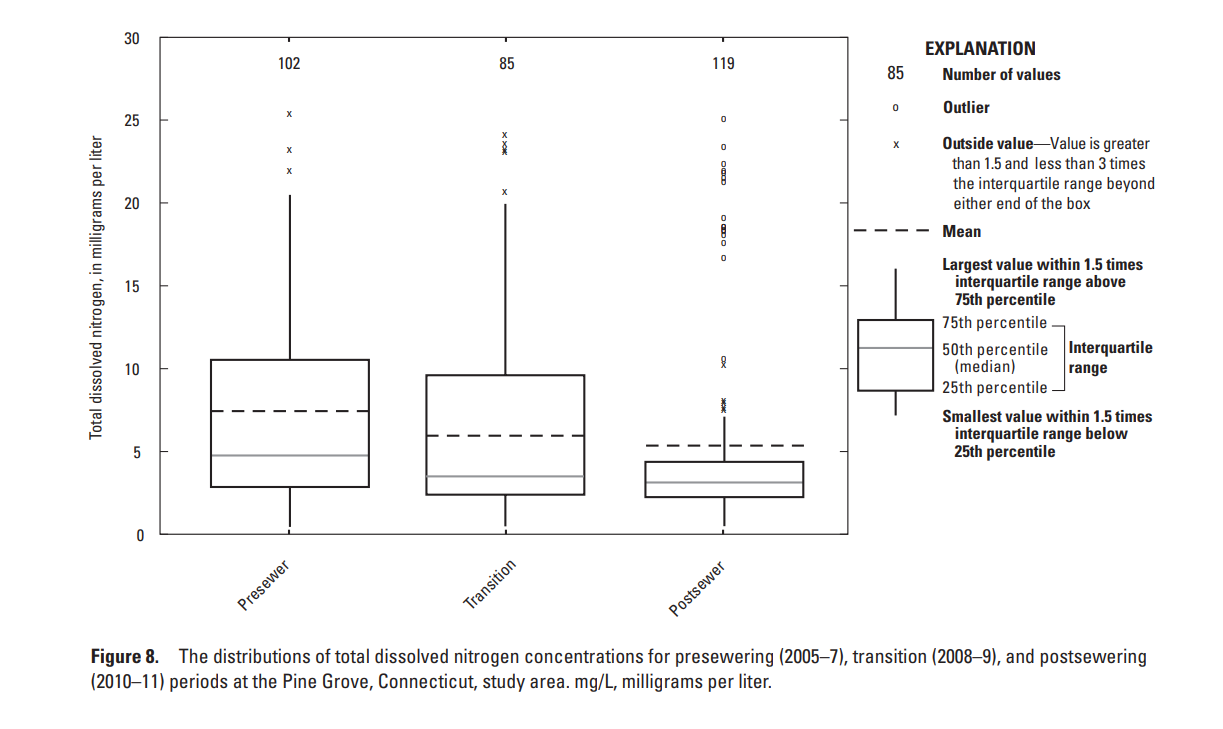
A follow up study was implemented in 2025 where samples will be collected four times over the course of a year (one sample set per season) to account for seasonal variability. The resulting data will then be compared against the data from the previous study to assess if nitrogen levels have continued to drop after sewering. The current study is funded by the U.S. Environmental Protection Agency (EPA).
References
Long Island Sound Study, 2022, Long Island Sound eelgrass management and restoration strategy, variously paginated, accessed March 14, 2025.
Mullaney, J.R., 2015, Evaluation of the effects of sewering on nitrogen loads to the Niantic River, southeastern Connecticut, 2005–11: U.S. Geological Survey Scientific Investigations Report 2015–5011, 30 p.
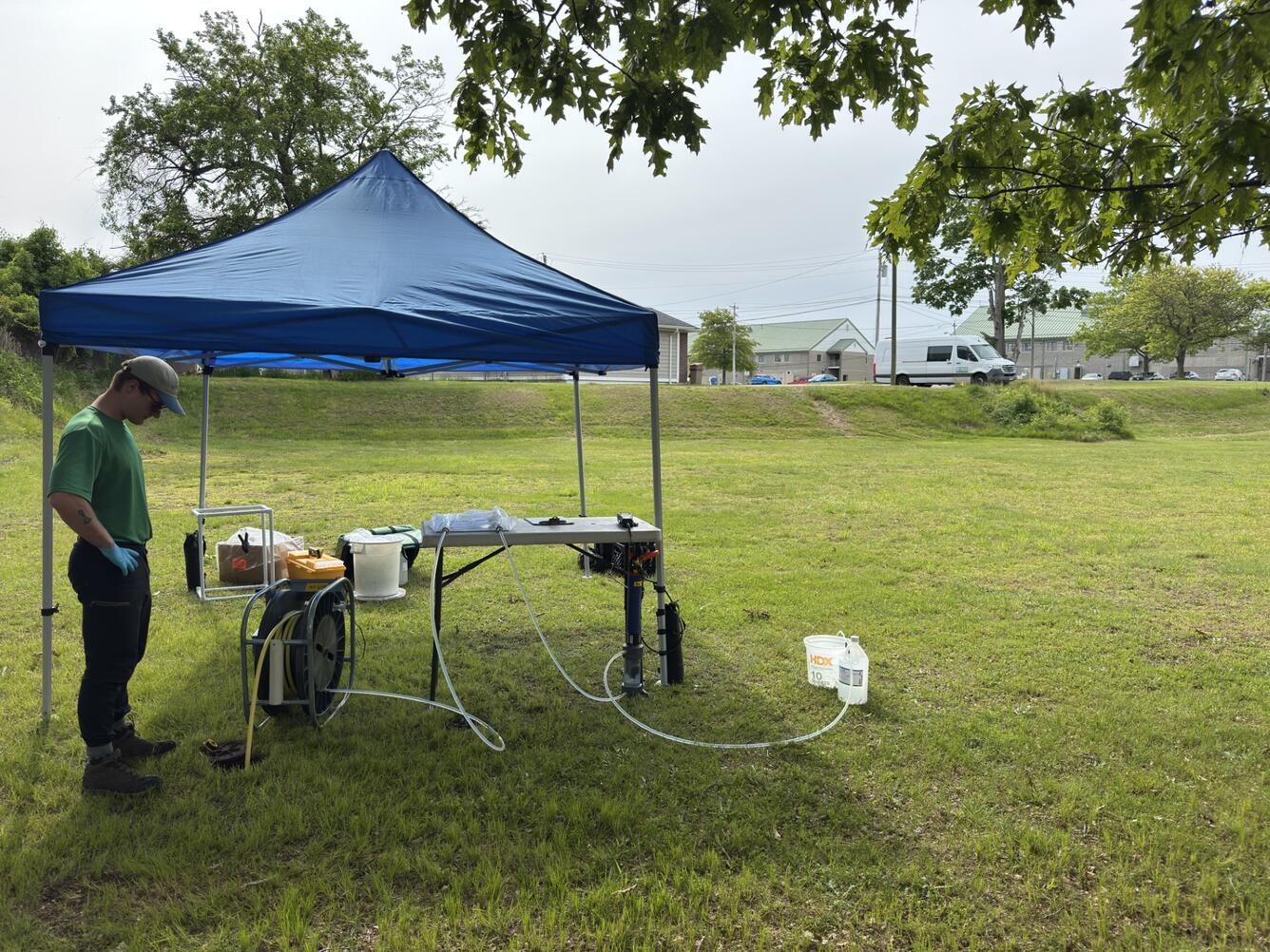
Hydrologic Technician Conner Caridad observing the purge of a groundwater well located in the Army Base Camp Nett.
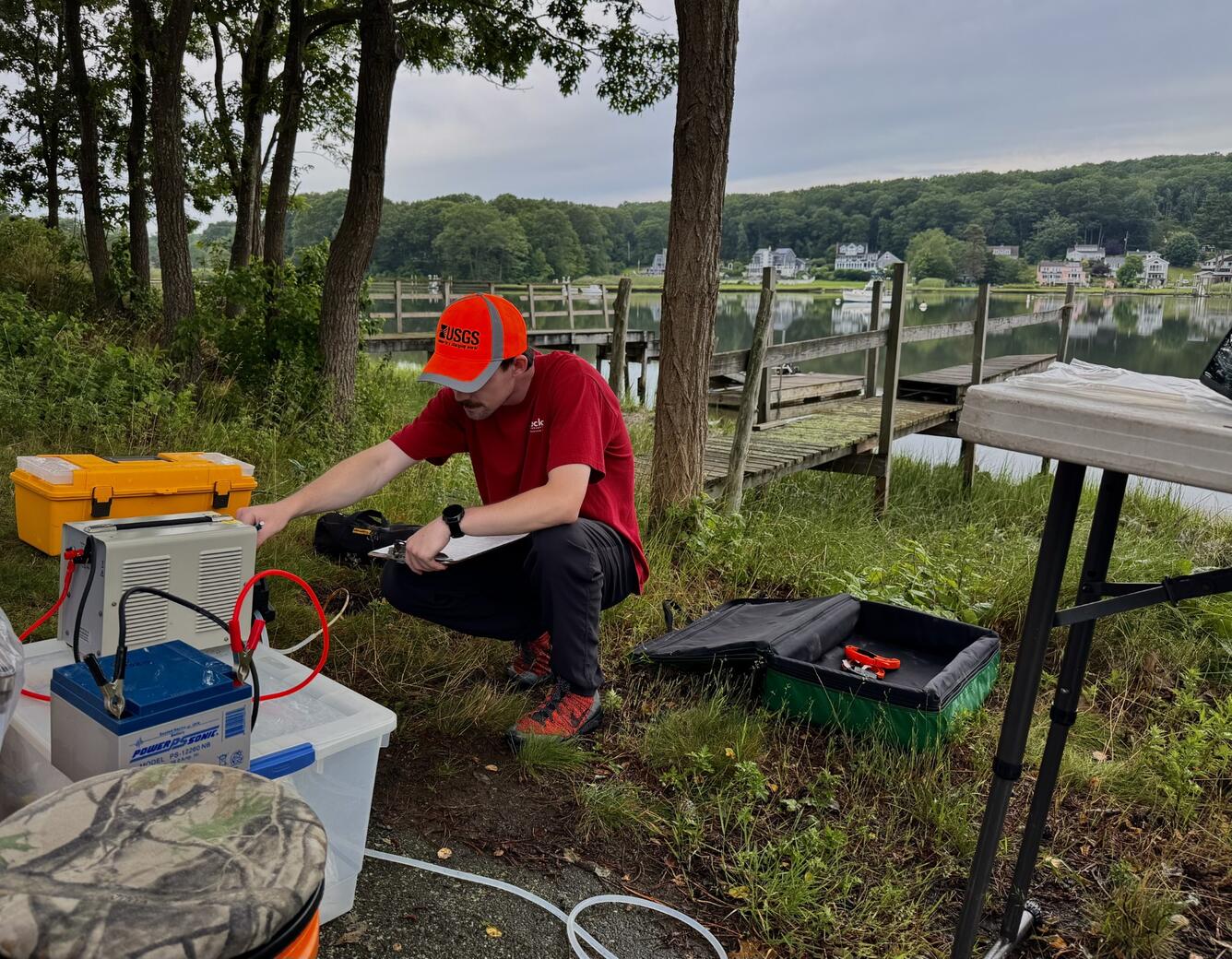
Hydrologic Technician Danny Hansen adjusts the speed of peristaltic pump at a groundwater well in the Pine Grove community Grove in Niantic, CT.
Onsite residential septic systems can be a major nonpoint source of nitrogen contamination. The excess nitrogen entering Connecticut’s Niantic River estuary is associated with high nitrate concentrations in the groundwater of the river’s 28-square-mile watershed, creating unsuitable habitat for the growth and recovery of eelgrass (Zostera marina). In an attempt to improve the river’s water quality, the town of East Lyme moved away from onsite septic systems in 2008 in the Pine Grove peninsula and installed a town sewer system to process and discharge residential wastewater. The U.S. Geological Survey (USGS) studied nitrogen concentrations in the groundwater at Pine Grove from 2005 – 2011, before, during, and after sewer installation, and found decreases in nitrogen after switching to sewer. In 2025, USGS is revisiting the study sites to identify how the water-quality has changed over the past decade.
Many coastal communities in Connecticut continue to utilize onsite residential septic systems that do not process wastewater for nitrate, allowing it to seep into the groundwater. The replacement of traditional septic systems to municipal sewer systems reduces the outflow of nitrogen into groundwater and, ultimately, into rivers and estuaries connected to Long Island Sound. The findings from this study can inform similar towns about the best alternatives for coastal wastewater management to improve Long Island Sound’s ecological health.
USGS Hydrologist John Mullaney collects groundwater samples from a USGS monitoring well on the Pine Grove peninsula in February 2025.
The Consequences of Too Much Nitrogen
Nitrogen is a natural part of aquatic ecosystems, but when there is too much nitrogen (often from human activities), it can promote the growth of nuisance vegetation, degrade the growth of beneficial vegetation, and fuel algal blooms that degrade aquatic habitats. Excess levels of nitrogen and phosphorous support the growth of algae, which can significantly shade submerged aquatic vegetation inhibiting their growth.
A vital habitat species for shellfish and fisheries, eelgrass is one type of aquatic plant negatively impacted by excess nitrogen. Eelgrass is a foundation of a healthy estuarine ecosystem providing areas for foraging, shelter, and nurseries for fish and invertebrates. Beds of eelgrass also trap sediment that stabilize sand and dampen wave energy during storms. Eelgrass habitat and, subsequently, bay scallop populations have declined in the Niantic River estuary since the mid-1980s and have not rebounded. The Niantic River estuary is the most western embayment in Connecticut that has eelgrass, and restoration of this critical habitat is crucial.
Study Methods
In 2005, the USGS drilled 18 groundwater wells for water-quality testing, some of which enable samples to be taken at different depths in the groundwater table. Data collection on this project began in 2005 before sewer installation to establish a baseline of nutrient values. The sewer system was completed in 2009, and the USGS collected additional samples at the same wells from 2009 to 2011. The resulting data indicated that mean and median concentrations of nitrogen were reduced by 2.3 and 1.7 milligrams per liter, respectively.
A follow up study was implemented in 2025 where samples will be collected four times over the course of a year (one sample set per season) to account for seasonal variability. The resulting data will then be compared against the data from the previous study to assess if nitrogen levels have continued to drop after sewering. The current study is funded by the U.S. Environmental Protection Agency (EPA).
References
Long Island Sound Study, 2022, Long Island Sound eelgrass management and restoration strategy, variously paginated, accessed March 14, 2025.
Mullaney, J.R., 2015, Evaluation of the effects of sewering on nitrogen loads to the Niantic River, southeastern Connecticut, 2005–11: U.S. Geological Survey Scientific Investigations Report 2015–5011, 30 p.
Hydrologic Technician Conner Caridad observing the purge of a groundwater well located in the Army Base Camp Nett.
Hydrologic Technician Danny Hansen adjusts the speed of peristaltic pump at a groundwater well in the Pine Grove community Grove in Niantic, CT.