



The U.S. Geological Survey (USGS) New England Water Science Center, in cooperation with the Connecticut Department of Economic and Community Development (CT DECD) and the Connecticut Department of Energy and Environmental Protection (CT DEEP), is investigating the occurrence of per- and polyfluoroalkyl substances (PFAS) in soils and shallow groundwater across the state of Connecticut. The studies are focused on background conditions that are not tied directly to known or potential PFAS sources.
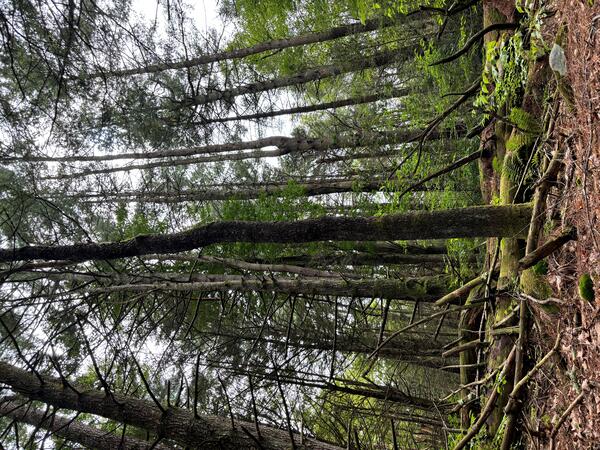
PFAS are a diverse group of man-made chemical compounds used for their non-stick and water-resistant properties. The compounds are persistent in the environment and have been linked to adverse effects on human and ecosystem health. PFAS have been found to be present in many parts of our environment due to transport in the atmosphere and solubility in groundwater and surface water. Therefore, the USGS is investigating anthropogenic background concentrations of PFAS in soil and shallow groundwater throughout Connecticut, specifically in areas of minimal land disturbance, to better quantify its presence.
“Anthropogenic background” refers to the low-level concentrations that result from human activities and diffuse sources, and not those directly attributable to local point source(s). The spatial distribution of PFAS concentrations in soil and groundwater from these studies can be used by agencies to support resource planning, management decisions, and inform scientific needs as the understanding of PFAS in the environment evolves.
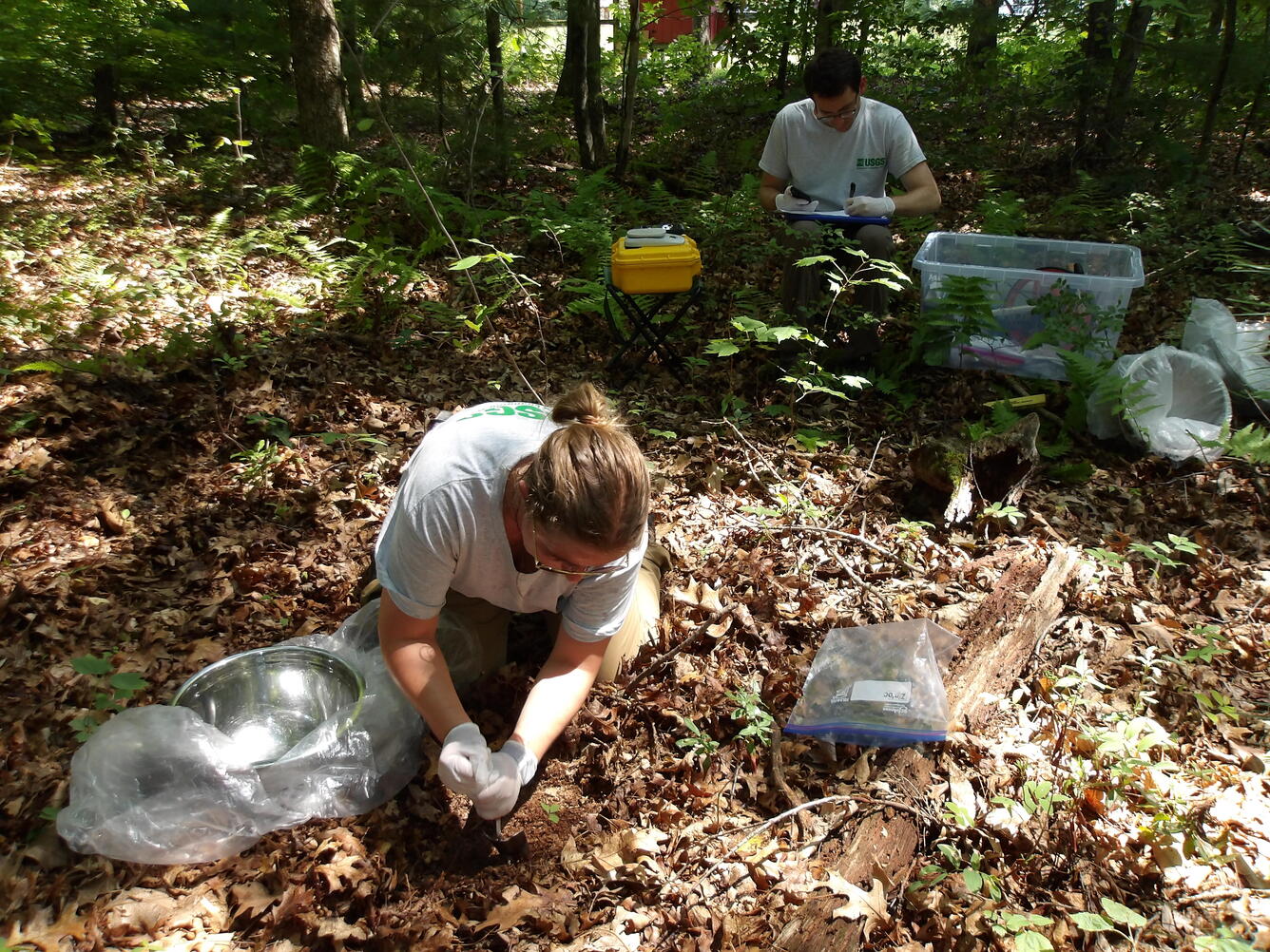
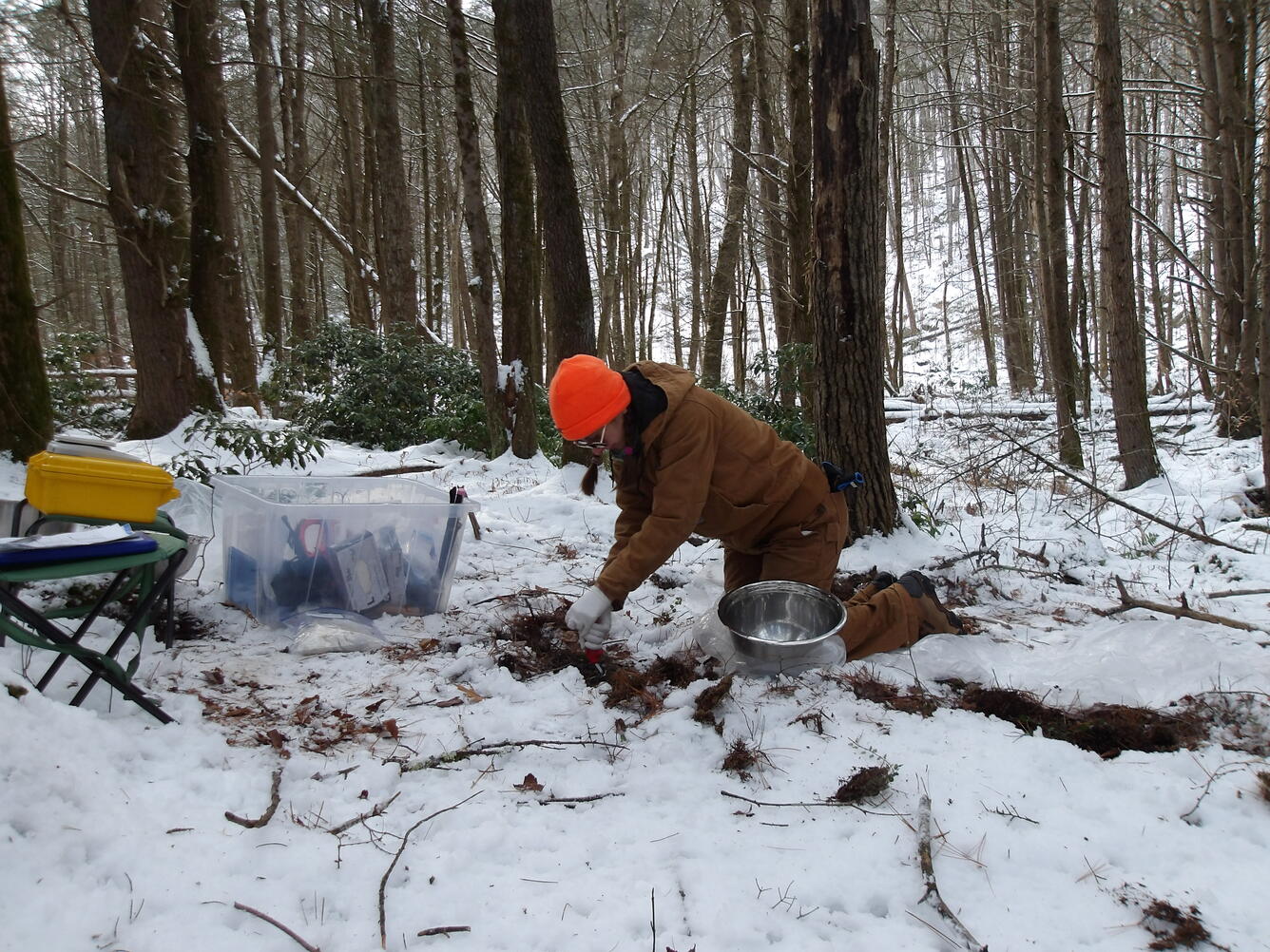
Soil quality data has been collected at 100 randomized locations. A subset of about 30 of the 100 locations is being selected for collection of shallow groundwater quality data.
All samples are being analyzed for PFAS concentrations and other constituents, such as organic carbon, pH, metals, and major ions. These analyses can help identify potential factors related to PFAS in the environments being studied, and whether other potentially co-occurring chemicals influence the presence of PFAS.
All study data will be available to the public in published data releases.
For more information, please contact the USGS project leads:
Soil Quality Study: Maxwell Meadows, mmeadows@usgs.gov
Shallow Groundwater Quality Study: Leah Santangelo, lsantangelo@usgs.gov
The U.S. Geological Survey (USGS) New England Water Science Center, in cooperation with the Connecticut Department of Economic and Community Development (CT DECD) and the Connecticut Department of Energy and Environmental Protection (CT DEEP), is investigating the occurrence of per- and polyfluoroalkyl substances (PFAS) in soils and shallow groundwater across the state of Connecticut. The studies are focused on background conditions that are not tied directly to known or potential PFAS sources.
PFAS are a diverse group of man-made chemical compounds used for their non-stick and water-resistant properties. The compounds are persistent in the environment and have been linked to adverse effects on human and ecosystem health. PFAS have been found to be present in many parts of our environment due to transport in the atmosphere and solubility in groundwater and surface water. Therefore, the USGS is investigating anthropogenic background concentrations of PFAS in soil and shallow groundwater throughout Connecticut, specifically in areas of minimal land disturbance, to better quantify its presence.
“Anthropogenic background” refers to the low-level concentrations that result from human activities and diffuse sources, and not those directly attributable to local point source(s). The spatial distribution of PFAS concentrations in soil and groundwater from these studies can be used by agencies to support resource planning, management decisions, and inform scientific needs as the understanding of PFAS in the environment evolves.
Soil quality data has been collected at 100 randomized locations. A subset of about 30 of the 100 locations is being selected for collection of shallow groundwater quality data.
All samples are being analyzed for PFAS concentrations and other constituents, such as organic carbon, pH, metals, and major ions. These analyses can help identify potential factors related to PFAS in the environments being studied, and whether other potentially co-occurring chemicals influence the presence of PFAS.
All study data will be available to the public in published data releases.
For more information, please contact the USGS project leads:
Soil Quality Study: Maxwell Meadows, mmeadows@usgs.gov
Shallow Groundwater Quality Study: Leah Santangelo, lsantangelo@usgs.gov