



NOROCK Research in Support of Native Amphibians
NOROCK Research in Support of Native Amphibians
NOROCK continues its important amphibian research program. Recent studies have explored the effects of environmental contaminants and pathogens on amphibians, and the influence of beaver-modified wetlands on pathogen prevalence in amphibians. See below for more information.
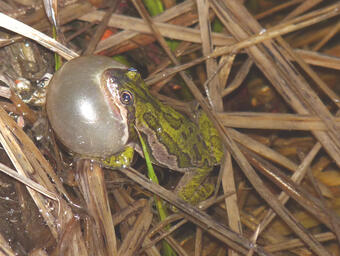
Background
Disease and environmental contaminants contribute to amphibian population declines worldwide. NOROCK scientists have been studying the effects of a particularly destructive amphibian pathogen, amphibian chytrid fungus (Batrachochytrium dendrobatidis (Bd)), and a potentially lethal environmental pollutant, methylmercury. Bd and methylmercury are widespread across the landscape, so understanding how these threats affect amphibians and interact with each other and the environment can inform management of native amphibians, including habitat restoration strategies.
A Snapshot of Findings from Three Recent Studies
- Interactive effects of Bd and methylmercury can result in methylmercury magnifying the effects of Bd in amphibians in some cases.
- Both methylmercury and methylmercury-induced production of a stress hormone was associated with lower survival in native Columbia spotted frogs.
- Beaver activity in wetlands resulted in an overall negligible effect on Bd prevalence because of opposing influences of Bd:
- the extended time beaver-enhanced wetlands held water increased Bd prevalence
- lower tree cover caused by beavers decreased Bd prevalence
- New Jersey Water Science Center
- Western Ecological Research Center
- National Wildlife Health Center
- Forest and Rangeland Ecosystem Science Center
- Wetland and Aquatic Research Center
- Eastern Ecological Science Center
- Fort Collins Science Center
Click on the images below to get more information on the collaborative research NOROCK conducted to understand Bd, methylmercury, their interactive effects, and the effects beaver-modified wetlands have on Bd.