



Dynamics of Rabies Transmission in Vampire Bats and Potential for Control Through Vaccination
Vampire bats are the primary spreader of rabies, a lethal disease that harms livestock and people across Latin America. Growth of the livestock industry and environmental changes in this region are leading to the expansion of vampire bats’ habitat range, and it is considered likely this species will move into the southern United States.
What is the issue
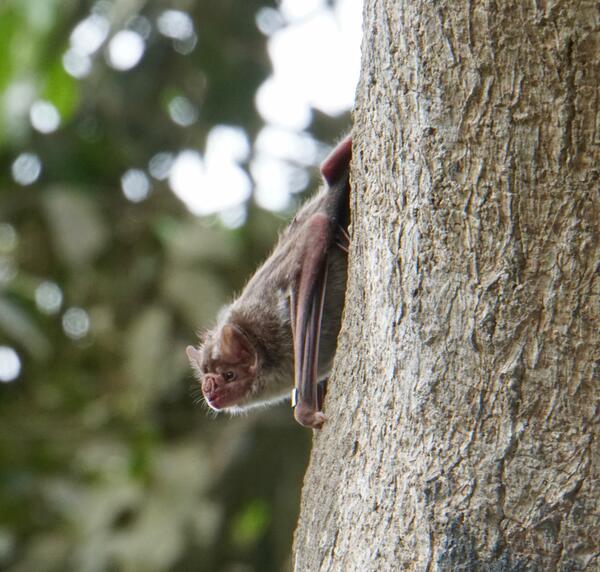
Controlling vampire bat rabies is difficult as it relies mainly on reduction of bat populations (culling) and vaccination of livestock. However culling bats often results in further spread of the rabies virus as bats disperse when their colony is disrupted. Vaccinating vampire bats to prevent rabies virus transmission could significantly cut livestock losses from rabies and lower the risk of human disease. However, no approved rabies vaccines are currently available for bats, and vaccinating wild bats is a challenge.
What's at stake
Without viable alternatives to culling, rabies outbreaks and animal losses are likely to persist, putting rural communities at continued risk of economic hardship from livestock losses and ongoing exposure to the disease. Each year, an estimated 450 rabies outbreaks are caused by vampire bats in Central and South America, mostly in livestock. While vampire bat rabies is limited by the range of bats (Latin America), U.S. livestock populations could be at risk in the future if vampire bats continue to expand their range (eg., into the south Texas border), where resources and suitable habitat are available. A bat-focused vaccine strategy could prevent disease and strengthen current control measures.
What is our approach
Several studies are currently in progress to gather information needed before widespread use of rabies vaccine can be approved and applied in vampire bats. This includes work both in the lab and in the field.
- Lab trials: Scientists at NWHC are optimizing dose and delivery of an RCN–mosaic glycoprotein (RCN-MoG) rabies vaccine in vampire bats. This includes testing oral and topical delivery methods, assessing the immunity and protection provided by vaccination, and determining the vaccine’s effectiveness in preventing rabies virus shedding in vampire bats. The advantage of this vaccine is that can be applied topically and spread through a bat colony by grooming as the bats ingest the vaccine in the process.
- Field transfer studies: In wild vampire bats, we use a fluorescent biomarker in a gel-based delivery medium to measure how topical treatment of a mock vaccine spreads by grooming within colonies.
- Field vaccination assessment: We are assessing the effect of rabies vaccination on wild vampire bats using a commercial protein vaccine (which must be injected) to assess variables such as survival and population changes (e.g., abundance). This will allow scientists to understand how bat populations might change after vaccination with the oro-topical vaccine in the future. We will monitor bat colonies using microchip readers in individual bats to track survival.
- Modeling: Using the data collected from our field and laboratory studies, we are building computer models to identify the most effective vaccination approaches such as when, which, and how many bats to treat to curb rabies spread.
What are the benefits
Vaccination provides a non-lethal alternative to control vampire bat rabies by targeting the reservoir source. This work will develop a safe rabies vaccine for bat use and better delivery methods for mass vaccination that emphasizes practicality, broad coverage, and cost-effectiveness. Modeling will inform guidelines for bat-focused vaccine deployment, timing, and coverage to reduce rabies in wild bats and, ultimately, outbreaks in livestock. Because vampire bats are not the only species that carries rabies virus, the vaccine can be used in other bat species beyond Latin America.
Recent accomplishments
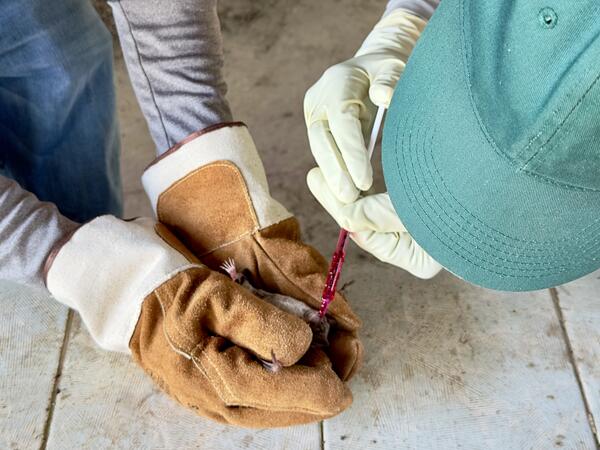
In the 2026 field season, NWHC scientists and collaborators in Mexico visited caves, abandoned buildings, and other sites in Jalisco, Mexico to capture, vaccinate, and sample almost 300 bats across 3 study colonies.
Next steps
Blood samples will be tested for rabies antibodies by serology to determine whether vaccination increases antibody levels. We will also continue to monitor microchipped bats to track survival. Finally, we will integrate serology and bat survival data into models to assess the effects of vaccination on bat populations.
Special thanks to volunteers Elsa Cardenas-Canales and Cole Knuese for their work on this project.
We thank our partner Departamento de Ciencias de la Salud y Ecología Humana, Centro Universitario de la Costa Sur, Universidad de Guadalajara, Autlan, Jalisco, Mexico, for its contributions to this project
Additional resources:
An optimized rabies vaccine vehicle for orotopical administration to wild vampire bats
Vampire bats are the primary spreader of rabies, a lethal disease that harms livestock and people across Latin America. Growth of the livestock industry and environmental changes in this region are leading to the expansion of vampire bats’ habitat range, and it is considered likely this species will move into the southern United States.
What is the issue
Controlling vampire bat rabies is difficult as it relies mainly on reduction of bat populations (culling) and vaccination of livestock. However culling bats often results in further spread of the rabies virus as bats disperse when their colony is disrupted. Vaccinating vampire bats to prevent rabies virus transmission could significantly cut livestock losses from rabies and lower the risk of human disease. However, no approved rabies vaccines are currently available for bats, and vaccinating wild bats is a challenge.
What's at stake
Without viable alternatives to culling, rabies outbreaks and animal losses are likely to persist, putting rural communities at continued risk of economic hardship from livestock losses and ongoing exposure to the disease. Each year, an estimated 450 rabies outbreaks are caused by vampire bats in Central and South America, mostly in livestock. While vampire bat rabies is limited by the range of bats (Latin America), U.S. livestock populations could be at risk in the future if vampire bats continue to expand their range (eg., into the south Texas border), where resources and suitable habitat are available. A bat-focused vaccine strategy could prevent disease and strengthen current control measures.
What is our approach
Several studies are currently in progress to gather information needed before widespread use of rabies vaccine can be approved and applied in vampire bats. This includes work both in the lab and in the field.
- Lab trials: Scientists at NWHC are optimizing dose and delivery of an RCN–mosaic glycoprotein (RCN-MoG) rabies vaccine in vampire bats. This includes testing oral and topical delivery methods, assessing the immunity and protection provided by vaccination, and determining the vaccine’s effectiveness in preventing rabies virus shedding in vampire bats. The advantage of this vaccine is that can be applied topically and spread through a bat colony by grooming as the bats ingest the vaccine in the process.
- Field transfer studies: In wild vampire bats, we use a fluorescent biomarker in a gel-based delivery medium to measure how topical treatment of a mock vaccine spreads by grooming within colonies.
- Field vaccination assessment: We are assessing the effect of rabies vaccination on wild vampire bats using a commercial protein vaccine (which must be injected) to assess variables such as survival and population changes (e.g., abundance). This will allow scientists to understand how bat populations might change after vaccination with the oro-topical vaccine in the future. We will monitor bat colonies using microchip readers in individual bats to track survival.
- Modeling: Using the data collected from our field and laboratory studies, we are building computer models to identify the most effective vaccination approaches such as when, which, and how many bats to treat to curb rabies spread.
What are the benefits
Vaccination provides a non-lethal alternative to control vampire bat rabies by targeting the reservoir source. This work will develop a safe rabies vaccine for bat use and better delivery methods for mass vaccination that emphasizes practicality, broad coverage, and cost-effectiveness. Modeling will inform guidelines for bat-focused vaccine deployment, timing, and coverage to reduce rabies in wild bats and, ultimately, outbreaks in livestock. Because vampire bats are not the only species that carries rabies virus, the vaccine can be used in other bat species beyond Latin America.
Recent accomplishments
In the 2026 field season, NWHC scientists and collaborators in Mexico visited caves, abandoned buildings, and other sites in Jalisco, Mexico to capture, vaccinate, and sample almost 300 bats across 3 study colonies.
Next steps
Blood samples will be tested for rabies antibodies by serology to determine whether vaccination increases antibody levels. We will also continue to monitor microchipped bats to track survival. Finally, we will integrate serology and bat survival data into models to assess the effects of vaccination on bat populations.
Special thanks to volunteers Elsa Cardenas-Canales and Cole Knuese for their work on this project.
We thank our partner Departamento de Ciencias de la Salud y Ecología Humana, Centro Universitario de la Costa Sur, Universidad de Guadalajara, Autlan, Jalisco, Mexico, for its contributions to this project
Additional resources:
An optimized rabies vaccine vehicle for orotopical administration to wild vampire bats