



Juvenile Northern Shrike. This photo was taken on the Seward Peninsula as part of the Changing Arctic Ecosystem Boreal-Arctic Transition Zone program.
On this page, learn about USGS work with the Alaska Landbird Monitoring Survey (ALMS), Beak Deformities in Landbirds, and Boreal Partners in Flight (BPIF).
Return to Ecosystems >> Terrestrial Ecosystems
Media

Sources/Usage: Public Domain. View Media Details
Alaska Landbird Monitoring Survey (ALMS)
Alaska provides breeding habitat for >140 regularly occurring species of landbirds, half of which breed predominantly north of the U.S.–Canada border. The road-based North American Breeding Bird Survey (BBS) provides some data on population trends in Alaska, but most northern species are inadequately monitored by that continental program because of a paucity of roads. Boreal Partners in Flight developed the Alaska Landbird Monitoring Survey (ALMS) to monitor breeding populations of landbirds in the vast off-road areas of Alaska and to complement data collected from the roadside BBS.
Beak Deformities in Landbirds
The Alaska Science Center began research on a cluster of beak deformities in landbirds in Alaska in 1999. We have since identified more than 3,000 Black-capped Chickadees affected by this disease, known as avian keratin disorder, which represents the highest concentration of such abnormalities ever recorded in a wild bird population! More recently, increasing numbers of other species, including nuthatches, woodpeckers, crows, and jays have also been reported with beak deformities by biologists and local residents.
Media

Sources/Usage: Public Domain. View Media Details
Boreal Partners in Flight (BPIF)
Alaska Landbird Resource Information System, the official web site for Boreal Partners in Flight! Here is the place to learn more about the Boreal Partners in Flight program and our efforts to understand and conserve northern populations of landbirds.
Boreal Partners in Flight is a coalition of individuals who are working together to help conserve bird populations throughout boreal regions of North America. Boreal Partners in Flight is the official Alaska state working group of the international Partners in Flight program. We also have many members from Canada because we share many of the same species, habitats, and problems.
Below are multimedia items associated with this project.
Filter Total Items: 37

Juvenile Northern Shrike
Juvenile Northern Shrike. This photo was taken on the Seward Peninsula as part of the Changing Arctic Ecosystem Boreal-Arctic Transition Zone program.

Skyler Vold conducts a bird survey on the Seward Peninsula
Skyler Vold conducts a bird survey on the Seward PeninsulaUSGS biologist Skyler Vold conducts a bird survey on Alaska’s Seward Peninsula
Skyler Vold conducts a bird survey on the Seward Peninsula
Skyler Vold conducts a bird survey on the Seward PeninsulaUSGS biologist Skyler Vold conducts a bird survey on Alaska’s Seward Peninsula

Acoustic recording device on the Seward Peninsula tundra, Alaska
Acoustic recording device on the Seward Peninsula tundra, AlaskaAn acoustic recording device on the tundra of the Seward Peninsula, Alaska
Acoustic recording device on the Seward Peninsula tundra, Alaska
Acoustic recording device on the Seward Peninsula tundra, AlaskaAn acoustic recording device on the tundra of the Seward Peninsula, Alaska

Savannah Sparrow nest with eggs on the Seward Peninsula, Alaska
Savannah Sparrow nest with eggs on the Seward Peninsula, AlaskaSavannah Sparrow nest with egg. This photo was taken on the Seward Peninsula as part of the Changing Arctic Ecosystem Boreal-Arctic Transition Zone program.
Savannah Sparrow nest with eggs on the Seward Peninsula, Alaska
Savannah Sparrow nest with eggs on the Seward Peninsula, AlaskaSavannah Sparrow nest with egg. This photo was taken on the Seward Peninsula as part of the Changing Arctic Ecosystem Boreal-Arctic Transition Zone program.

Common Redpolls in a spruce tree in Anchorage, Alaska
Common Redpolls in a spruce tree in Anchorage, AlaskaTwo Common Redpolls sitting in a snow covered spruce tree in Anchorage, Alaska
Common Redpolls in a spruce tree in Anchorage, Alaska
Common Redpolls in a spruce tree in Anchorage, AlaskaTwo Common Redpolls sitting in a snow covered spruce tree in Anchorage, Alaska

Black-capped Chickadee with a deformed beak that has grown long and curved down
Black-capped Chickadee with a deformed beak that has grown long and curved downA Black-capped Chickadee with a beak that has grown long and curved down. Avian keratin disorder (AKD) is a disease characterized by debilitating beak overgrowth and other abnormalities of keratinized tissues. Affected birds have difficulty feeding and preening and may suffer high rates of mortality.
Black-capped Chickadee with a deformed beak that has grown long and curved down
Black-capped Chickadee with a deformed beak that has grown long and curved downA Black-capped Chickadee with a beak that has grown long and curved down. Avian keratin disorder (AKD) is a disease characterized by debilitating beak overgrowth and other abnormalities of keratinized tissues. Affected birds have difficulty feeding and preening and may suffer high rates of mortality.

USGS scientist banding a Bluethroat on the Seward Peninsula, Alaska
USGS scientist banding a Bluethroat on the Seward Peninsula, AlaskaUSGS scientist Rachel Richardson banding a Bluethroat on the Seward Peninsula in Alaska.
USGS scientist banding a Bluethroat on the Seward Peninsula, Alaska
USGS scientist banding a Bluethroat on the Seward Peninsula, AlaskaUSGS scientist Rachel Richardson banding a Bluethroat on the Seward Peninsula in Alaska.

Yellow Warbler in Alaska
Scientist holding an Yellow Warbler on the Seward Peninsula, Alaska. This photo is part of the Changing Arctic Ecosystems Boreal-Arctic Transition program.
Scientist holding an Yellow Warbler on the Seward Peninsula, Alaska. This photo is part of the Changing Arctic Ecosystems Boreal-Arctic Transition program.

Gray-cheeked Thrush with a band, Seward Peninsula, Alaska
Gray-cheeked Thrush with a band, Seward Peninsula, AlaskaGray-cheeked Thrush with a band from the Seward Peninsula in Alaska.
Gray-cheeked Thrush with a band, Seward Peninsula, Alaska
Gray-cheeked Thrush with a band, Seward Peninsula, AlaskaGray-cheeked Thrush with a band from the Seward Peninsula in Alaska.

Varied Thrush with a band, Seward Peninsula, Alaska
Varied Thrush with a band, Seward Peninsula, AlaskaUSGS scientists holding a Varied Thrush recenly banded on the Seward Peninsula in Alaska.
Varied Thrush with a band, Seward Peninsula, Alaska
Varied Thrush with a band, Seward Peninsula, AlaskaUSGS scientists holding a Varied Thrush recenly banded on the Seward Peninsula in Alaska.

Bluethroat on the Seward Peninsula, Alaska
Bluethroat on the Seward Peninsula, Alaska. This photo was taken on the Seward Peninsula as part of the Changing Arctic Ecosystem Boreal-Arctic Transition Zone program.
Bluethroat on the Seward Peninsula, Alaska. This photo was taken on the Seward Peninsula as part of the Changing Arctic Ecosystem Boreal-Arctic Transition Zone program.

Juvenile Bluethroat on the Seward Peninsula, Alaska
Juvenile Bluethroat on the Seward Peninsula, AlaskaJuvenile Bluethroat on the Seward Peninsula, Alaska. This photo was taken on the Seward Peninsula as part of the Changing Arctic Ecosystem Boreal-Arctic Transition Zone program.
Juvenile Bluethroat on the Seward Peninsula, Alaska
Juvenile Bluethroat on the Seward Peninsula, AlaskaJuvenile Bluethroat on the Seward Peninsula, Alaska. This photo was taken on the Seward Peninsula as part of the Changing Arctic Ecosystem Boreal-Arctic Transition Zone program.

Arctic Warbler in Alaska
Scientist holding an Arctic Warbler on the Seward Peninsula, Alaska. This photo is part of the Changing Arctic Ecosystems Boreal-Arctic Transition program.
Scientist holding an Arctic Warbler on the Seward Peninsula, Alaska. This photo is part of the Changing Arctic Ecosystems Boreal-Arctic Transition program.
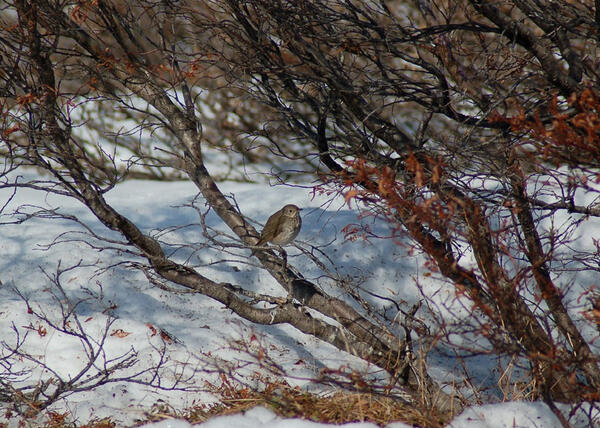
Gray-cheeked Thrush on the Seward Peninsula, Alaska
Gray-cheeked Thrush on the Seward Peninsula, AlaskaA Gray-cheeked Thrush perched in a shrub. This photo was taken on the Seward Peninsula as part of the Changing Arctic Ecosystem Boreal-Arctic Transition Zone program.
Gray-cheeked Thrush on the Seward Peninsula, Alaska
Gray-cheeked Thrush on the Seward Peninsula, AlaskaA Gray-cheeked Thrush perched in a shrub. This photo was taken on the Seward Peninsula as part of the Changing Arctic Ecosystem Boreal-Arctic Transition Zone program.

Black-capped Chickadee with elongated upper beak
Black-capped Chickadee with elongated upper beak. Avian keratin disorder (AKD) is a disease characterized by debilitating beak overgrowth and other abnormalities of keratinized tissues. Affected birds have difficulty feeding and preening and may suffer high rates of mortality.
Black-capped Chickadee with elongated upper beak. Avian keratin disorder (AKD) is a disease characterized by debilitating beak overgrowth and other abnormalities of keratinized tissues. Affected birds have difficulty feeding and preening and may suffer high rates of mortality.

On this page, learn about USGS work with the Alaska Landbird Monitoring Survey (ALMS), Beak Deformities in Landbirds, and Boreal Partners in Flight (BPIF).
Return to Ecosystems >> Terrestrial Ecosystems
Media
Sources/Usage: Public Domain. View Media Details
Alaska Landbird Monitoring Survey (ALMS)
Alaska provides breeding habitat for >140 regularly occurring species of landbirds, half of which breed predominantly north of the U.S.–Canada border. The road-based North American Breeding Bird Survey (BBS) provides some data on population trends in Alaska, but most northern species are inadequately monitored by that continental program because of a paucity of roads. Boreal Partners in Flight developed the Alaska Landbird Monitoring Survey (ALMS) to monitor breeding populations of landbirds in the vast off-road areas of Alaska and to complement data collected from the roadside BBS.
Beak Deformities in Landbirds
The Alaska Science Center began research on a cluster of beak deformities in landbirds in Alaska in 1999. We have since identified more than 3,000 Black-capped Chickadees affected by this disease, known as avian keratin disorder, which represents the highest concentration of such abnormalities ever recorded in a wild bird population! More recently, increasing numbers of other species, including nuthatches, woodpeckers, crows, and jays have also been reported with beak deformities by biologists and local residents.
Media
Sources/Usage: Public Domain. View Media Details
Boreal Partners in Flight (BPIF)
Alaska Landbird Resource Information System, the official web site for Boreal Partners in Flight! Here is the place to learn more about the Boreal Partners in Flight program and our efforts to understand and conserve northern populations of landbirds.
Boreal Partners in Flight is a coalition of individuals who are working together to help conserve bird populations throughout boreal regions of North America. Boreal Partners in Flight is the official Alaska state working group of the international Partners in Flight program. We also have many members from Canada because we share many of the same species, habitats, and problems.
Below are multimedia items associated with this project.
Filter Total Items: 37
Juvenile Northern Shrike
Juvenile Northern Shrike. This photo was taken on the Seward Peninsula as part of the Changing Arctic Ecosystem Boreal-Arctic Transition Zone program.
Juvenile Northern Shrike. This photo was taken on the Seward Peninsula as part of the Changing Arctic Ecosystem Boreal-Arctic Transition Zone program.
Skyler Vold conducts a bird survey on the Seward Peninsula
Skyler Vold conducts a bird survey on the Seward PeninsulaUSGS biologist Skyler Vold conducts a bird survey on Alaska’s Seward Peninsula
Skyler Vold conducts a bird survey on the Seward Peninsula
Skyler Vold conducts a bird survey on the Seward PeninsulaUSGS biologist Skyler Vold conducts a bird survey on Alaska’s Seward Peninsula
Acoustic recording device on the Seward Peninsula tundra, Alaska
Acoustic recording device on the Seward Peninsula tundra, AlaskaAn acoustic recording device on the tundra of the Seward Peninsula, Alaska
Acoustic recording device on the Seward Peninsula tundra, Alaska
Acoustic recording device on the Seward Peninsula tundra, AlaskaAn acoustic recording device on the tundra of the Seward Peninsula, Alaska
Savannah Sparrow nest with eggs on the Seward Peninsula, Alaska
Savannah Sparrow nest with eggs on the Seward Peninsula, AlaskaSavannah Sparrow nest with egg. This photo was taken on the Seward Peninsula as part of the Changing Arctic Ecosystem Boreal-Arctic Transition Zone program.
Savannah Sparrow nest with eggs on the Seward Peninsula, Alaska
Savannah Sparrow nest with eggs on the Seward Peninsula, AlaskaSavannah Sparrow nest with egg. This photo was taken on the Seward Peninsula as part of the Changing Arctic Ecosystem Boreal-Arctic Transition Zone program.
Common Redpolls in a spruce tree in Anchorage, Alaska
Common Redpolls in a spruce tree in Anchorage, AlaskaTwo Common Redpolls sitting in a snow covered spruce tree in Anchorage, Alaska
Common Redpolls in a spruce tree in Anchorage, Alaska
Common Redpolls in a spruce tree in Anchorage, AlaskaTwo Common Redpolls sitting in a snow covered spruce tree in Anchorage, Alaska
Black-capped Chickadee with a deformed beak that has grown long and curved down
Black-capped Chickadee with a deformed beak that has grown long and curved downA Black-capped Chickadee with a beak that has grown long and curved down. Avian keratin disorder (AKD) is a disease characterized by debilitating beak overgrowth and other abnormalities of keratinized tissues. Affected birds have difficulty feeding and preening and may suffer high rates of mortality.
Black-capped Chickadee with a deformed beak that has grown long and curved down
Black-capped Chickadee with a deformed beak that has grown long and curved downA Black-capped Chickadee with a beak that has grown long and curved down. Avian keratin disorder (AKD) is a disease characterized by debilitating beak overgrowth and other abnormalities of keratinized tissues. Affected birds have difficulty feeding and preening and may suffer high rates of mortality.
USGS scientist banding a Bluethroat on the Seward Peninsula, Alaska
USGS scientist banding a Bluethroat on the Seward Peninsula, AlaskaUSGS scientist Rachel Richardson banding a Bluethroat on the Seward Peninsula in Alaska.
USGS scientist banding a Bluethroat on the Seward Peninsula, Alaska
USGS scientist banding a Bluethroat on the Seward Peninsula, AlaskaUSGS scientist Rachel Richardson banding a Bluethroat on the Seward Peninsula in Alaska.
Yellow Warbler in Alaska
Scientist holding an Yellow Warbler on the Seward Peninsula, Alaska. This photo is part of the Changing Arctic Ecosystems Boreal-Arctic Transition program.
Scientist holding an Yellow Warbler on the Seward Peninsula, Alaska. This photo is part of the Changing Arctic Ecosystems Boreal-Arctic Transition program.
Gray-cheeked Thrush with a band, Seward Peninsula, Alaska
Gray-cheeked Thrush with a band, Seward Peninsula, AlaskaGray-cheeked Thrush with a band from the Seward Peninsula in Alaska.
Gray-cheeked Thrush with a band, Seward Peninsula, Alaska
Gray-cheeked Thrush with a band, Seward Peninsula, AlaskaGray-cheeked Thrush with a band from the Seward Peninsula in Alaska.
Varied Thrush with a band, Seward Peninsula, Alaska
Varied Thrush with a band, Seward Peninsula, AlaskaUSGS scientists holding a Varied Thrush recenly banded on the Seward Peninsula in Alaska.
Varied Thrush with a band, Seward Peninsula, Alaska
Varied Thrush with a band, Seward Peninsula, AlaskaUSGS scientists holding a Varied Thrush recenly banded on the Seward Peninsula in Alaska.
Bluethroat on the Seward Peninsula, Alaska
Bluethroat on the Seward Peninsula, Alaska. This photo was taken on the Seward Peninsula as part of the Changing Arctic Ecosystem Boreal-Arctic Transition Zone program.
Bluethroat on the Seward Peninsula, Alaska. This photo was taken on the Seward Peninsula as part of the Changing Arctic Ecosystem Boreal-Arctic Transition Zone program.
Juvenile Bluethroat on the Seward Peninsula, Alaska
Juvenile Bluethroat on the Seward Peninsula, AlaskaJuvenile Bluethroat on the Seward Peninsula, Alaska. This photo was taken on the Seward Peninsula as part of the Changing Arctic Ecosystem Boreal-Arctic Transition Zone program.
Juvenile Bluethroat on the Seward Peninsula, Alaska
Juvenile Bluethroat on the Seward Peninsula, AlaskaJuvenile Bluethroat on the Seward Peninsula, Alaska. This photo was taken on the Seward Peninsula as part of the Changing Arctic Ecosystem Boreal-Arctic Transition Zone program.
Arctic Warbler in Alaska
Scientist holding an Arctic Warbler on the Seward Peninsula, Alaska. This photo is part of the Changing Arctic Ecosystems Boreal-Arctic Transition program.
Scientist holding an Arctic Warbler on the Seward Peninsula, Alaska. This photo is part of the Changing Arctic Ecosystems Boreal-Arctic Transition program.
Gray-cheeked Thrush on the Seward Peninsula, Alaska
Gray-cheeked Thrush on the Seward Peninsula, AlaskaA Gray-cheeked Thrush perched in a shrub. This photo was taken on the Seward Peninsula as part of the Changing Arctic Ecosystem Boreal-Arctic Transition Zone program.
Gray-cheeked Thrush on the Seward Peninsula, Alaska
Gray-cheeked Thrush on the Seward Peninsula, AlaskaA Gray-cheeked Thrush perched in a shrub. This photo was taken on the Seward Peninsula as part of the Changing Arctic Ecosystem Boreal-Arctic Transition Zone program.
Black-capped Chickadee with elongated upper beak
Black-capped Chickadee with elongated upper beak. Avian keratin disorder (AKD) is a disease characterized by debilitating beak overgrowth and other abnormalities of keratinized tissues. Affected birds have difficulty feeding and preening and may suffer high rates of mortality.
Black-capped Chickadee with elongated upper beak. Avian keratin disorder (AKD) is a disease characterized by debilitating beak overgrowth and other abnormalities of keratinized tissues. Affected birds have difficulty feeding and preening and may suffer high rates of mortality.