



FORT Science in Action, Part 4: the North American Bat Monitoring Program (NABat)
The North American Bat Monitoring Program (NABat) was established in 2015 as a multi-national, multi-agency coordinated bat population monitoring program. NABat was designed to unify and enable a dispersed community to repeatedly monitor bats across a continent, assemble data in a centralized database, and deliver status and trends for one of North America’s critical resources – bats.
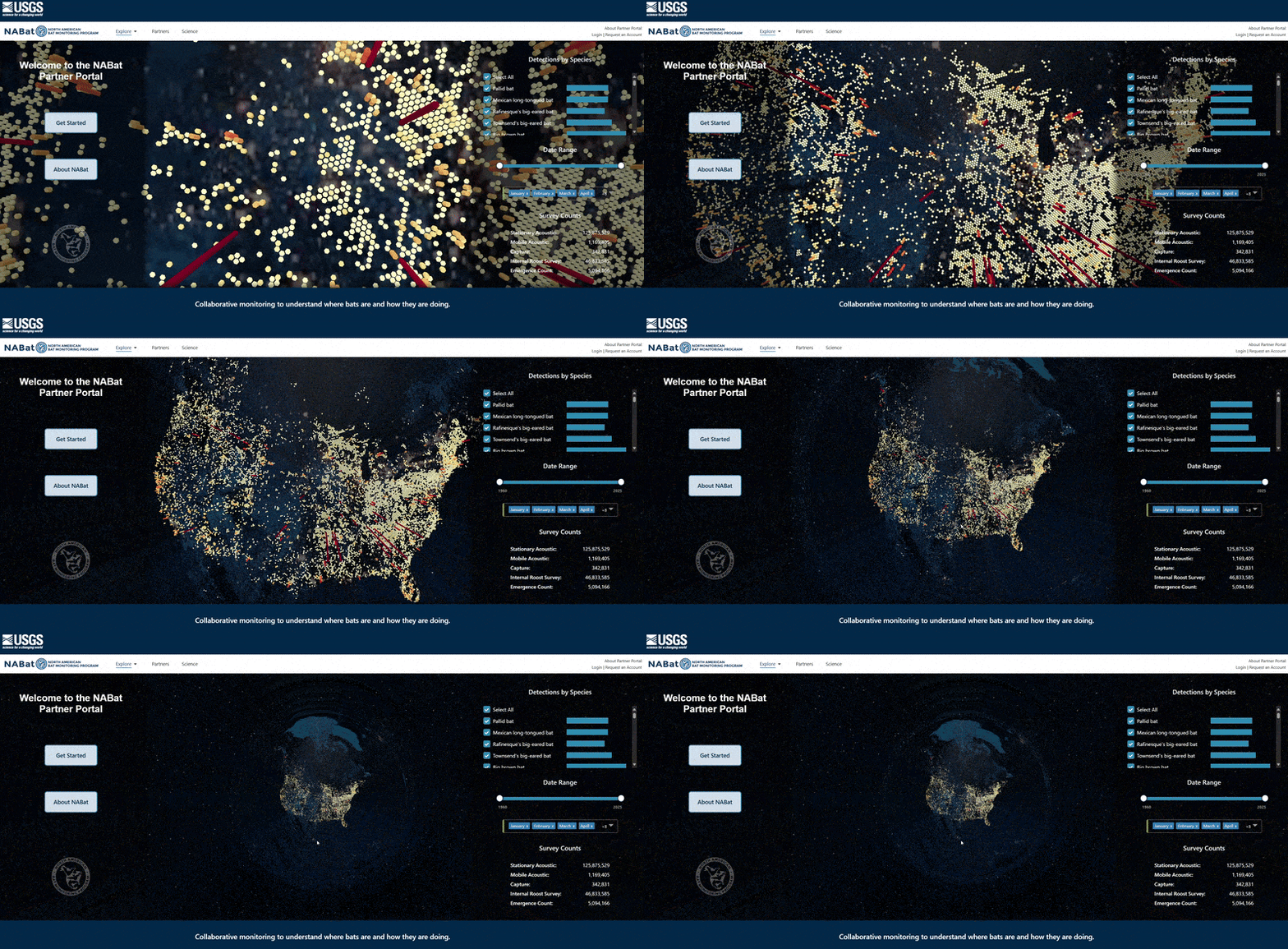
Bats are essential, contributing members of healthy, functioning ecosystems. They perform numerous ecosystem services like insect pest control and plant pollination, and provide enormous economic benefits through ecotourism, medical research, and novel biotechnologies. North American bats face unprecedented threats including habitat loss and fragmentation, white-nose syndrome, and wind energy development. However, it is difficult to evaluate the impacts of these threats due to a lack of basic information about the distribution and abundance of bats across the continent.
The North American Bat Monitoring Program (NABat), now ten years in, serves as the information system for 47 North American bat species, supporting informed decision-making through robust data collection, data management, and analysis.
The U.S. Fish and Wildlife service use NABat data and science products to inform their listing decisions and environmental review processes. The US Forest Service (USFS) uses NABat science support to inform forest management decisions, the USFS Bat Conservation Plan, and the Habitat Conservation Plan. Currently, science is underway to integrate bat population and distribution information from NABat into a USGS-led environmental review portal that will help to expedite permitting for energy related products.
More FORT Science in Action
This September, FORT is highlighting how our science projects support sound decision-making. Each day, we will highlight a new project and its applications. To see more, follow the tabs below.
FORT Science in Action, Part 3
FORT Science in Action, Part 5
Related

North American Bat Monitoring Program (NABat)
Related