



USGS Provides Mission Support on Eglin Air Force Base: Coastal and Marine Species Science
USGS WARC's long-term species monitoring and research program in the Florida Panhandle supports the largest forested U.S. Air Force Base in the world, Eglin Air Force Base.
The Science Issue and Relevance
Eglin Air Force Base (AFB) is the largest forested U.S. Air Force Base in the world. This installation, located in northwest Florida, encompasses a wide variety of habitats that support a diverse array of species, many of which are endemic (found only in the area) and/or imperiled including multiple species of sea turtles, beach mice, diamondback terrapins, bald eagles, and gopher tortoises.
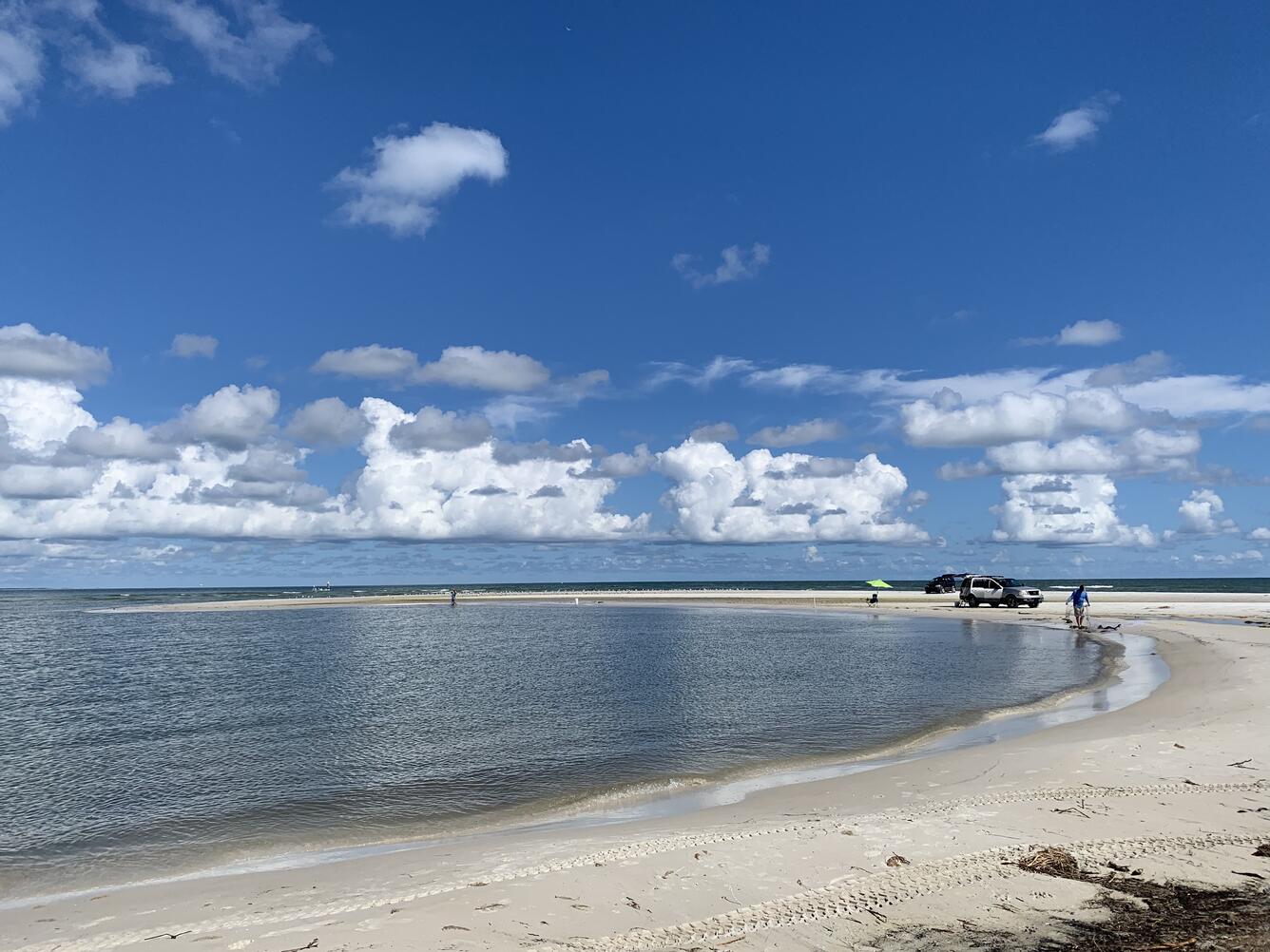
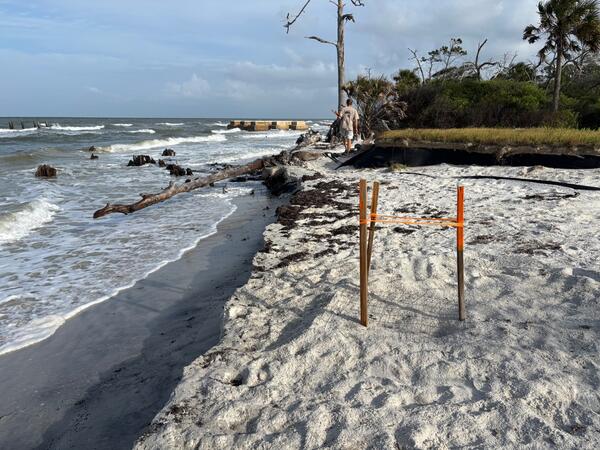
In addition, waters within the Eglin Gulf Test and Training Range (EGTTR) are used by multiple listed coastal and marine organisms, and species that play an important role in the economy of the region including sport fish species such as cobia and tarpon. For example, Eglin AFB property on Cape San Blas, Florida is one of the densest nesting beaches for loggerhead sea turtles in the northern Gulf. Other sea turtle species, including greens, leatherbacks, and Kemp’s ridleys, also use the beaches and waters on, and surrounding, Eglin AFB.
The presence of imperiled species can result in operational restrictions on U.S. Department of Defense (DoD) missions in the region, so knowledge of their population status, and spatial and temporal distributions is critical to minimizing these impacts. These data are used to help address many management issues on Eglin AFB property including preventing DoD mission site restrictions and delays, improving Section 7 consultations, and reducing delays and costs in not only the EGTTR but at all DoD installations where these animals are present.
While not an imperiled species, Eglin also has a particular interest in the coyote population on their installation, because they can cause property damage, affect human use of the installation for recreation, and cause mortality to protected species (particularly sea turtles) impacting natural resource management efforts and causing additional operational challenges.
Methodology for Addressing the Issue
USGS WARC provides long-term species population monitoring on species of interest to Eglin AFB, including sea turtles, coyotes, beach mice, gopher tortoise, diamondback terrapins, and sport fish, such as cobia and tarpon.
Sea Turtle
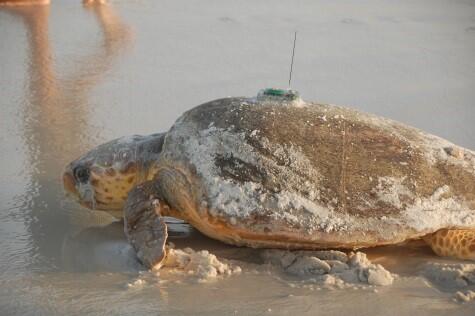
Since 1994, sea turtle nesting activity surveys have been conducted from May 1 to November 1. Because of the increased nesting activity documented on Eglin AFB since then, nests are relocated out of mission critical areas, which helps reduce delays or cancellations of missions and other testing activities. Saturation tagging surveys, which involves nightly surveys to tag all nesting females using the beach, have been conducted every night from June 1 to August 1 since 1998. Additional night surveys occur opportunistically on another portion of Eglin AFB on Santa Rosa Island. Nesting turtles are sampled for genetic analyses to determine population structure of turtles nesting in the region, and a subset of turtles are tracked using satellite telemetry to document movement patterns and understand habitat use within the EGTTR.
Since 2014, USGS has also conducted in-water captures of sea turtles in the coastal bays and nearshore waters off Eglin AFB’s Cape San Blas and Santa Rosa Island properties. A subset of captured sea turtles receives telemetry tags, including satellite and acoustic tags, to assess their movement patterns and spatial habitat use. A passive acoustic array is deployed off Eglin AFB Cape San Blas and Santa Rosa Island properties to document fine-scale sea turtle movements, which assists the base with mission planning. This array is part of a collaborative, Gulf-wide network that captures data about sea turtle (and other tagged animals, such as fish) movements throughout the region. The information produced by this array helps identify areas and times of the year when sea turtle presence would least impact military activities.
Biological samples are collected from each captured sea turtle for genetic and stable isotope analyses. In-water sea turtle assemblages are mixed stock groups, which means turtles that comprise the foraging assemblage may have been produced from nesting beaches located anywhere in the world. Understanding their genetic lineage helps Eglin AFB understand their conservation status. For example, recent results generated from the samples we have collected in Eglin AFB waters showed green turtles using the waters off Eglin AFB’s Santa Rosa Island property came from different nesting beaches than green turtles using the waters off the Eglin AFB Cape San Blas property. Therefore, mission impacts to green turtles off Eglin AFB Santa Rosa Island would have different conservation consequences than mission impacts to green turtles off Eglin AFB Cape San Blas. Stable isotope analyses provide us with information on diet items used by sea turtles, which helps minimize indirect impacts to turtles.

Coyote
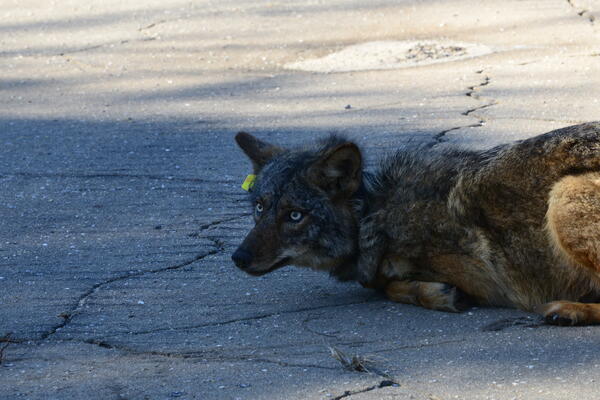
Because coyotes represent the primary source of mortality for shorebird eggs and chicks and incubating sea turtle eggs on Eglin AFB property, since 2020 coyotes have been trapped on Eglin AFB property using leg-hold traps and fitted with GPS-telemetry collars to track their movements. Hair samples are collected from all captured coyotes for genetic analyses to determine population structure and provide information on connectivity of the coyotes using Eglin AFB to other coyote populations in the southeast U.S., which can also highlight potential threats to other protected species by coyotes using Eglin AFB property. Samples are also collected for stable isotope analyses which provides information on the coyotes’ diet. This information allows us to assess the proportion of the coyote diet that is comprised of sea turtle eggs and determine what other items, including additional listed species such as shorebird chicks, beach mice, and diamondback terrapins, comprise their diet.
Beach Mouse
The Gulf Coast beach mouse is comprised of five subspecies including two that inhabit Eglin AFB property. The Santa Rosa mouse (Peromyscus polionotus leucocephalus) is found on Eglin AFB’s Santa Rosa Island property while the St. Andrew Beach mouse (Peromyscus polionotus peninsularis) utilizes dune habitat in Bay and Gulf Counties, Florida, including property adjacent to Eglin AFB Cape San Blas. Historic records suggest the species previously inhabited Eglin AFB property, but recent monitoring has not documented mouse presence on the property.
The U.S. Fish and Wildlife Service (USFWS) is considering transplanting mice to Eglin AFB Cape San Blas property to expand the population and reduce potential for extinction of the subspecies if their current habitat is damaged or lost. To assist the USFWS and Eglin AFB determine presence of beach mice on Eglin AFB Cape San Blas and assess the potential for translocation of mice to the property, we deployed beach mouse monitoring tubes in the dunes along Eglin AFB Cape San Blas property and check those tubes monthly for mouse activity.
Gopher Tortoise
Gopher tortoise were recently (2022) determined to be two separate populations, and the eastern distinct population segment, which includes animals in Florida, was determined to no longer be warranted for listing under the U.S. Endangered Species Act. However, gopher tortoise in Florida remain listed as threatened under state designation. USGS conducts surveys for gopher tortoise burrows monthly on Eglin AFB Cape San Blas to ensure populations remain stable and support state conservation management efforts. Additionally, tortoises located on lands under development in Florida are often relocated to Eglin AFB. Biologists assist with the intake and processing of all relocated tortoises. These efforts also provide Eglin AFB with information to support mission planning on their Cape San Blas property to avoid impacts to tortoise burrows.

Diamondback Terrapin
Diamondback terrapins are keystone species in salt marsh habitats and can be found along the U.S. Atlantic and Gulf coasts from Massachusetts to Texas. Terrapin populations are declining throughout their range due to overexploitation in the pet trade, road mortality, and drowning in crab traps, as well as loss of habitat. The species has recently been petitioned for listing under the U.S. Endangered Species Act. USGS’s diamondback terrapin research in Eglin AFB will provide federal agencies the information needed to determine whether listing is necessary.
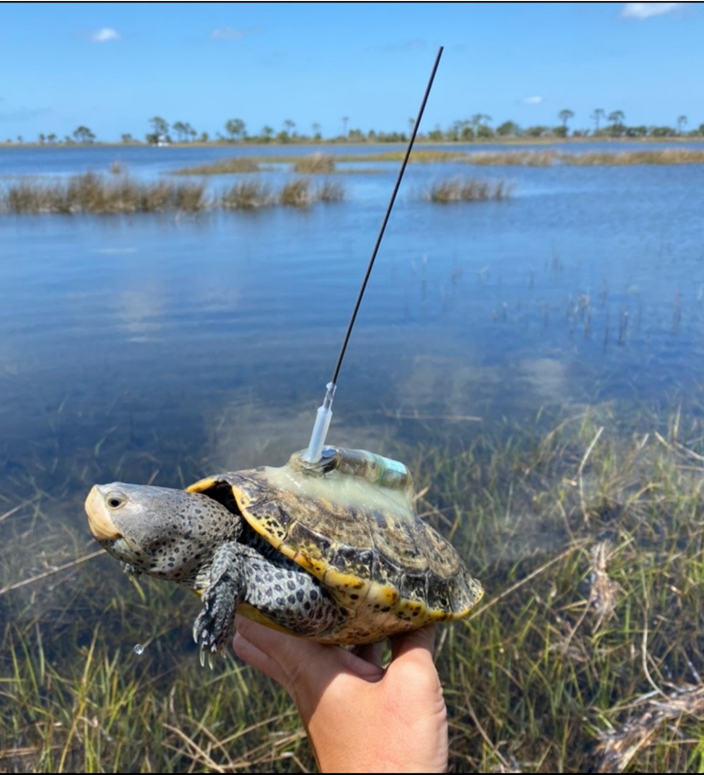
Diamondback terrapins are captured in estuarine habitats on Eglin’s main installation and their Cape San Blas property annually from April through October. Terrapins are primarily captured by hand and all terrapins are individually marked to allow for mark-recapture analyses that will provide population-level information such as survival and abundance estimates. Biological samples are also collected for genetic and stable isotope analyses, which provide information on connectivity of the Eglin AFB terrapins to nearby terrapin populations, and characterize the resources used by terrapins on Eglin AFB property. A subset of terrapins is tracked using satellite and acoustic telemetry to determine movement patterns and habitat use.
Sport Fish
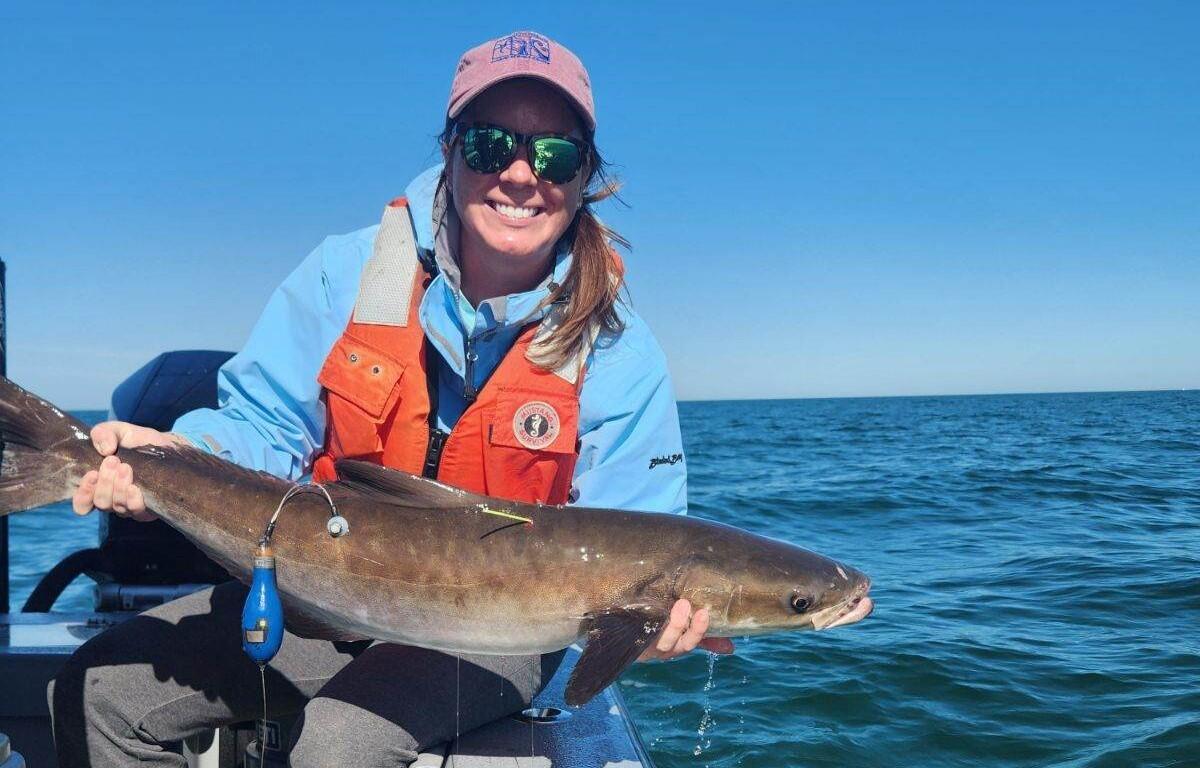
The USGS WARC supports the Gulf States Marine Fisheries Commission by providing unbiased scientific information about fish communities to help guide the conservation, development, and utilization of the region's fishery resources. As part of this larger effort, hook-and-line captures of sport fish species, particularly cobia and tarpon, occur in the waters off Eglin AFB. All captured fish receive a dart tag and acoustic tag, and a subset receive a satellite tag. Biological samples are also collected from fish species for genetic and isotope analyses. The researched fish species represent recreationally and/or commercially valuable species that use the waters off Eglin AFB and the EGTTR for critical life-history behaviors such as spawning. Declines in these fish can have significant impacts to local and regional economies, so, minimizing mission impacts to these species benefits the fisheries industry and the economy of the region.
Additional Support
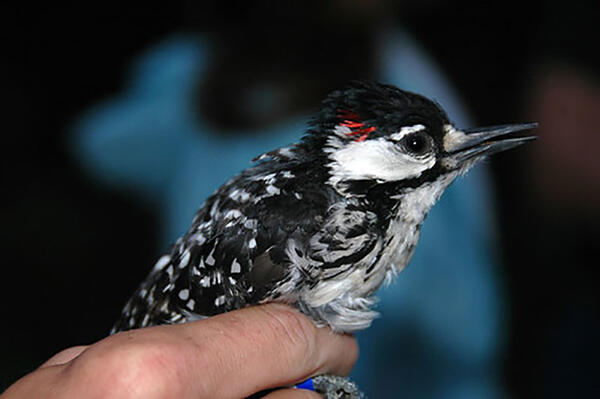
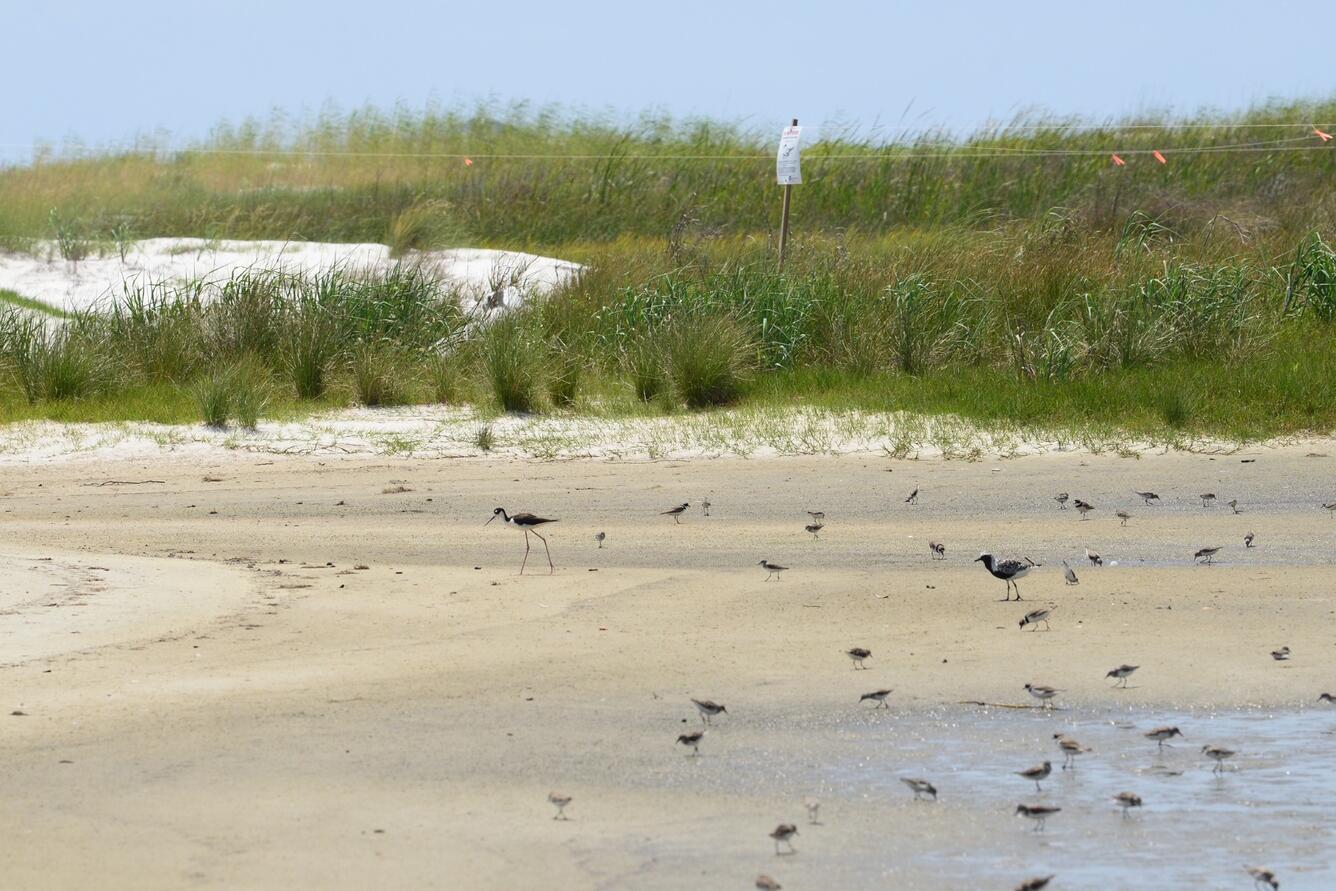
Many additional endemic and listed species use Eglin AFB property and USGS biologists assist with additional tasks when needed. Eglin AFB has the southern portion of the largest nearly contiguous longleaf pine forest in the nation. One species that relies on longleaf pine habitat and as such also relies on Eglin AFB property is the Red Cockaded Woodpecker. USGS supports Eglin AFB biologists as they monitor Red Cockaded Woodpecker health and occupancy, which can provide informed data to the DOD about potential fire hazards from fuel build up from critical DOD missions. USGS also assists with management of aquatic invertebrates, shorebirds, Okaloosa darters, soil erosion control, and public outreach.
The USGS works closely with local community volunteers, from sea turtle patrols to gopher tortoise pen dismantling to recovering cold-stunned sea turtles when water temperatures drop too low. With USGS, volunteers provide Eglin AFB with an efficient and cost-effective way to ensure that all environmental work is completed in a timely manner preventing delays for critical military missions and success. Trash cleaning, habitat management, wildfire support, beach mice surveying, and equipment maintenance are just a few year-long programs that volunteers help with at Eglin AFB. On average, volunteers help to remove over 4,000 pounds of trash from Eglin's beaches, water ways, and the overall installation each year.
Future Steps
Surveys for DoD species of interest, including maintaining our long-term sea turtle monitoring program, will continue on Eglin AFB’s main installation and their Cape San Blas property. Our diamondback terrapin monitoring program is expanding to include additional sites on Eglin AFB property. Coyote tracking will also continue, and tracking of other invasive or pest species, will be initiated as requested by the Air Force. Fish tracking will continue and will expand to include other species of interest. Sampling of environmental DNA (eDNA) to provide Eglin AFB with presence/absence and distribution data of rare and elusive species is being discussed for initiation.

Management of Gopher Tortoise (Gopherus polyphemus) Using Coastal Habitats

Ecology of the Diamondback Terrapin: Demographics, Movements, and Habitat Use

Fine-Scale Dive Profiles and Activity Patterns of Sea Turtles in the Gulf

Sea Turtle Movement and Habitat Use in the Northern Gulf

Sea Turtle Nesting on Eglin Air Force Base Property, Cape San Blas, Florida
USGS WARC's long-term species monitoring and research program in the Florida Panhandle supports the largest forested U.S. Air Force Base in the world, Eglin Air Force Base.
The Science Issue and Relevance
Eglin Air Force Base (AFB) is the largest forested U.S. Air Force Base in the world. This installation, located in northwest Florida, encompasses a wide variety of habitats that support a diverse array of species, many of which are endemic (found only in the area) and/or imperiled including multiple species of sea turtles, beach mice, diamondback terrapins, bald eagles, and gopher tortoises.
In addition, waters within the Eglin Gulf Test and Training Range (EGTTR) are used by multiple listed coastal and marine organisms, and species that play an important role in the economy of the region including sport fish species such as cobia and tarpon. For example, Eglin AFB property on Cape San Blas, Florida is one of the densest nesting beaches for loggerhead sea turtles in the northern Gulf. Other sea turtle species, including greens, leatherbacks, and Kemp’s ridleys, also use the beaches and waters on, and surrounding, Eglin AFB.
The presence of imperiled species can result in operational restrictions on U.S. Department of Defense (DoD) missions in the region, so knowledge of their population status, and spatial and temporal distributions is critical to minimizing these impacts. These data are used to help address many management issues on Eglin AFB property including preventing DoD mission site restrictions and delays, improving Section 7 consultations, and reducing delays and costs in not only the EGTTR but at all DoD installations where these animals are present.
While not an imperiled species, Eglin also has a particular interest in the coyote population on their installation, because they can cause property damage, affect human use of the installation for recreation, and cause mortality to protected species (particularly sea turtles) impacting natural resource management efforts and causing additional operational challenges.
Methodology for Addressing the Issue
USGS WARC provides long-term species population monitoring on species of interest to Eglin AFB, including sea turtles, coyotes, beach mice, gopher tortoise, diamondback terrapins, and sport fish, such as cobia and tarpon.
Sea Turtle
Since 1994, sea turtle nesting activity surveys have been conducted from May 1 to November 1. Because of the increased nesting activity documented on Eglin AFB since then, nests are relocated out of mission critical areas, which helps reduce delays or cancellations of missions and other testing activities. Saturation tagging surveys, which involves nightly surveys to tag all nesting females using the beach, have been conducted every night from June 1 to August 1 since 1998. Additional night surveys occur opportunistically on another portion of Eglin AFB on Santa Rosa Island. Nesting turtles are sampled for genetic analyses to determine population structure of turtles nesting in the region, and a subset of turtles are tracked using satellite telemetry to document movement patterns and understand habitat use within the EGTTR.
Since 2014, USGS has also conducted in-water captures of sea turtles in the coastal bays and nearshore waters off Eglin AFB’s Cape San Blas and Santa Rosa Island properties. A subset of captured sea turtles receives telemetry tags, including satellite and acoustic tags, to assess their movement patterns and spatial habitat use. A passive acoustic array is deployed off Eglin AFB Cape San Blas and Santa Rosa Island properties to document fine-scale sea turtle movements, which assists the base with mission planning. This array is part of a collaborative, Gulf-wide network that captures data about sea turtle (and other tagged animals, such as fish) movements throughout the region. The information produced by this array helps identify areas and times of the year when sea turtle presence would least impact military activities.
Biological samples are collected from each captured sea turtle for genetic and stable isotope analyses. In-water sea turtle assemblages are mixed stock groups, which means turtles that comprise the foraging assemblage may have been produced from nesting beaches located anywhere in the world. Understanding their genetic lineage helps Eglin AFB understand their conservation status. For example, recent results generated from the samples we have collected in Eglin AFB waters showed green turtles using the waters off Eglin AFB’s Santa Rosa Island property came from different nesting beaches than green turtles using the waters off the Eglin AFB Cape San Blas property. Therefore, mission impacts to green turtles off Eglin AFB Santa Rosa Island would have different conservation consequences than mission impacts to green turtles off Eglin AFB Cape San Blas. Stable isotope analyses provide us with information on diet items used by sea turtles, which helps minimize indirect impacts to turtles.
Coyote
Because coyotes represent the primary source of mortality for shorebird eggs and chicks and incubating sea turtle eggs on Eglin AFB property, since 2020 coyotes have been trapped on Eglin AFB property using leg-hold traps and fitted with GPS-telemetry collars to track their movements. Hair samples are collected from all captured coyotes for genetic analyses to determine population structure and provide information on connectivity of the coyotes using Eglin AFB to other coyote populations in the southeast U.S., which can also highlight potential threats to other protected species by coyotes using Eglin AFB property. Samples are also collected for stable isotope analyses which provides information on the coyotes’ diet. This information allows us to assess the proportion of the coyote diet that is comprised of sea turtle eggs and determine what other items, including additional listed species such as shorebird chicks, beach mice, and diamondback terrapins, comprise their diet.
Beach Mouse
The Gulf Coast beach mouse is comprised of five subspecies including two that inhabit Eglin AFB property. The Santa Rosa mouse (Peromyscus polionotus leucocephalus) is found on Eglin AFB’s Santa Rosa Island property while the St. Andrew Beach mouse (Peromyscus polionotus peninsularis) utilizes dune habitat in Bay and Gulf Counties, Florida, including property adjacent to Eglin AFB Cape San Blas. Historic records suggest the species previously inhabited Eglin AFB property, but recent monitoring has not documented mouse presence on the property.
The U.S. Fish and Wildlife Service (USFWS) is considering transplanting mice to Eglin AFB Cape San Blas property to expand the population and reduce potential for extinction of the subspecies if their current habitat is damaged or lost. To assist the USFWS and Eglin AFB determine presence of beach mice on Eglin AFB Cape San Blas and assess the potential for translocation of mice to the property, we deployed beach mouse monitoring tubes in the dunes along Eglin AFB Cape San Blas property and check those tubes monthly for mouse activity.
Gopher Tortoise
Gopher tortoise were recently (2022) determined to be two separate populations, and the eastern distinct population segment, which includes animals in Florida, was determined to no longer be warranted for listing under the U.S. Endangered Species Act. However, gopher tortoise in Florida remain listed as threatened under state designation. USGS conducts surveys for gopher tortoise burrows monthly on Eglin AFB Cape San Blas to ensure populations remain stable and support state conservation management efforts. Additionally, tortoises located on lands under development in Florida are often relocated to Eglin AFB. Biologists assist with the intake and processing of all relocated tortoises. These efforts also provide Eglin AFB with information to support mission planning on their Cape San Blas property to avoid impacts to tortoise burrows.
Diamondback Terrapin
Diamondback terrapins are keystone species in salt marsh habitats and can be found along the U.S. Atlantic and Gulf coasts from Massachusetts to Texas. Terrapin populations are declining throughout their range due to overexploitation in the pet trade, road mortality, and drowning in crab traps, as well as loss of habitat. The species has recently been petitioned for listing under the U.S. Endangered Species Act. USGS’s diamondback terrapin research in Eglin AFB will provide federal agencies the information needed to determine whether listing is necessary.
Diamondback terrapins are captured in estuarine habitats on Eglin’s main installation and their Cape San Blas property annually from April through October. Terrapins are primarily captured by hand and all terrapins are individually marked to allow for mark-recapture analyses that will provide population-level information such as survival and abundance estimates. Biological samples are also collected for genetic and stable isotope analyses, which provide information on connectivity of the Eglin AFB terrapins to nearby terrapin populations, and characterize the resources used by terrapins on Eglin AFB property. A subset of terrapins is tracked using satellite and acoustic telemetry to determine movement patterns and habitat use.
Sport Fish
The USGS WARC supports the Gulf States Marine Fisheries Commission by providing unbiased scientific information about fish communities to help guide the conservation, development, and utilization of the region's fishery resources. As part of this larger effort, hook-and-line captures of sport fish species, particularly cobia and tarpon, occur in the waters off Eglin AFB. All captured fish receive a dart tag and acoustic tag, and a subset receive a satellite tag. Biological samples are also collected from fish species for genetic and isotope analyses. The researched fish species represent recreationally and/or commercially valuable species that use the waters off Eglin AFB and the EGTTR for critical life-history behaviors such as spawning. Declines in these fish can have significant impacts to local and regional economies, so, minimizing mission impacts to these species benefits the fisheries industry and the economy of the region.
Additional Support
Many additional endemic and listed species use Eglin AFB property and USGS biologists assist with additional tasks when needed. Eglin AFB has the southern portion of the largest nearly contiguous longleaf pine forest in the nation. One species that relies on longleaf pine habitat and as such also relies on Eglin AFB property is the Red Cockaded Woodpecker. USGS supports Eglin AFB biologists as they monitor Red Cockaded Woodpecker health and occupancy, which can provide informed data to the DOD about potential fire hazards from fuel build up from critical DOD missions. USGS also assists with management of aquatic invertebrates, shorebirds, Okaloosa darters, soil erosion control, and public outreach.
The USGS works closely with local community volunteers, from sea turtle patrols to gopher tortoise pen dismantling to recovering cold-stunned sea turtles when water temperatures drop too low. With USGS, volunteers provide Eglin AFB with an efficient and cost-effective way to ensure that all environmental work is completed in a timely manner preventing delays for critical military missions and success. Trash cleaning, habitat management, wildfire support, beach mice surveying, and equipment maintenance are just a few year-long programs that volunteers help with at Eglin AFB. On average, volunteers help to remove over 4,000 pounds of trash from Eglin's beaches, water ways, and the overall installation each year.
Future Steps
Surveys for DoD species of interest, including maintaining our long-term sea turtle monitoring program, will continue on Eglin AFB’s main installation and their Cape San Blas property. Our diamondback terrapin monitoring program is expanding to include additional sites on Eglin AFB property. Coyote tracking will also continue, and tracking of other invasive or pest species, will be initiated as requested by the Air Force. Fish tracking will continue and will expand to include other species of interest. Sampling of environmental DNA (eDNA) to provide Eglin AFB with presence/absence and distribution data of rare and elusive species is being discussed for initiation.
Management of Gopher Tortoise (Gopherus polyphemus) Using Coastal Habitats
Ecology of the Diamondback Terrapin: Demographics, Movements, and Habitat Use
Fine-Scale Dive Profiles and Activity Patterns of Sea Turtles in the Gulf
Sea Turtle Movement and Habitat Use in the Northern Gulf