



USGS PCMSC-PICASC Tour Engages Local Hawaiian Communities About Deep-Sea Research
The USGS Pacific Coastal and Marine Science Center (PCMSC) partnered with the USGS Pacific Islands Climate Adaptation Science Center (PICASC) to organize a six-day tour across Hawaii Island and Oahu to engage with local communities about planned deep-sea research during the USGS Hawaii Abyssal Nodules and Associated Ecosystems Expedition.
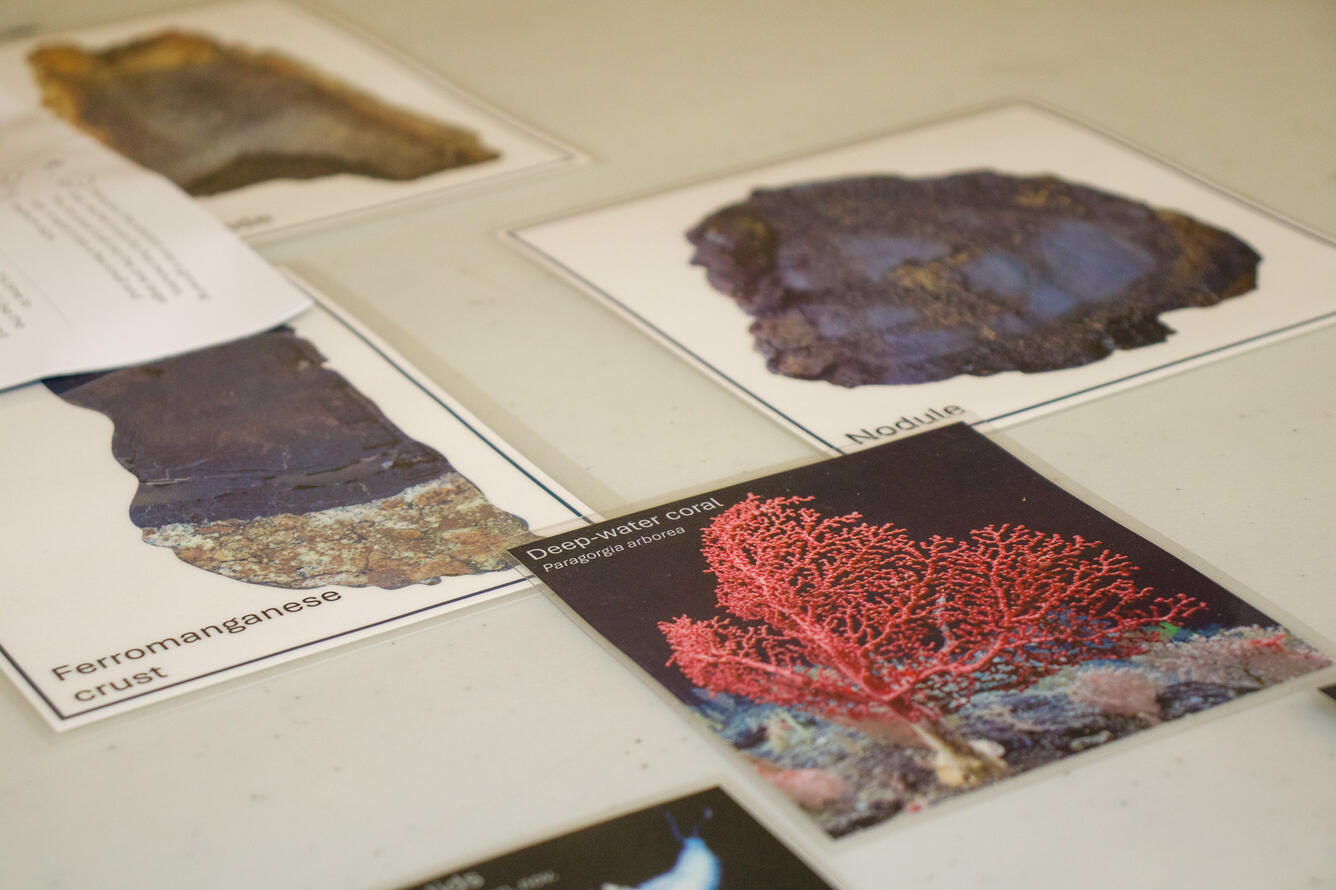
The USGS Pacific Coastal and Marine Science Center (PCMSC) partnered with the USGS Pacific Islands Climate Adaptation Science Center (PICASC) to organize a six-day tour across Hawaii Island and Oahu to engage with local communities about planned deep-sea research during the USGS Hawaii Abyssal Nodules and Associated Ecosystems Expedition. The USGS-led Fall 2025 research expedition investigated the geology and ecosystems of the abyssal plains about 230 nautical miles off the coast of Hawaii Island. The abyssal plains, located 4,000–6,000 meters below the ocean’s surface and comprising roughly 70% of the global seafloor, remain among Earth’s least understood ecosystems. Importantly, oceanographic and geographic models suggested the possible presence of manganese nodules—a deep-sea mineral type drawing regional and global interest for potential deep sea mining across the Pacific Region. Rising national and global interest in seabed mineral resources and local concern regarding deep-sea mining impacts underscored the need for open dialogue and transparency regarding the long-planned expedition. This prompted the PCMSC/PICASC partnership that allowed students and community members to engage directly with the USGS scientists who are continuing a 60-year legacy of USGS researchers studying deep-sea environments and seabed mineral formation, globally.
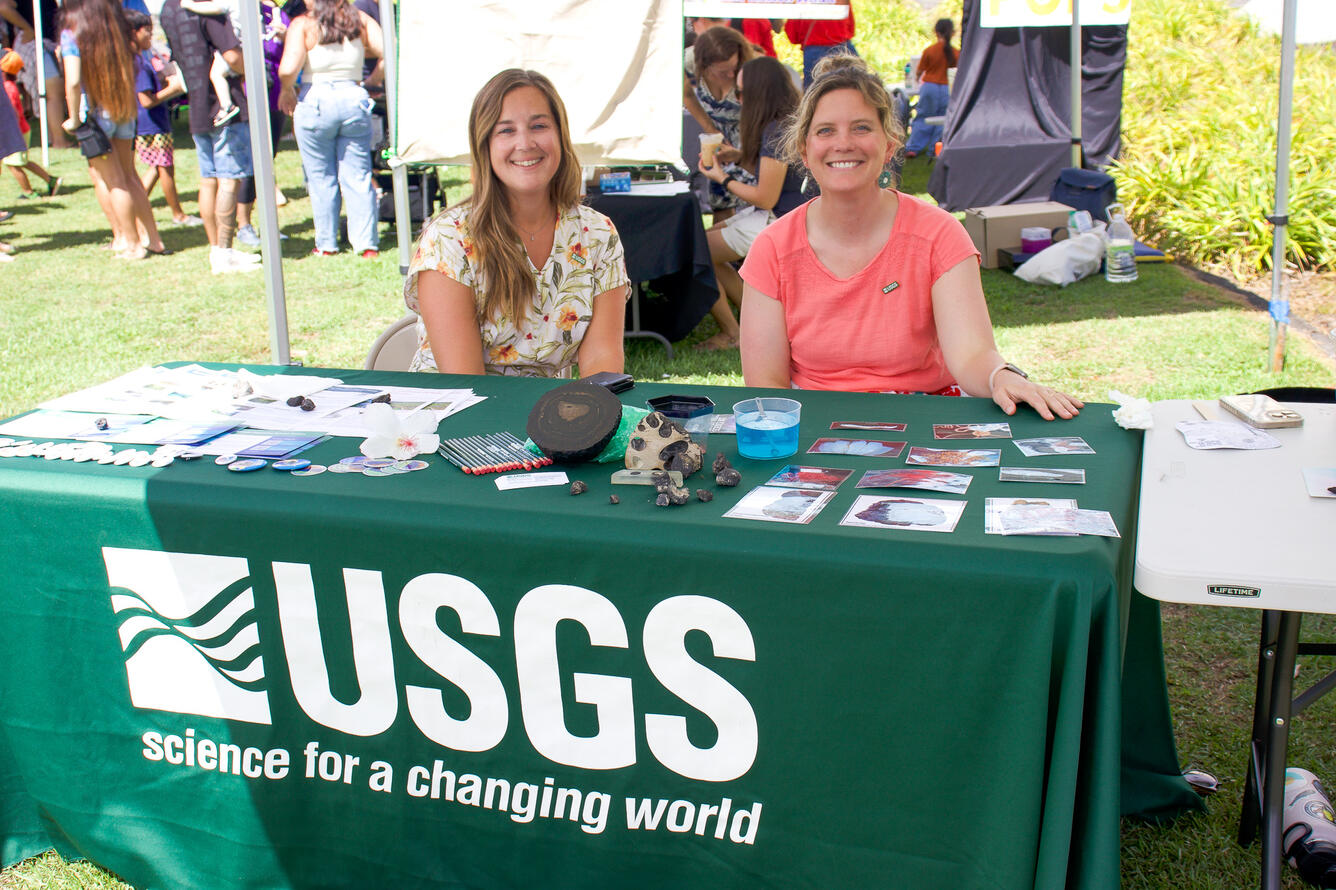
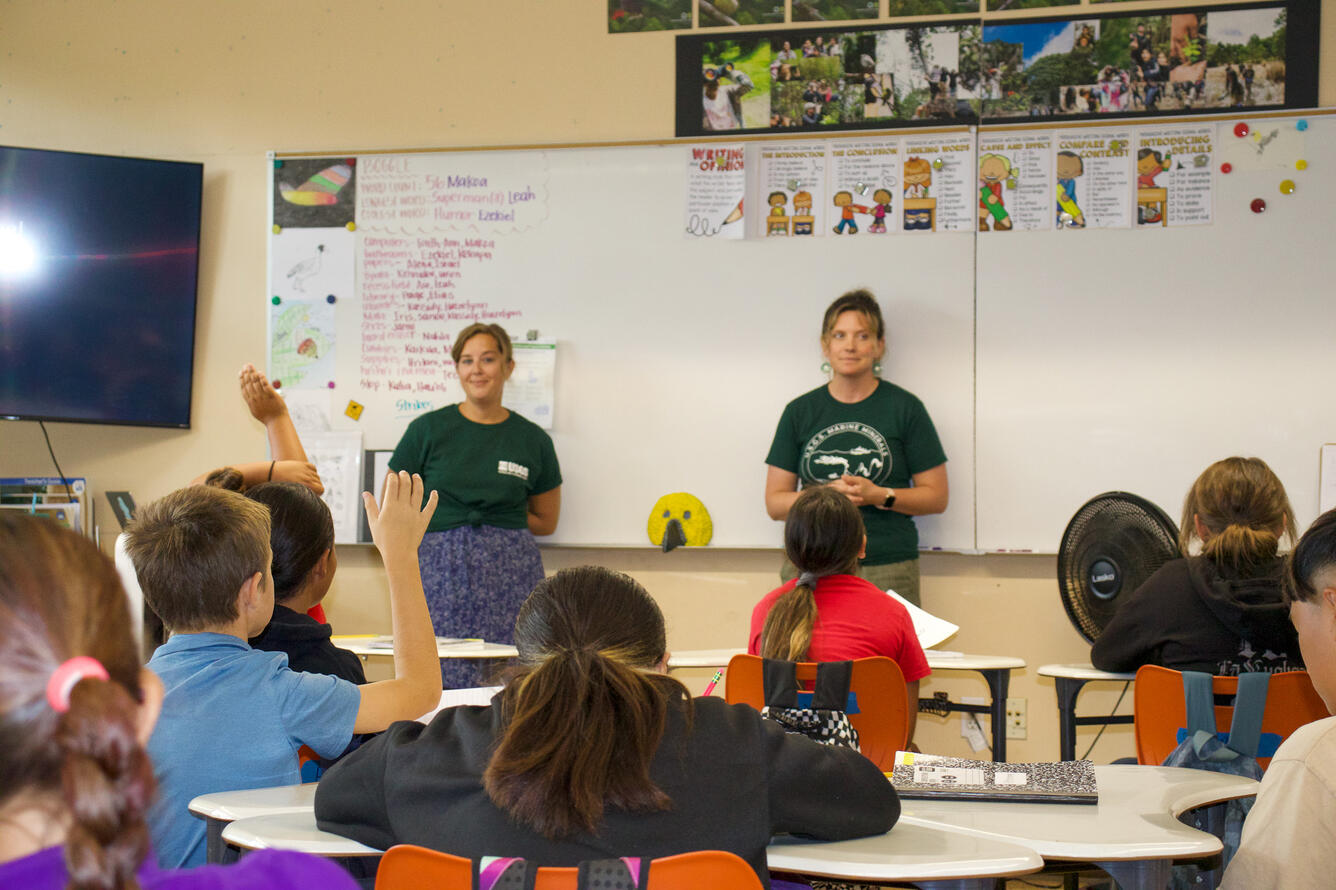
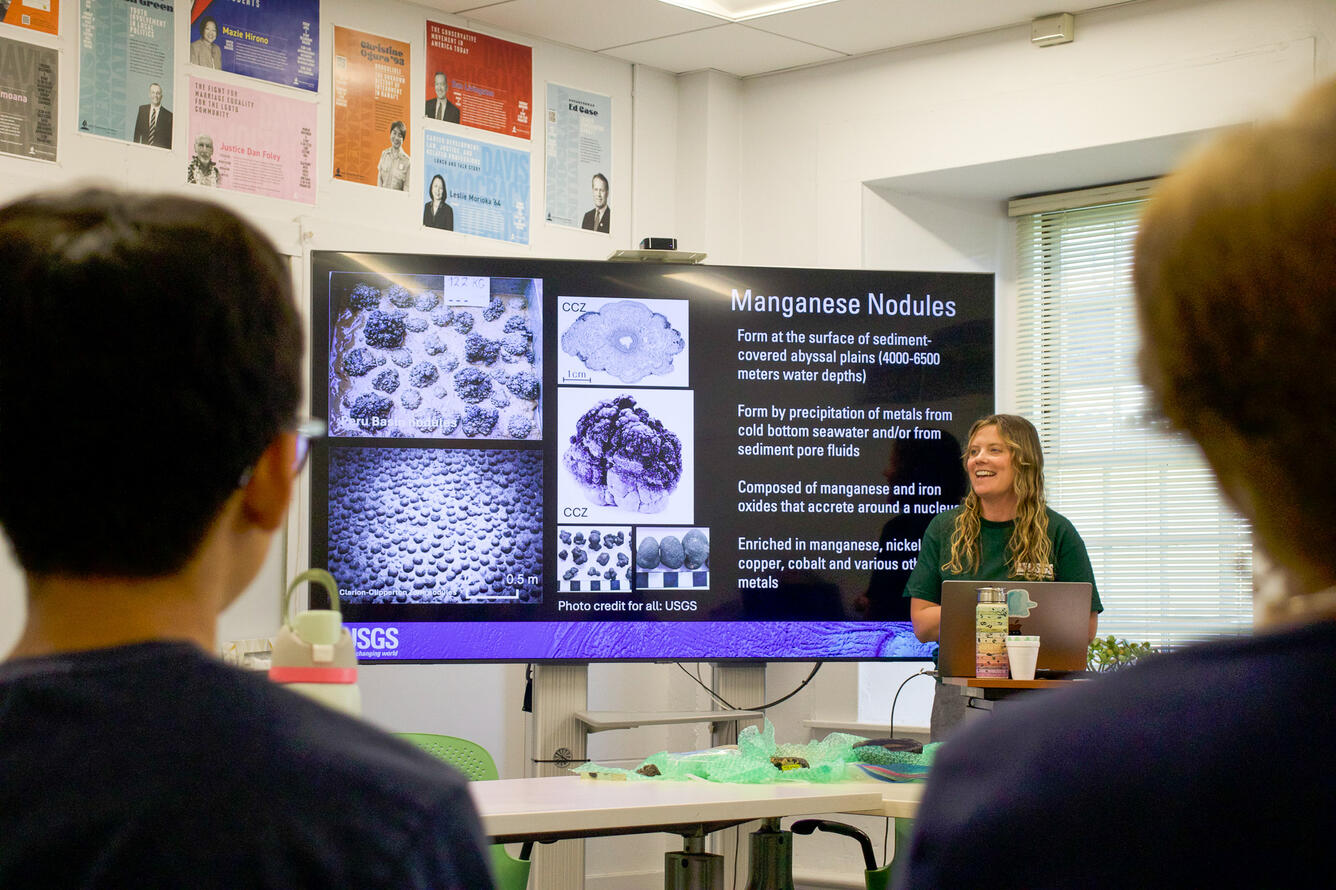
Across 11 presentations with more than 23 hours of direct outreach and Q&A, the tour leveraged PICASC’s long-standing community relationships to facilitate the delivery of timely, place-based, scientific information to Hawaii residents. Participants were able to voice concerns and ask questions about the potential impacts of the data collected while learning about the unbiased, scientific role of the U.S. Geological Survey, the purpose of deep-sea research, and its potential applications to both resource management and conservation. Through assisting with meaningful engagement between scientists, students, educators, and community members, PICASC helped bridge information gaps and support informed dialogue.
Throughout the tour, USGS Research Oceanographer and Chief Scientist Kira Mizell, joined later by colleague and USGS Scientist Katlin Adamczyk, listened actively, answered questions, clarified misconceptions, and described the multi-year process to organize and prepare for the research expedition. A key aspect of the expedition’s progression included co-developing research models and protocols with an interdisciplinary team of scientists and Native Hawaiian cultural practitioners. This collaboration was also a way to show respect to the region of the deep-sea known as Moananuiākea—a place that, for many Native Hawaiians, is a source of life, knowledge, and spiritual connection. Together, these efforts highlight how community partnerships, strategic communication, positioning of core messaging, and face-to-face dissemination of scientific findings can strengthen public understanding and support for USGS research in the region.
Learn more about the expedition here: Expedition Recap - Hawaiʻi Abyssal Nodules and Associated Ecosystems | U.S. Geological Survey