



This is an image of a scientist holding a Pinto Abalone. Pinto abalone, once a familiar presence in Washington’s coastal ecosystems, have suffered a decline since.
Multimedia
Search here for some of our available laboratory and field imagery.
Images
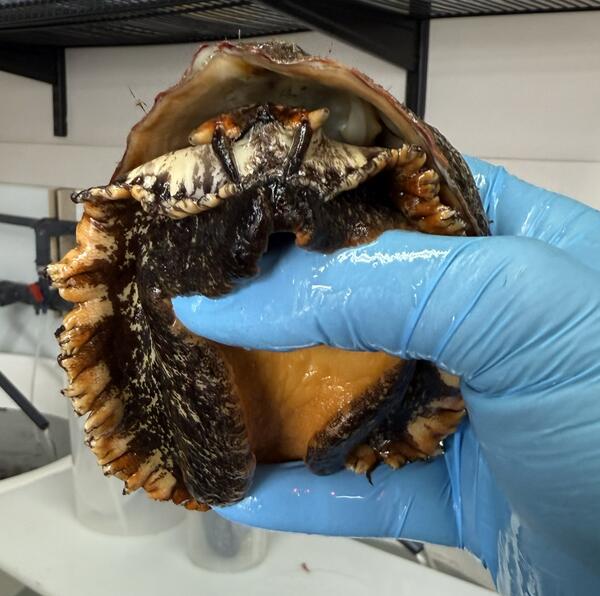
Scientists Holding Pinto Abalone
This is an image of a scientist holding a Pinto Abalone. Pinto abalone, once a familiar presence in Washington’s coastal ecosystems, have suffered a decline since.
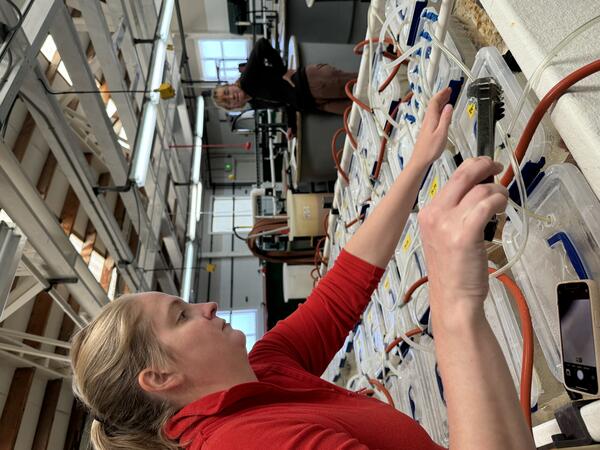
Melanie and Grace working in the lab on Sea Star Wasting Disease at the WFRC Marrowstone Marine Field Station
Melanie and Grace working in the lab on Sea Star Wasting Disease at the WFRC Marrowstone Marine Field StationThis is a photo of Melanie Prentice and Grace Crandall working in the lab at the Western Fisheries Research Center Marrowstone Marine Field Station to find the causative agent behind Sea Star Wasting Disease, a bacteria called, Vibrio pectenicida.
Melanie and Grace working in the lab on Sea Star Wasting Disease at the WFRC Marrowstone Marine Field Station
Melanie and Grace working in the lab on Sea Star Wasting Disease at the WFRC Marrowstone Marine Field StationThis is a photo of Melanie Prentice and Grace Crandall working in the lab at the Western Fisheries Research Center Marrowstone Marine Field Station to find the causative agent behind Sea Star Wasting Disease, a bacteria called, Vibrio pectenicida.
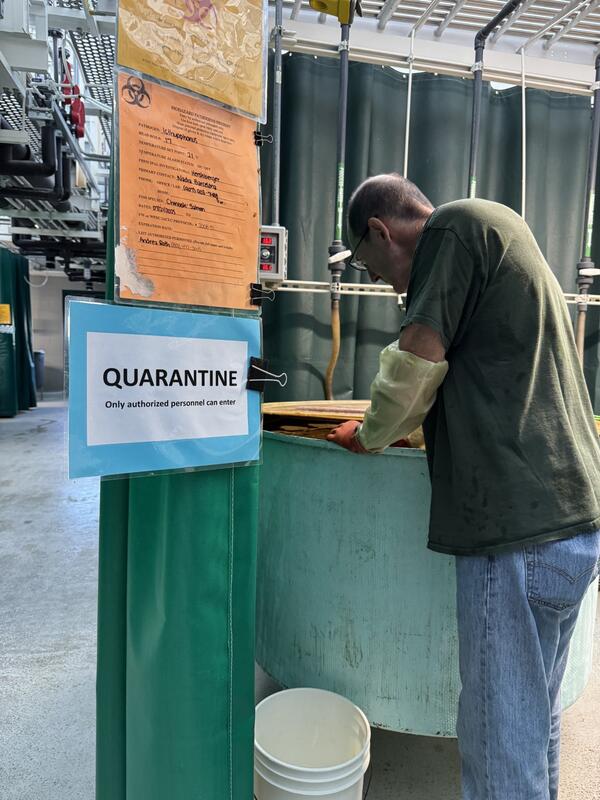
Scientist, Paul Hershberger Works in the Wet Lab
In this photo, Paul Hershberger is conducting research in the Seattle Western Fisheries Research Center wet laboratory. He is working to study diseases in fish.
In this photo, Paul Hershberger is conducting research in the Seattle Western Fisheries Research Center wet laboratory. He is working to study diseases in fish.
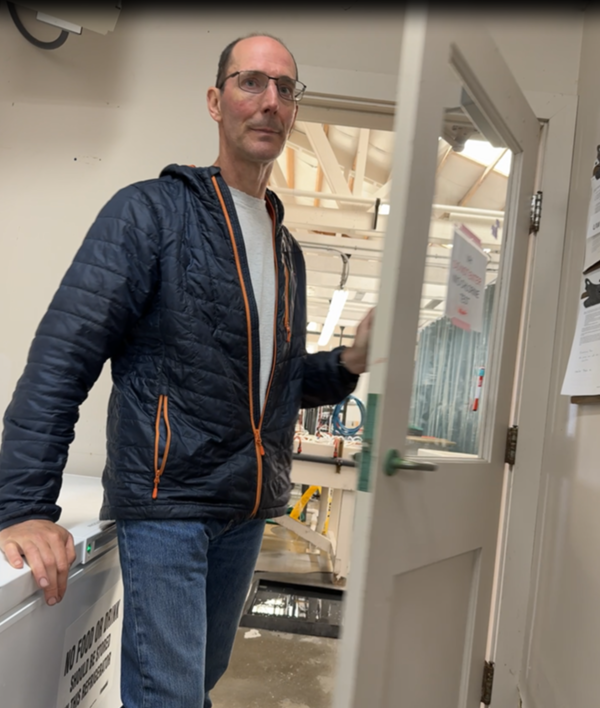
Scientist, Paul Hershberger, at the Marrowstone Marine Field Station in Washington
Scientist, Paul Hershberger, at the Marrowstone Marine Field Station in WashingtonThis is a photo of Paul Hershberger at Marrowstone Marine Field Station Lab. Dr. Hershberger studies diseases in fish.
Scientist, Paul Hershberger, at the Marrowstone Marine Field Station in Washington
Scientist, Paul Hershberger, at the Marrowstone Marine Field Station in WashingtonThis is a photo of Paul Hershberger at Marrowstone Marine Field Station Lab. Dr. Hershberger studies diseases in fish.

Sampling a patch of sea asparagus near Marrowstone Marine Field Station
Sampling a patch of sea asparagus near Marrowstone Marine Field StationPhoto (left to right): Dr. David Paez, Joanne Salzer, Jossline Aranda-Jackson (SEALASKA intern), and Dr. Gael Kurath sampling a patch of sea asparagus near the Western Fisheries Research Center’s Marrowstone Marine Field Station (MMFS).
Sampling a patch of sea asparagus near Marrowstone Marine Field Station
Sampling a patch of sea asparagus near Marrowstone Marine Field StationPhoto (left to right): Dr. David Paez, Joanne Salzer, Jossline Aranda-Jackson (SEALASKA intern), and Dr. Gael Kurath sampling a patch of sea asparagus near the Western Fisheries Research Center’s Marrowstone Marine Field Station (MMFS).

Aerial view of groups of sea lions in offshore waters near Cordova Alaska taken from an ultra-light plane
Aerial view of groups of sea lions in offshore waters near Cordova Alaska taken from an ultra-light planeTwo groups of sea lions can be seen some distance away from the shore in deeper water. Sea lions are herring predators, feeding on herring while they spawn. Therefore, the presence of sea lions can be indicative of the presence of herring. However, herring schools are absent in this image.
Aerial view of groups of sea lions in offshore waters near Cordova Alaska taken from an ultra-light plane
Aerial view of groups of sea lions in offshore waters near Cordova Alaska taken from an ultra-light planeTwo groups of sea lions can be seen some distance away from the shore in deeper water. Sea lions are herring predators, feeding on herring while they spawn. Therefore, the presence of sea lions can be indicative of the presence of herring. However, herring schools are absent in this image.