



Andrena crataegi, female
Images
USGS Bee Lab at the Eastern Ecological Science Center images.
Filter Total Items: 4493

Andrena-crataegi,-female,-face

Andrena erythronii, female, face
Andrena erythronii, female

Andrena fenningeri, F, Face 2, Bowie, Maryland
A very early spring bee, covered in pollen, collected by a homeowner in Bowie, Maryland, often found on maples
A very early spring bee, covered in pollen, collected by a homeowner in Bowie, Maryland, often found on maples

Andrena fenningeri, f, face, Pr. George's Co. MD
The head of Andrena fenningeri. A wee spring black mining bee that favors the pollen of Maple. Just one of the many little black things that are out in the spring on flowers that people pay no attention to. Found in the heart of suburbia: Bowie, Maryland. Photo by Wayne Boo.
The head of Andrena fenningeri. A wee spring black mining bee that favors the pollen of Maple. Just one of the many little black things that are out in the spring on flowers that people pay no attention to. Found in the heart of suburbia: Bowie, Maryland. Photo by Wayne Boo.

Andrena forbesii, Female, Back, Maryland
There are a group of bees in the genus Andrena that form a fairly distinct subgenus called Tracandrena. They are notorious for being difficult to separate out and, in particular, the males all look pretty much the same. I have created a little Excel spreadsheet that help separate out the females, if anyone is interested.
There are a group of bees in the genus Andrena that form a fairly distinct subgenus called Tracandrena. They are notorious for being difficult to separate out and, in particular, the males all look pretty much the same. I have created a little Excel spreadsheet that help separate out the females, if anyone is interested.

Andrena frigida, male, face
Middlesex County, Massachusetts

Andrena fulvipennis, M, Back, MD, Anne Arundel County
Andrena fulvipennis, M, Back, MD, Anne Arundel CountyAndrena fulvipennis "“ A very rare species this male was captured in an old sand pit in Anne Arundel County, Maryland. This species is only found in deep, permanently sandy locations. Picture taken by Brooke Alexander.
Andrena fulvipennis, M, Back, MD, Anne Arundel County
Andrena fulvipennis, M, Back, MD, Anne Arundel CountyAndrena fulvipennis "“ A very rare species this male was captured in an old sand pit in Anne Arundel County, Maryland. This species is only found in deep, permanently sandy locations. Picture taken by Brooke Alexander.

Andrena gardineri, M, Side, OH, Washington County
An often uncommon spring Andrena, I associate with the Appalachians, this is a male with a sweet yellow clypeus. Collected by MaLisa Spring near Marietta, Ohio. Photograph by Brooke Alexander. Canon Mark II 5D, Zerene Stacker, Stackshot Sled, 65mm Canon MP-E 1-5X macro lens, Twin Macro Flash in Styrofoam Cooler, F5.0, ISO 100, Shutter Speed 200
An often uncommon spring Andrena, I associate with the Appalachians, this is a male with a sweet yellow clypeus. Collected by MaLisa Spring near Marietta, Ohio. Photograph by Brooke Alexander. Canon Mark II 5D, Zerene Stacker, Stackshot Sled, 65mm Canon MP-E 1-5X macro lens, Twin Macro Flash in Styrofoam Cooler, F5.0, ISO 100, Shutter Speed 200

Andrena gnaphalii, f, left, Santa Barbara Co., CA
Not the best lighting, but this is Andrena gnaphalii....a interesting Andrena with a green tinge. From the Channel Islands off the coast of California. Photo by Anders Croft.
Not the best lighting, but this is Andrena gnaphalii....a interesting Andrena with a green tinge. From the Channel Islands off the coast of California. Photo by Anders Croft.

Andrena gnaphalii, f, side, Santa Barbara, CA
Another odd ball Andrena from the Channel Islands. This one is A. gnaphalli, collected as part of a larger study of bees in climatically vulnerable National Parks. An apparent Asteraceaea specialist with some glints of green and red instead of the normal black integument.
Another odd ball Andrena from the Channel Islands. This one is A. gnaphalli, collected as part of a larger study of bees in climatically vulnerable National Parks. An apparent Asteraceaea specialist with some glints of green and red instead of the normal black integument.

Andrena helianthi, face, Hartville, OH
Is the scientific name implies (helianthus = sunflowers), Andrena helianthi is a sunflower specialist. Not just the annual sunflower, commonly now raised to produce sunflower seed and sunflower oil, but also the many species of perennials and flowers, which are well deserving of spots in our gardens.
Is the scientific name implies (helianthus = sunflowers), Andrena helianthi is a sunflower specialist. Not just the annual sunflower, commonly now raised to produce sunflower seed and sunflower oil, but also the many species of perennials and flowers, which are well deserving of spots in our gardens.

Andrena helianthi, right, Hartville, OH
Is the scientific name implies (helianthus = sunflowers), Andrena helianthi is a sunflower specialist. Not just the annual sunflower, commonly now raised to produce sunflower seed and sunflower oil, but also the many species of perennials and flowers, which are well deserving of spots in our gardens.
Is the scientific name implies (helianthus = sunflowers), Andrena helianthi is a sunflower specialist. Not just the annual sunflower, commonly now raised to produce sunflower seed and sunflower oil, but also the many species of perennials and flowers, which are well deserving of spots in our gardens.
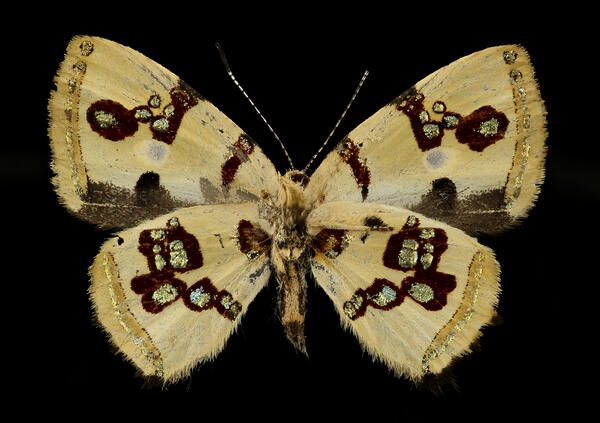
Anteros formosus, m, peru, Cosnipata Valley, brain harris, habitus
Anteros formosus, m, peru, Cosnipata Valley, brain harris, habitusBling Butterfly - Anteros fomosus - a.k.a.Black-bellied Anteros, or Formosus Jewelmark, collected in Peru. This is the underside and I show a variety of shots at different magnifications to highlight the lovely metalmarks some of the mirror-like scales create. Specimen from the Natural History Museum in Washington D.,C.
Anteros formosus, m, peru, Cosnipata Valley, brain harris, habitus
Anteros formosus, m, peru, Cosnipata Valley, brain harris, habitusBling Butterfly - Anteros fomosus - a.k.a.Black-bellied Anteros, or Formosus Jewelmark, collected in Peru. This is the underside and I show a variety of shots at different magnifications to highlight the lovely metalmarks some of the mirror-like scales create. Specimen from the Natural History Museum in Washington D.,C.

Anteros formosus, m, peru, Cosnipata Valley, brain harris, super detail
Anteros formosus, m, peru, Cosnipata Valley, brain harris, super detailBling Butterfly - Anteros fomosus - a.k.a.Black-bellied Anteros, or Formosus Jewelmark, collected in Peru. This is the underside and I show a variety of shots at different magnifications to highlight the lovely metalmarks some of the mirror-like scales create. Specimen from the Natural History Museum in Washington D.,C.
Anteros formosus, m, peru, Cosnipata Valley, brain harris, super detail
Anteros formosus, m, peru, Cosnipata Valley, brain harris, super detailBling Butterfly - Anteros fomosus - a.k.a.Black-bellied Anteros, or Formosus Jewelmark, collected in Peru. This is the underside and I show a variety of shots at different magnifications to highlight the lovely metalmarks some of the mirror-like scales create. Specimen from the Natural History Museum in Washington D.,C.

Anthidiellum notatum gilense, m, back, Cochise Co. AZ
Anthidiellum notatum gilense, m, back, Cochise Co. AZCollected in the deserts of Cochise County in Arizona as part of the famous Bee Course there by Tim McMahon, these speedy little bees are found throughout much of North America.
Anthidiellum notatum gilense, m, back, Cochise Co. AZ
Anthidiellum notatum gilense, m, back, Cochise Co. AZCollected in the deserts of Cochise County in Arizona as part of the famous Bee Course there by Tim McMahon, these speedy little bees are found throughout much of North America.

Anthidiellum perplexum, m, ga, baker, side
A lovely little southern pea loving bee. Its so nice to know that these little flying jewels are out there and not everything is a honey bee. Collected by Sabrie Breland in the southern pinelands of Georgia and photographed by Sara Guerrieri.
A lovely little southern pea loving bee. Its so nice to know that these little flying jewels are out there and not everything is a honey bee. Collected by Sabrie Breland in the southern pinelands of Georgia and photographed by Sara Guerrieri.

Anthidium illustre, m, back, Bray 1, CA
Background fun. Note that in one picture in this series we put a background of grass in our mini-insect studio in front of the black velvet curtain. What do you think ...pro? con?This is Anthidium illustre a snappy looking beast from the Rocky Mountains west.
Background fun. Note that in one picture in this series we put a background of grass in our mini-insect studio in front of the black velvet curtain. What do you think ...pro? con?This is Anthidium illustre a snappy looking beast from the Rocky Mountains west.

Anthidium loti , M, Face, Greece, Aegean Islands, Lesvos, Mytilene
Anthidium loti , M, Face, Greece, Aegean Islands, Lesvos, MytileneAnthidium loti: A characteristic summer species of the Greece, almost always found on the abundantly flowering Vitex agnus-castus. The males are swift flyers protecting their favorite bush of Vitex against intruders on warm summer days. Specimen collected by Jelle Devalez on Lesvos Island, Greece. Photography by Maggie Yuan.
Anthidium loti , M, Face, Greece, Aegean Islands, Lesvos, Mytilene
Anthidium loti , M, Face, Greece, Aegean Islands, Lesvos, MytileneAnthidium loti: A characteristic summer species of the Greece, almost always found on the abundantly flowering Vitex agnus-castus. The males are swift flyers protecting their favorite bush of Vitex against intruders on warm summer days. Specimen collected by Jelle Devalez on Lesvos Island, Greece. Photography by Maggie Yuan.

Anthidium loti, M, Back, Greece, Aegean Islands, Lesvos, Mytilene
Anthidium loti, M, Back, Greece, Aegean Islands, Lesvos, MytileneAnthidium loti: A characteristic summer species of the Greece, almost always found on the abundantly flowering Vitex agnus-castus. The males are swift flyers protecting their favorite bush of Vitex against intruders on warm summer days. Specimen collected by Jelle Devalez on Lesvos Island, Greece. Photography by Maggie Yuan.
Anthidium loti, M, Back, Greece, Aegean Islands, Lesvos, Mytilene
Anthidium loti, M, Back, Greece, Aegean Islands, Lesvos, MytileneAnthidium loti: A characteristic summer species of the Greece, almost always found on the abundantly flowering Vitex agnus-castus. The males are swift flyers protecting their favorite bush of Vitex against intruders on warm summer days. Specimen collected by Jelle Devalez on Lesvos Island, Greece. Photography by Maggie Yuan.

Andrena israel, f, israel, face
Photography Information: Canon Mark II 5D, Zerene Stacker, Stackshot Sled, 65mm Canon MP-E 1-5X macro lens, Twin Macro Flash in Styrofoam Cooler, F5.0, ISO 100, Shutter Speed 200.
Photography Information: Canon Mark II 5D, Zerene Stacker, Stackshot Sled, 65mm Canon MP-E 1-5X macro lens, Twin Macro Flash in Styrofoam Cooler, F5.0, ISO 100, Shutter Speed 200.

Andrena krigiana, female, back
Andrena krigiana