



Geologic model for abyssal seismoturbidite generation along the Cascadia Subduction Zone


Detailed Description
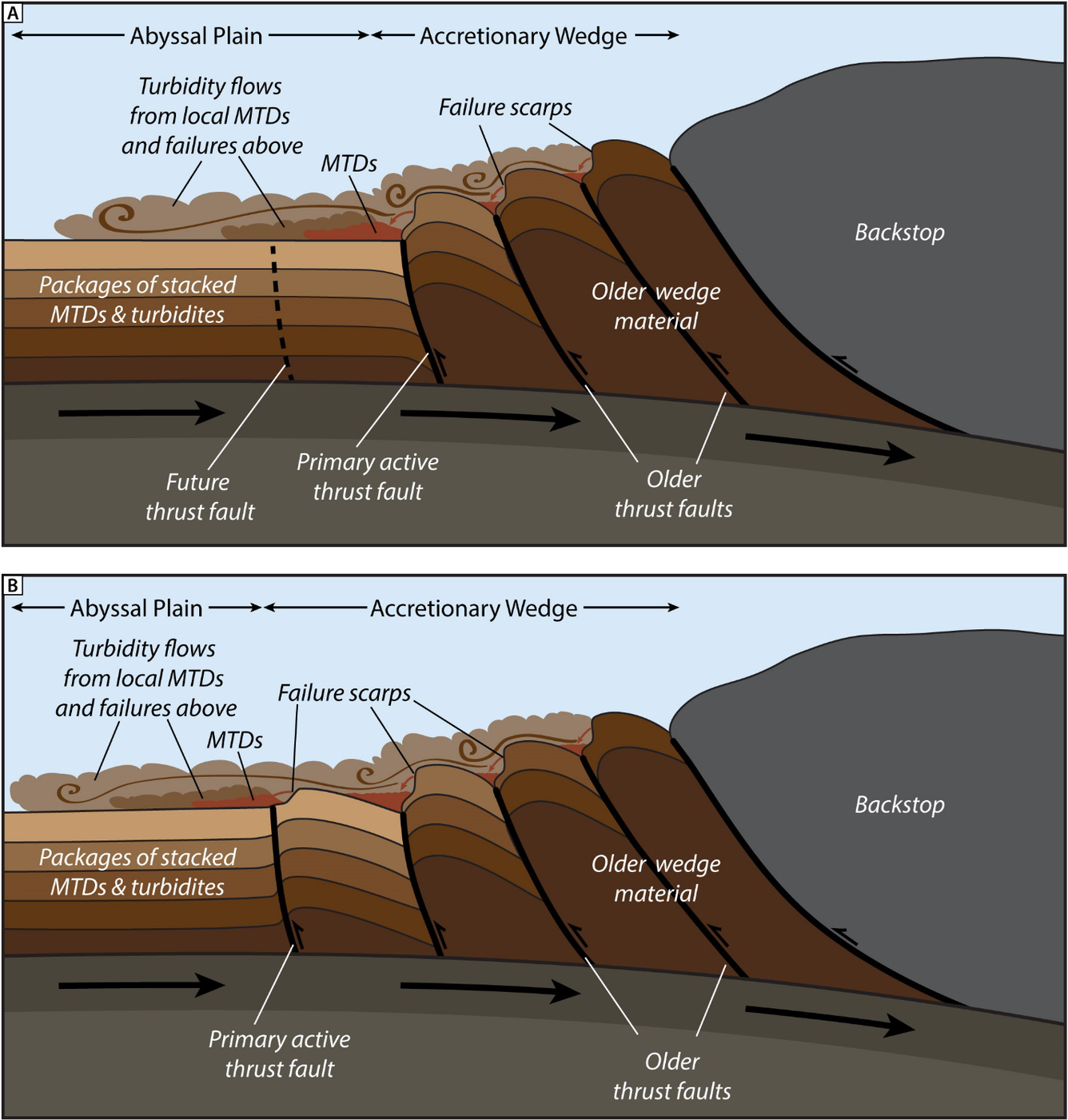
Geologic model for abyssal seismoturbidite generation along the Cascadia Subduction Zone. (A) With each earthquake cycle, slope failures occur on the oversteepened limbs of thrust folds in the accretionary wedge, resulting in proximal MTDs and turbidity flows that spread out across the abyssal plain. (B) As subduction progresses, the active frontal thrust fault steps seaward, uplifting the proximal abyssal plain turbidites/MTDs and incorporating these relatively weak strata into the wedge. Once the newly formed frontal thrust fold reaches a critical seafloor steepness (6-10°), additional failures will be nucleated on this emergent fold, recycling the uplifted strata into new MTDs and turbidity currents that spread out across the abyssal plain. From the study Widespread abyssal turbidites record megathrust earthquake triggered landslides and coseismic deformation in the Cascadia subduction zone.
Sources/Usage
Public Domain.