



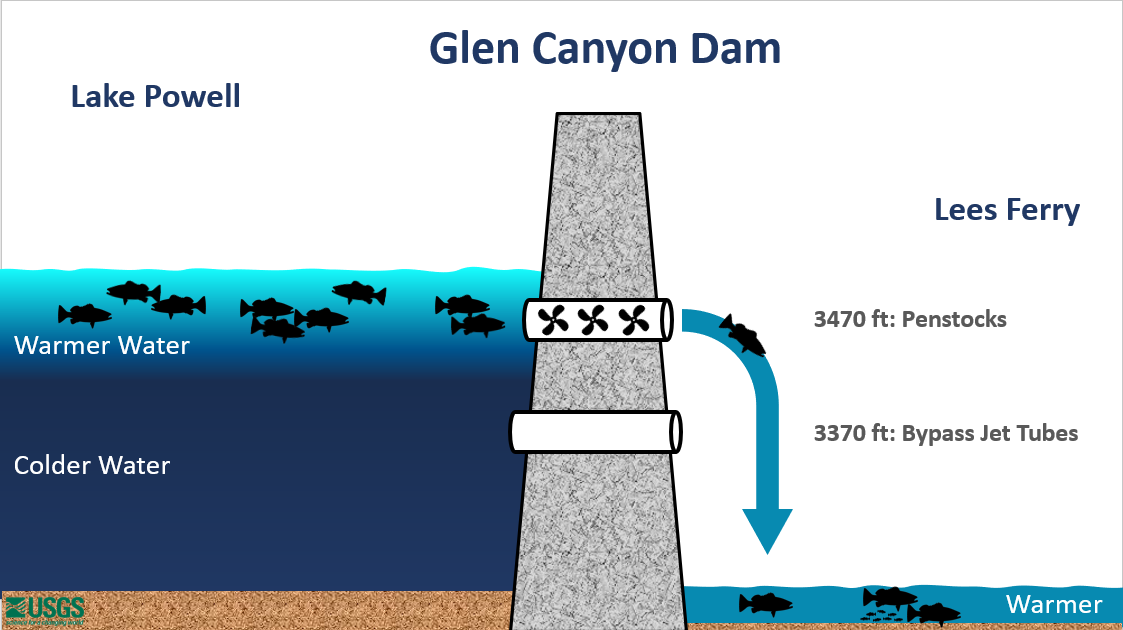
Schematic of how smallmouth bass invade through the Glen Canyon Dam
By Climate Adaptation Science Centers
2023 (approx.)

Detailed Description
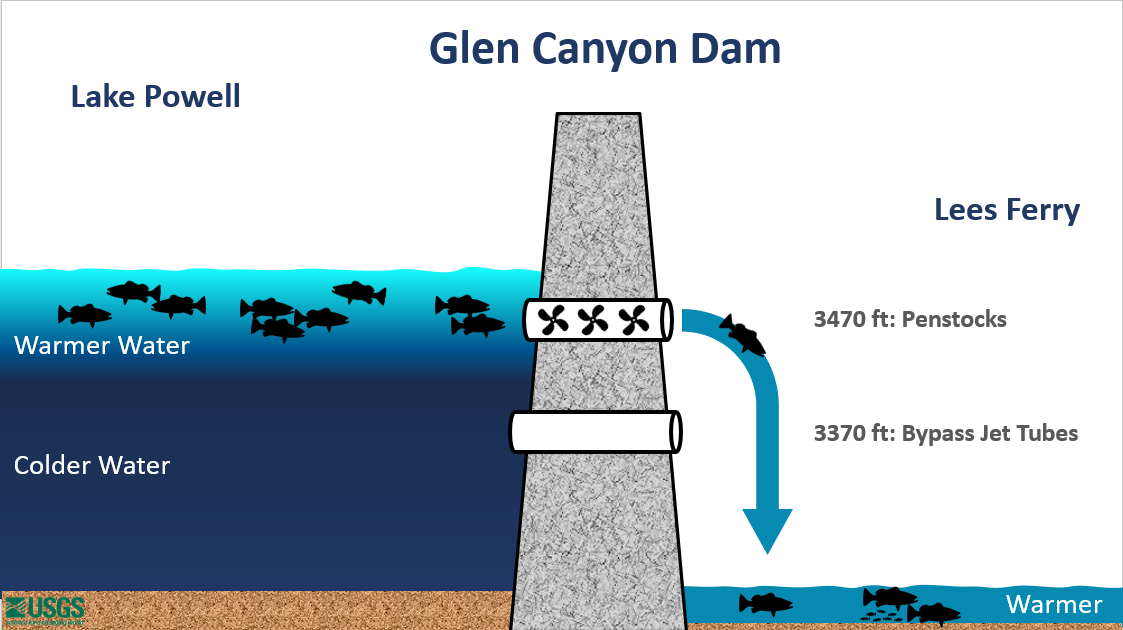
When Lake Powell experiences low water levels, the warm of the water column where smallmouth bass live sits farther down the Glen Canyon Dam than normal. As a result, these fish can accidently get sucked through the penstocks and out into the Colorado River below.
Sources/Usage
Public Domain.
Related
Early detection of aquatic threats: eDNA research in the Colorado River ecosystem & Lake Powell
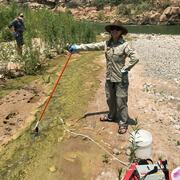
The USGS and partners are conducting environmental DNA (eDNA) research in the Colorado River downstream from Glen Canyon Dam and in Lake Powell to detect invasive fish species and other aquatic threats before they become established. eDNA is a cutting-edge technology that makes it possible to identify invasive species before they are visible, even in vast or hard-to-survey environments like rivers...
Related
Early detection of aquatic threats: eDNA research in the Colorado River ecosystem & Lake Powell
The USGS and partners are conducting environmental DNA (eDNA) research in the Colorado River downstream from Glen Canyon Dam and in Lake Powell to detect invasive fish species and other aquatic threats before they become established. eDNA is a cutting-edge technology that makes it possible to identify invasive species before they are visible, even in vast or hard-to-survey environments like rivers...