



Keeping watch on Mammoth Mountain's volcanic breath
What if we told you that scientists can monitor a volcano's "breathing" 24/7, even through deep winter snow? That's exactly what CalVO's permanent gas monitoring station does at the Horseshoe Lake tree kill area on Mammoth Mountain!
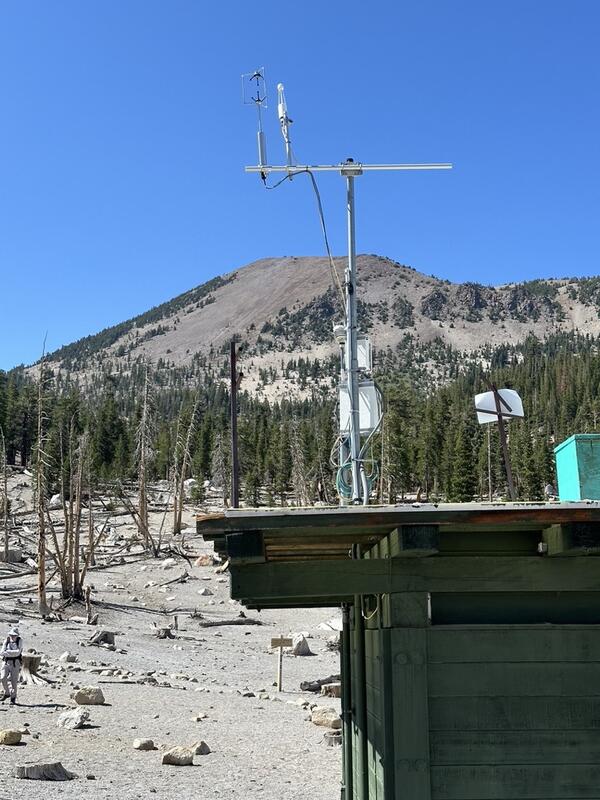
The eddy covariance station shown in this photo has been continuously measuring CO₂ emissions since 2014, providing half-hourly measurements of volcanic gas flux. Unlike previous seasonal monitoring that was limited by snowpack, this 6-meter-tall tower setup with commercial power allows year-round operation - a first for volcanic gas monitoring in this environment.
The station sits in one of California's most significant areas of volcanic CO₂ degassing, where elevated gas emissions created visible "tree kill" zones that have persisted since the early 1990s. The CO₂ rises from a deep gas reservoir beneath Mammoth Mountain along faults and fractures, providing scientists with real-time insights into what's happening deep underground.
What makes this data so valuable? The continuous measurements have revealed fascinating seasonal patterns - CO₂ emissions are typically lowest in winter and highest in summer. Scientists discovered these variations aren't just from weather effects but may actually result from seasonal stress changes in the Earth's crust caused by snowpack loading and regional water cycles. When the ground is put under pressure or released from pressure by seasonal changes in water and snow, it can open and close the underground pathways that transport volcanic gases to the surface.
Over about 11 years of monitoring, this station has tracked more than a 50% decline in CO₂ emissions, following a major increase that occurred from 2009 to 2011. This long-term trend helps scientists understand how the volcanic system responds to deep magmatic processes and provides crucial baseline data for detecting future changes that might signal volcanic unrest.
The ability to monitor volcanic gas emissions continuously and in real-time represents a major advance in volcano monitoring, complementing seismic and ground deformation measurements to give scientists a more complete picture of what's happening beneath Mammoth Mountain.
Read more about gas emissions at Mammoth Mountain at https://pubs.usgs.gov/dds/dds-81/Intro/facts-sheet/fs172-96.pdf